The Symptom
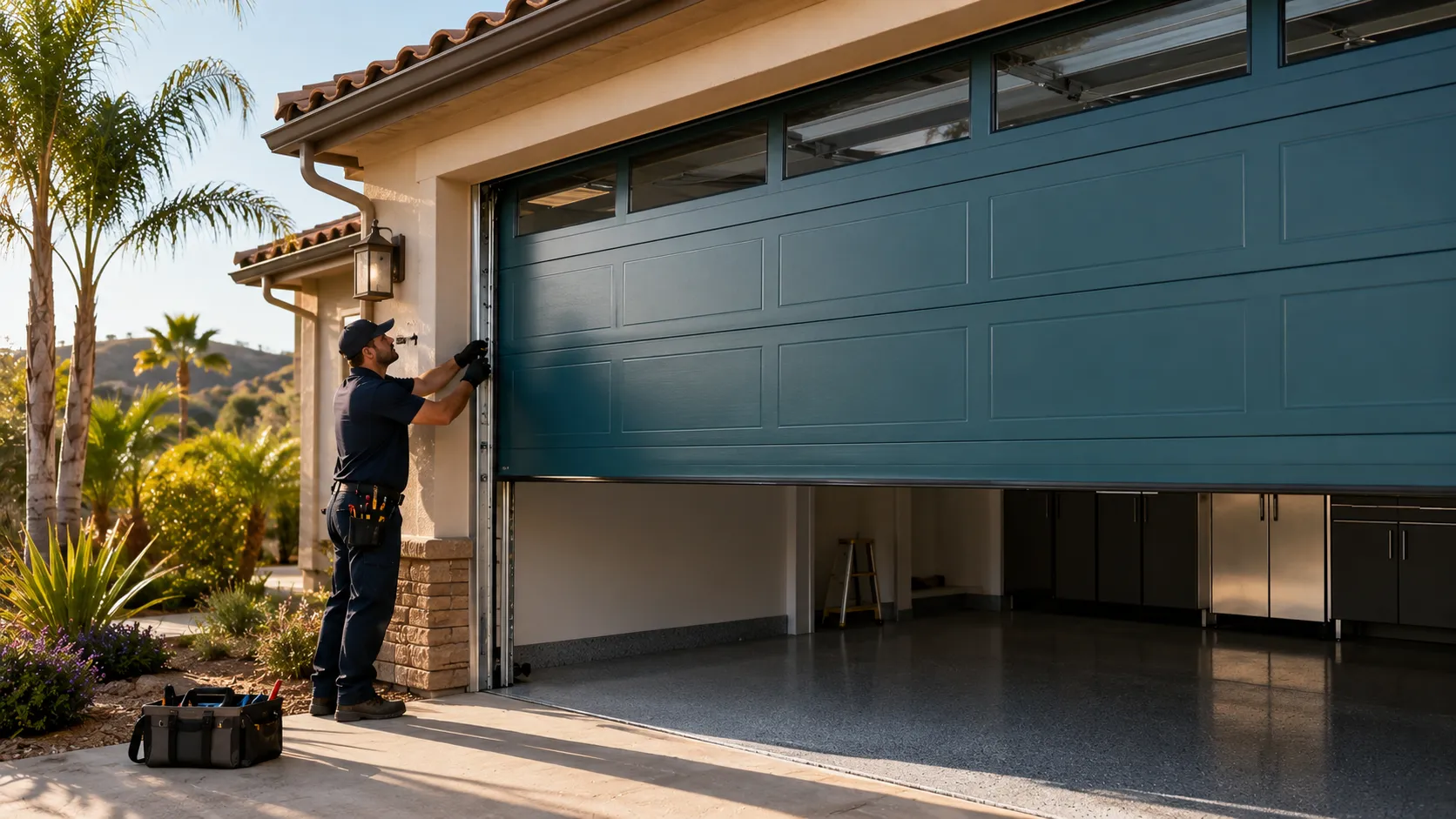
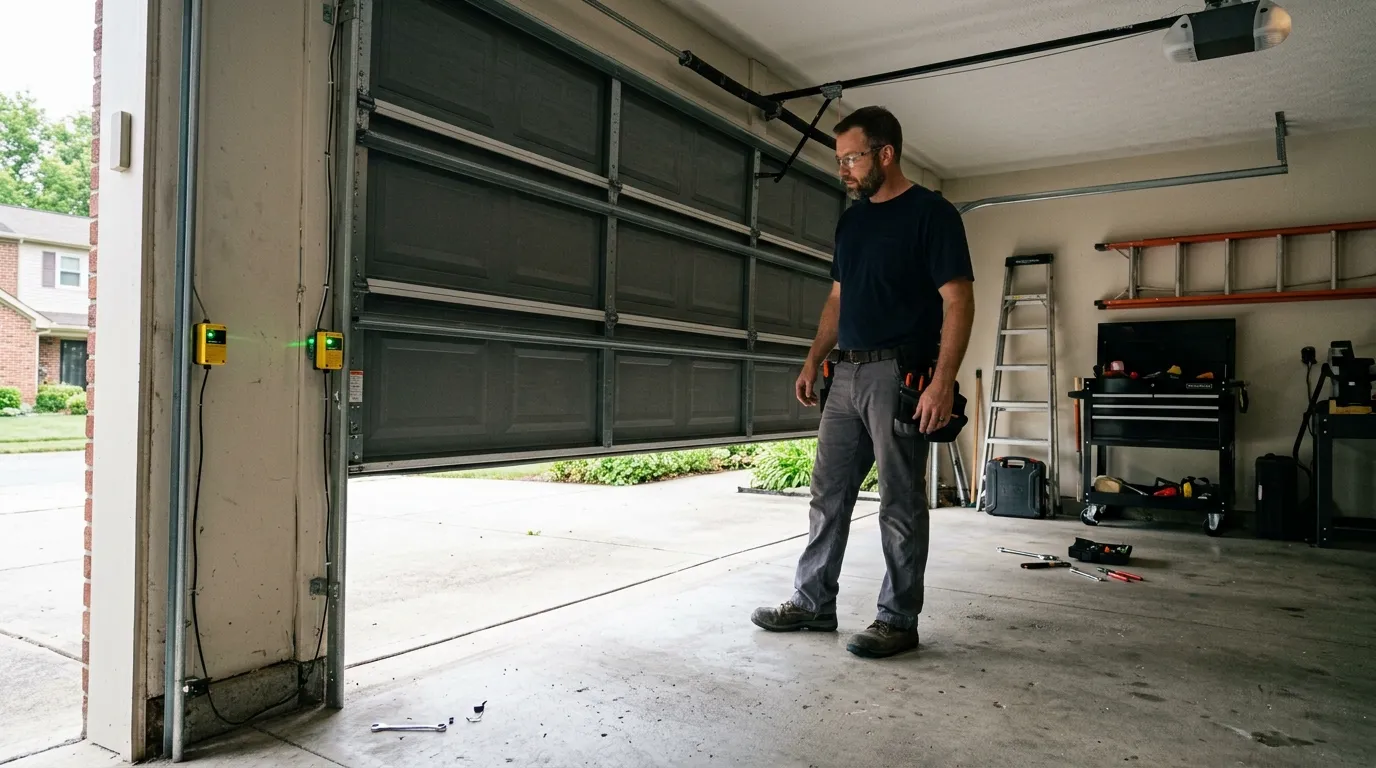
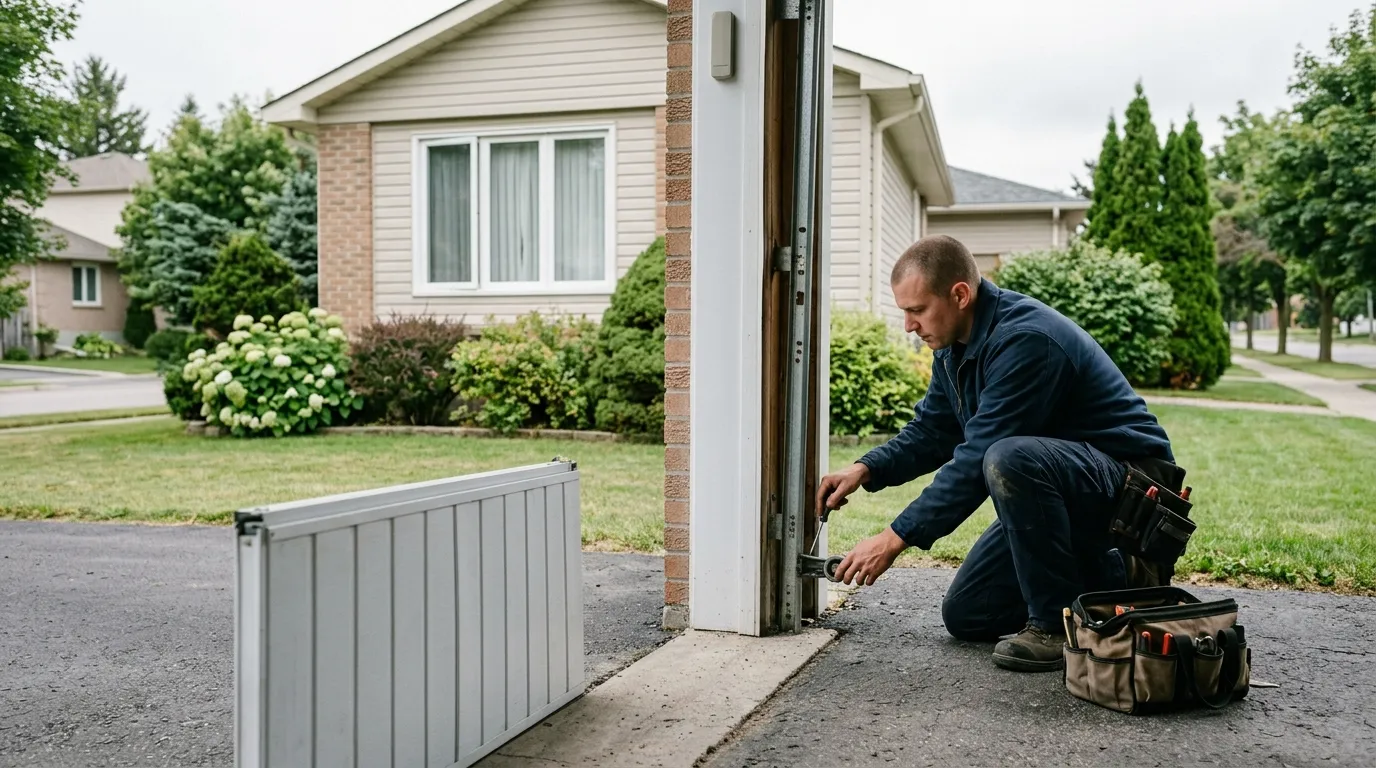
The door hangs crooked, one corner lower than the other, or it stops dead a foot off the ground and won't budge either way. Sometimes you hear the rollers grinding against the track's edge instead of rolling smooth inside it. In Memphis, this shows up most on the original track brackets that came with houses built around 1958, the median age of the housing stock out here. Those brackets were fastened to jamb wood that's had six decades to dry out and shrink a little, and a shrunk jamb means a bracket that's no longer square to the track. Once the track is even a quarter-inch out of alignment, a hard stop or a slammed remote-close is enough to pop a roller clean out of the channel. On a lot of these houses the track hardware has never been replaced, just tightened back down after the last time it happened. That's a patch, not a fix, and it's why the same door comes off track again a year or two later.
How We Fix It
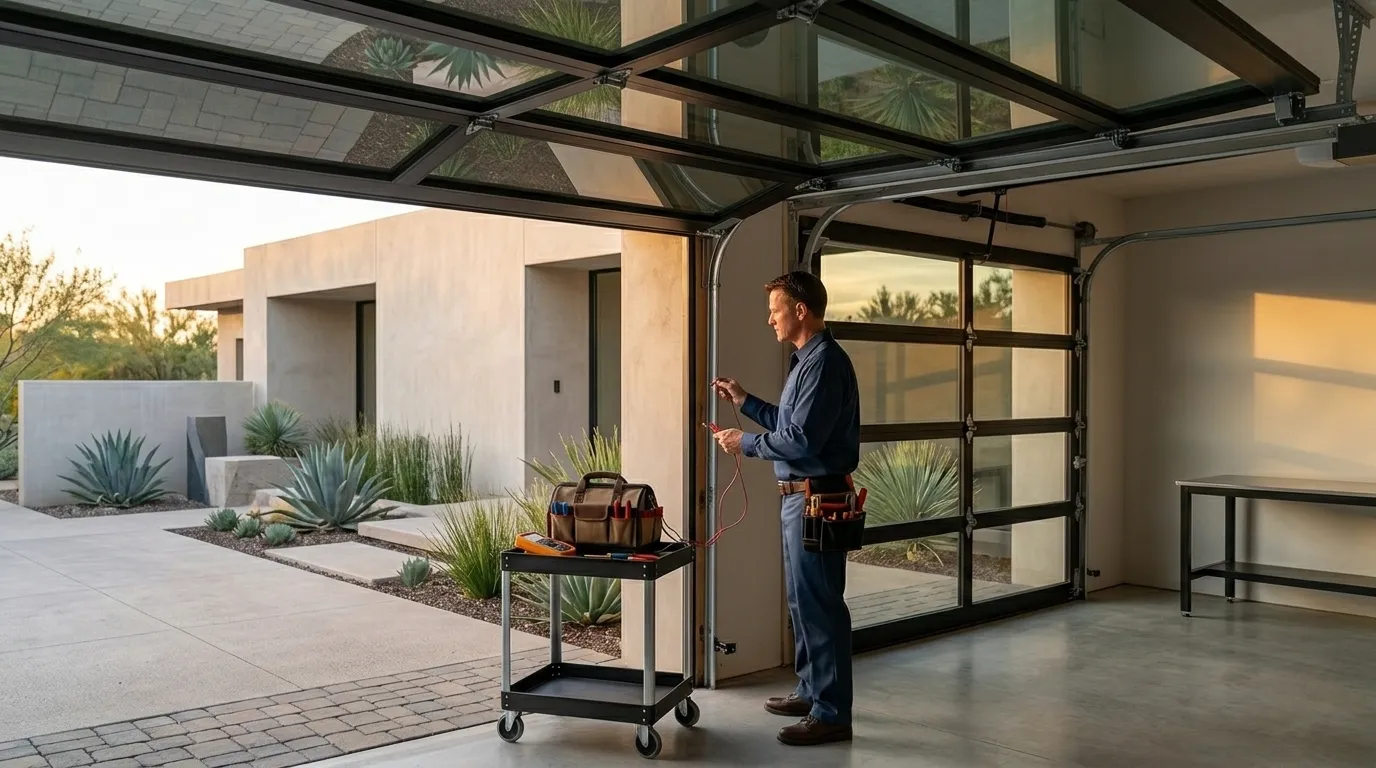
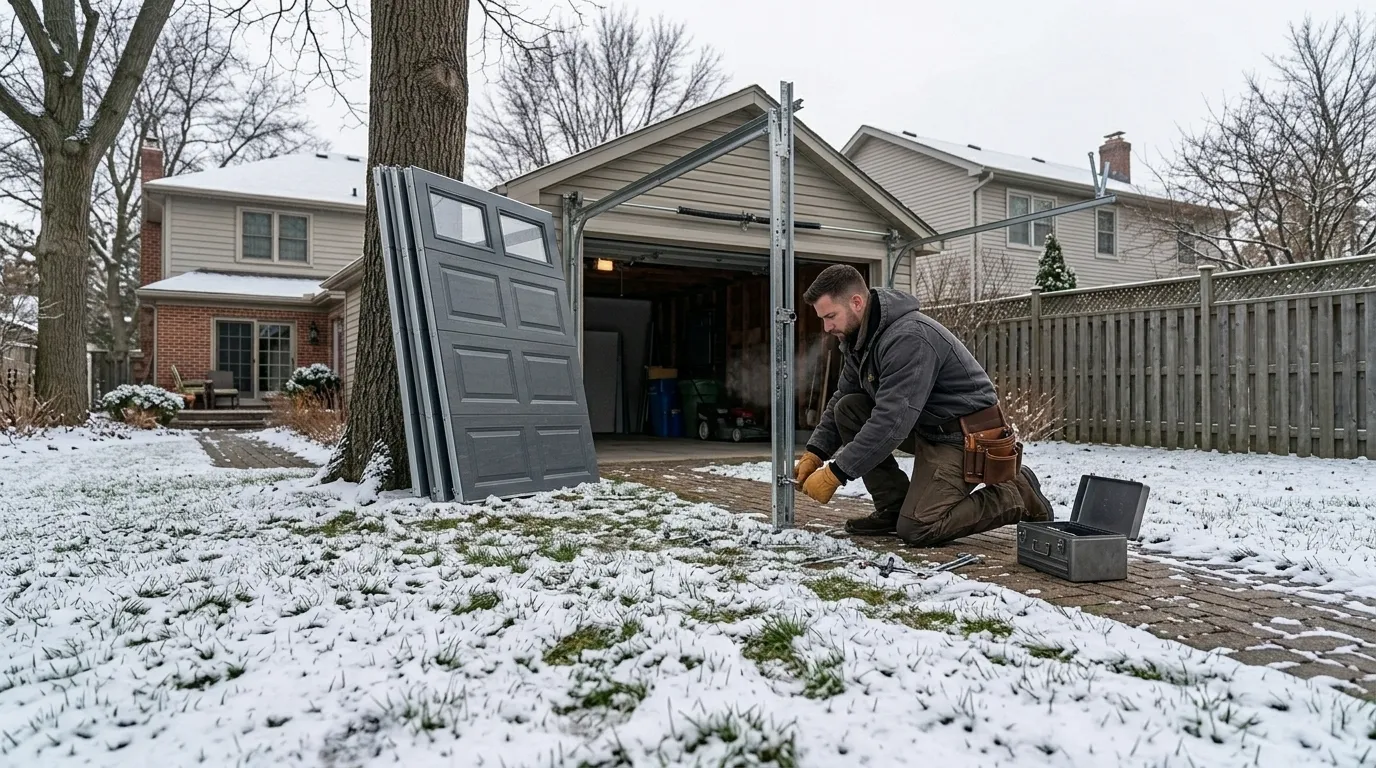
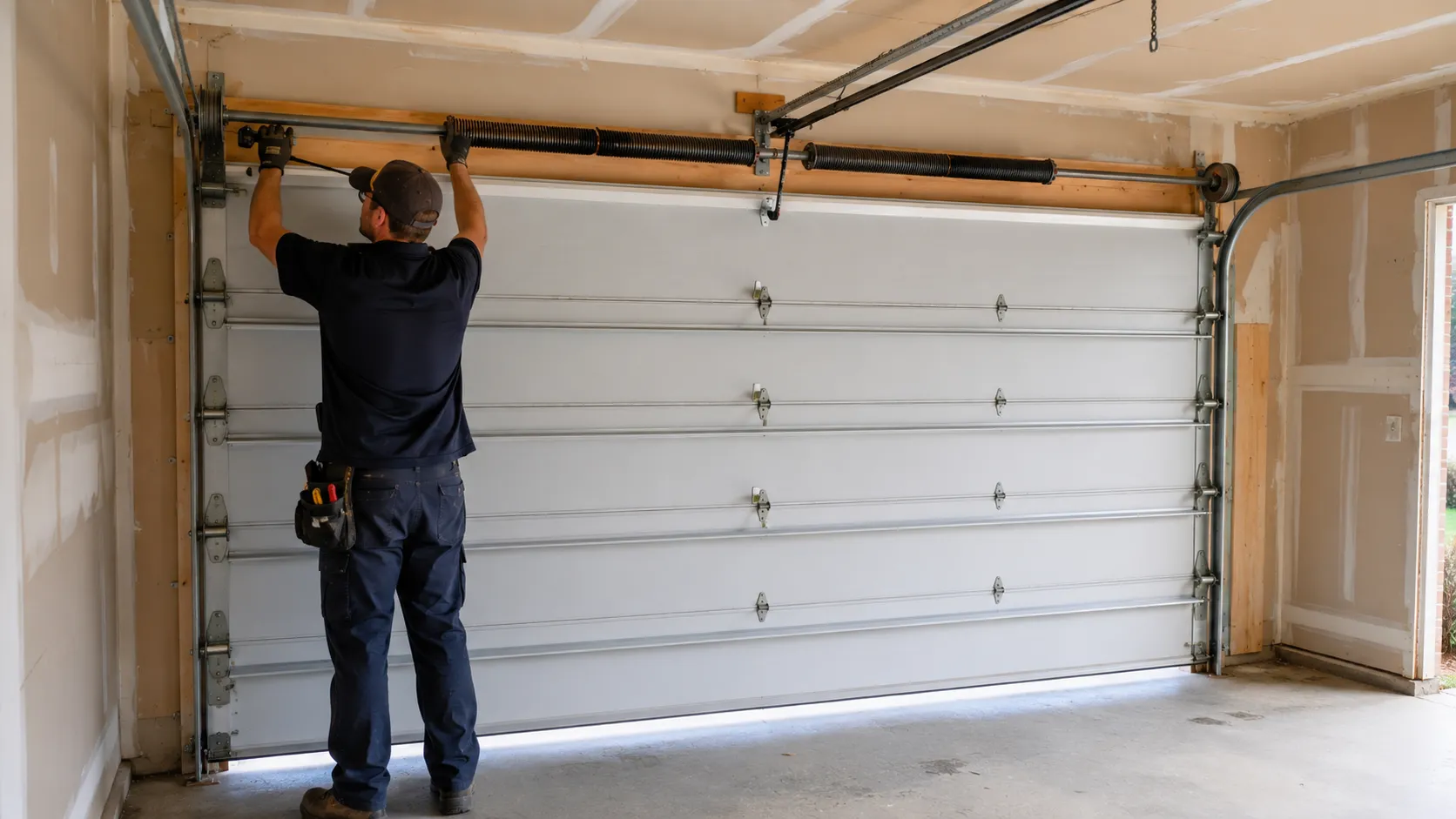
First we check whether the track itself is bent or just knocked loose from the jamb - those are two different repairs and pulling the wrong one wastes your money. If it's a bent section, we replace that length of track rather than trying to hammer it straight, because a straightened track never sits quite right and will throw the roller again within months. If the bracket has pulled loose, we re-set it into solid wood, which on a lot of Memphis houses means moving the fastener point an inch or two over from the original hole, since that original hole is usually stripped past saving. We also check the rollers themselves. Steel rollers on original 1958-era hardware wear a groove into themselves over time, and a grooved roller will keep jumping the track no matter how well the track is aligned. On those we recommend swapping to nylon rollers while we're already in there, since it's a small add to the job and it's the actual root cause more often than not.
Why This Fails Locally
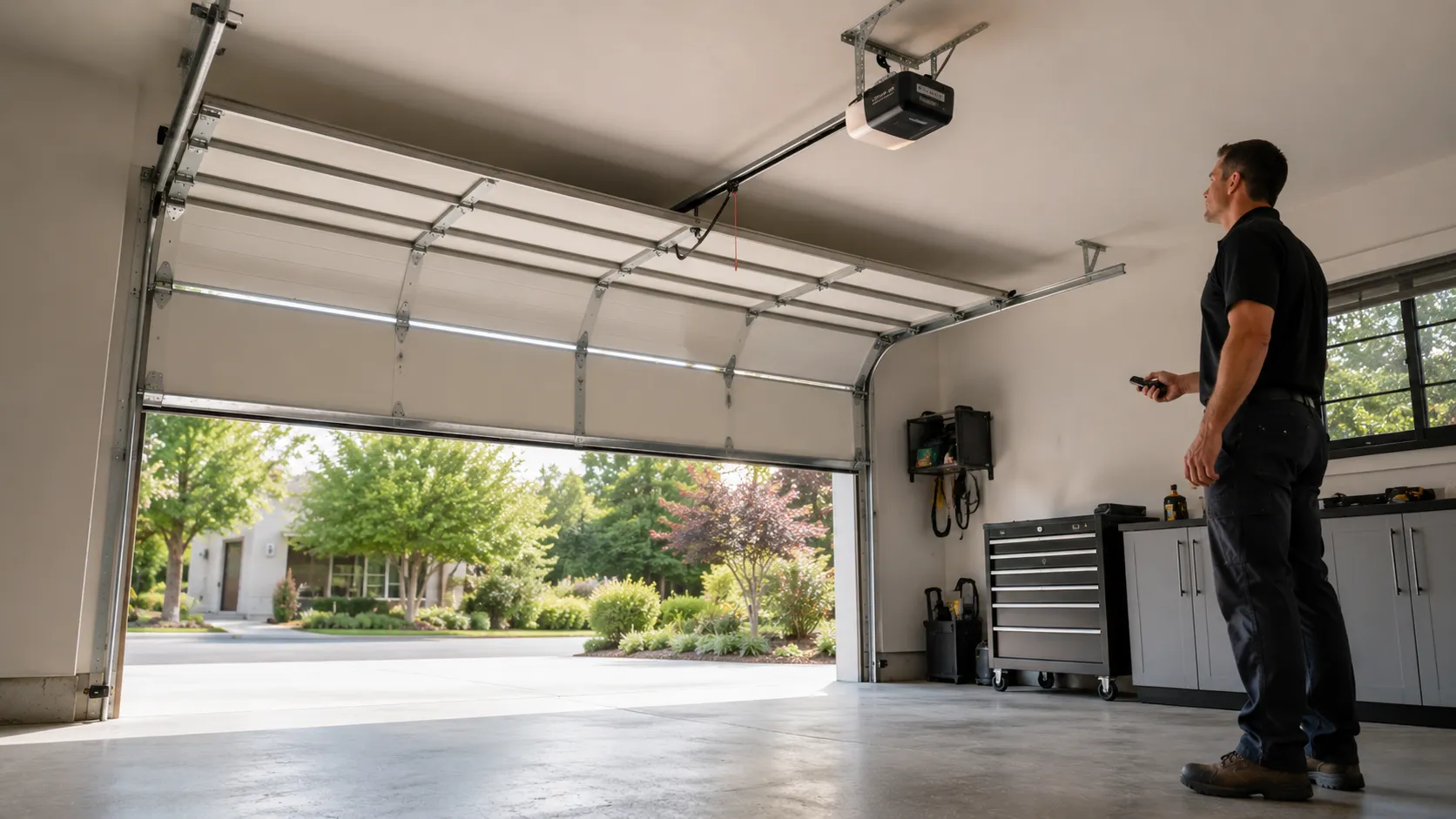
This area sits in a severe cold climate band, and that matters more for off-track failures than people expect. Cold makes steel track brittle and makes the grease in old roller bearings stiffen up, so the door drags instead of gliding right when it's below freezing. A door that drags gets forced - by hand, by an opener straining against resistance it wasn't built to push through - and forcing is what pops a roller. On the 1958-median housing stock common through Memphis and the wider service area, track brackets were never engineered for today's heavier insulated doors either, since most of those openings started with a lighter uninsulated panel. Swap in a heavier door later without upgrading the bracket hardware, and you've built an off-track failure into the wall.
What Can Go Wrong
If a roller's been grinding in a bent track for a while before anyone calls, it can wear a chunk out of the track edge that a straight roller swap won't fix - at that point you're replacing the section, not just resetting it. On the older single-car openings still common in Memphis, we sometimes find the jamb wood behind the bracket has gone soft enough that no fastener will hold, and that's a carpentry problem before it's a garage door problem; we'll tell you straight if that's what we're looking at rather than screwing a bracket into wood that won't hold it. One honest limit: we don't stock every bracket and track length on the truck, since Memphis-era hardware sizes aren't the ones the manufacturers sell most - if yours is an odd size, expect a short return trip once the part's in.