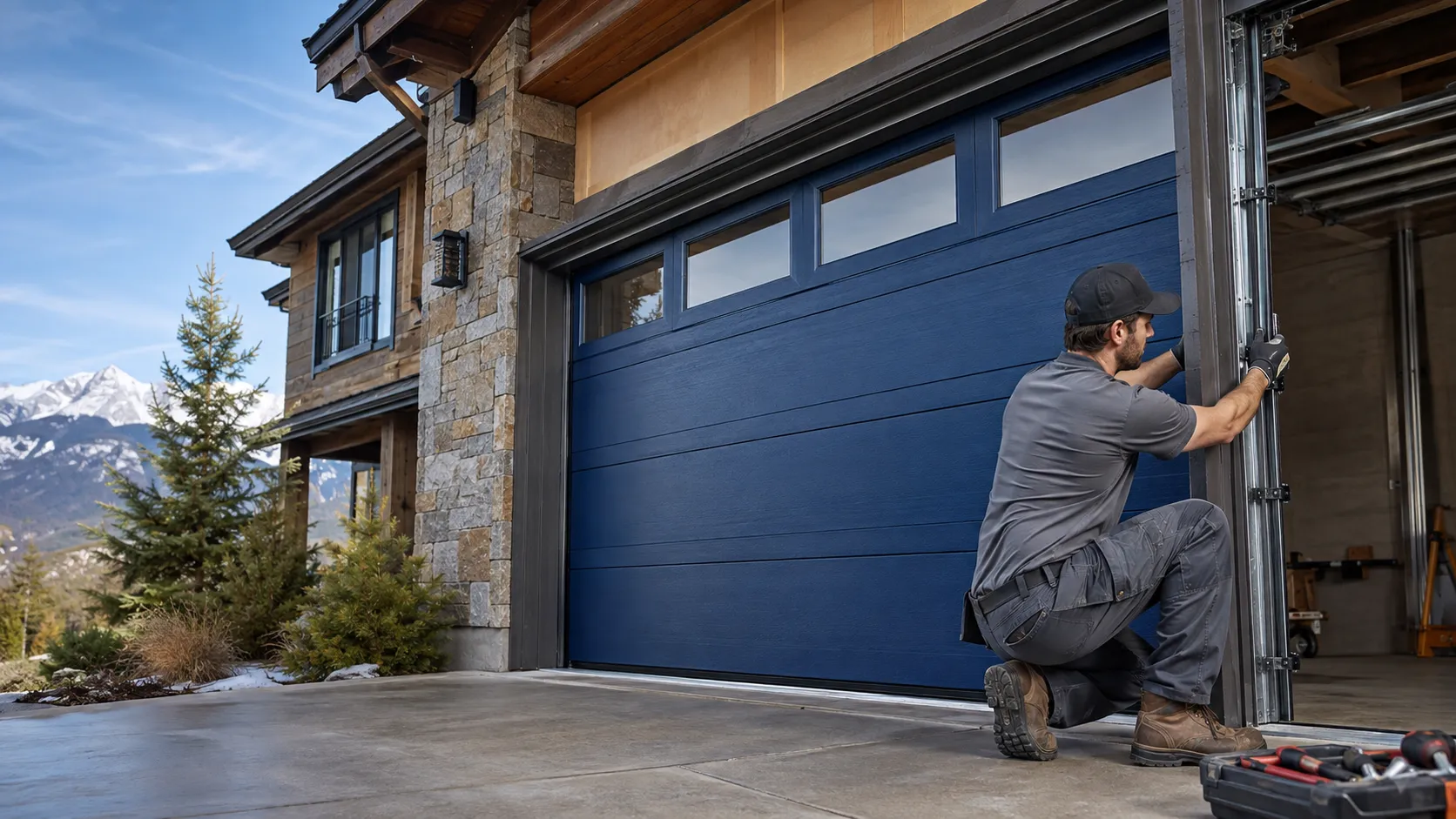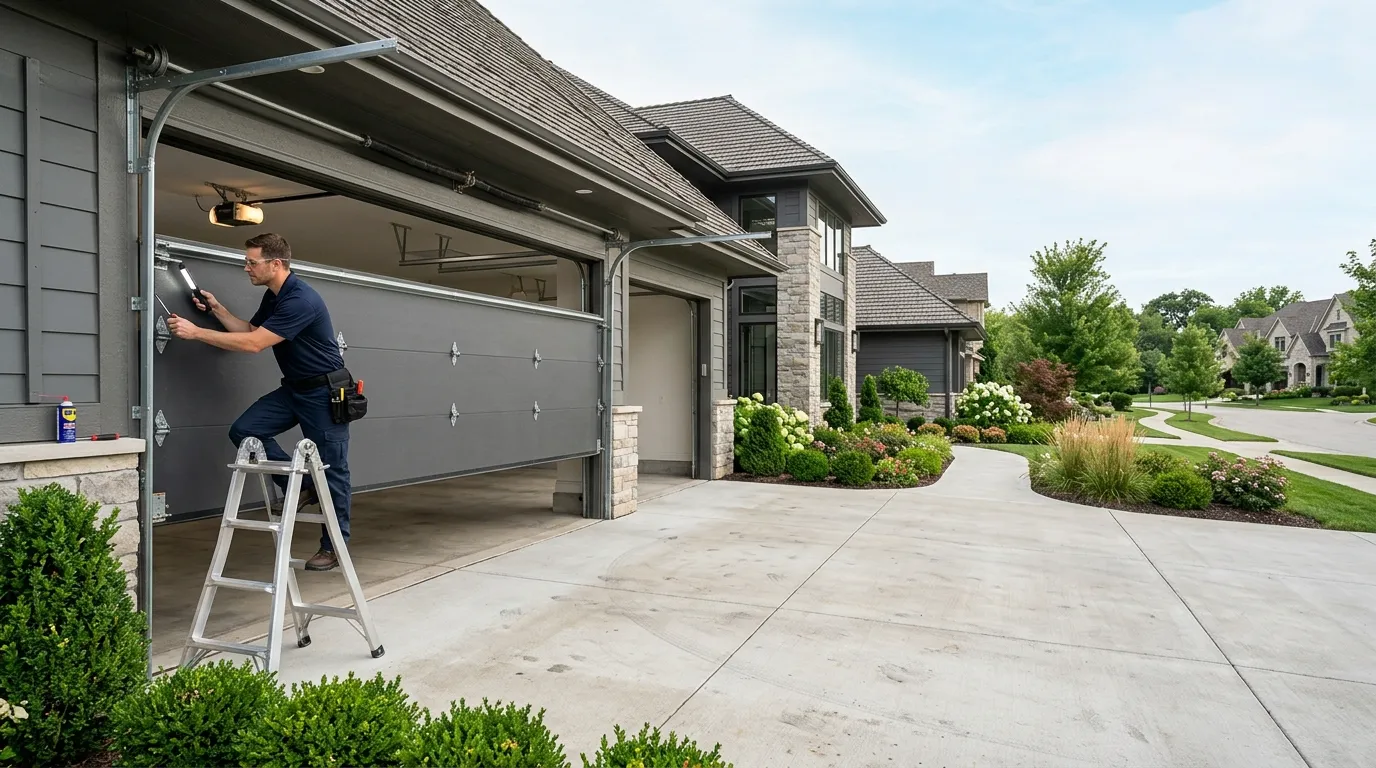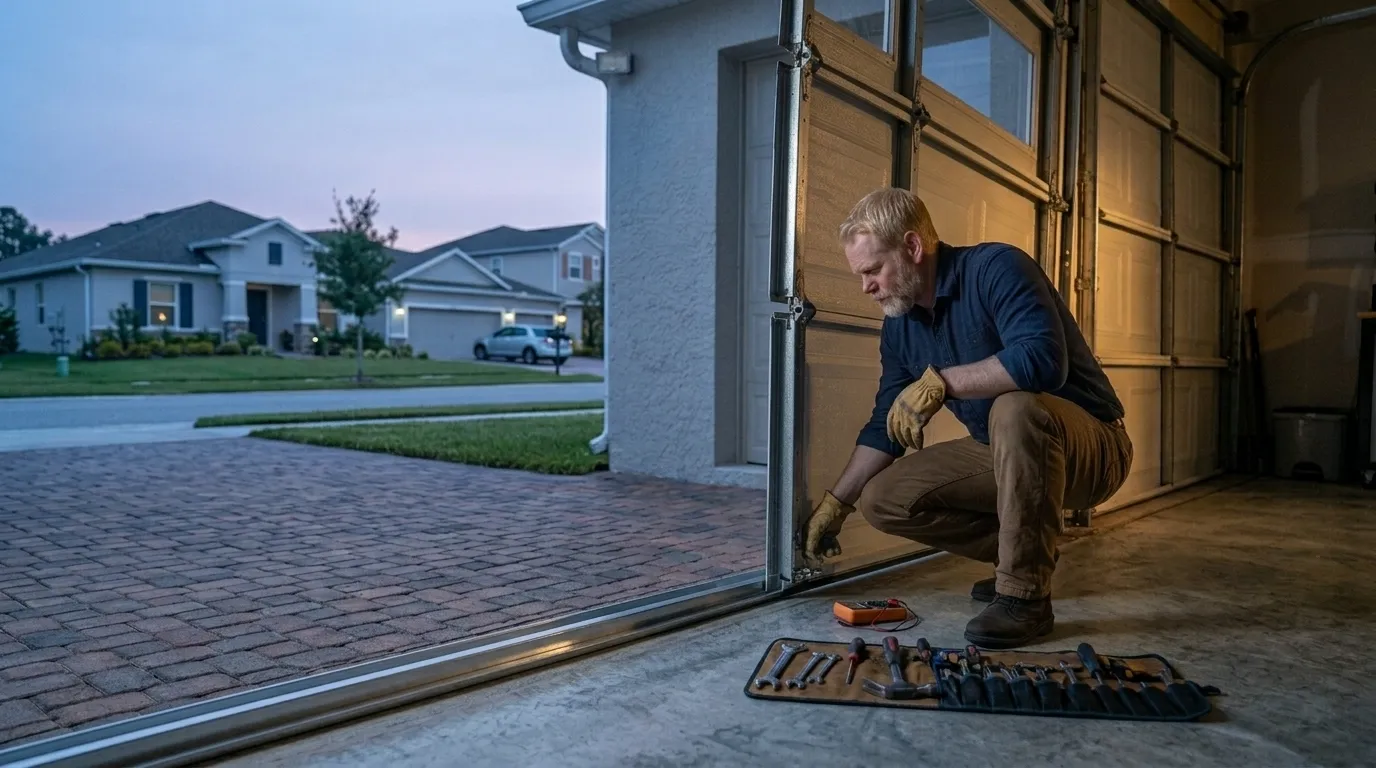
The Symptom
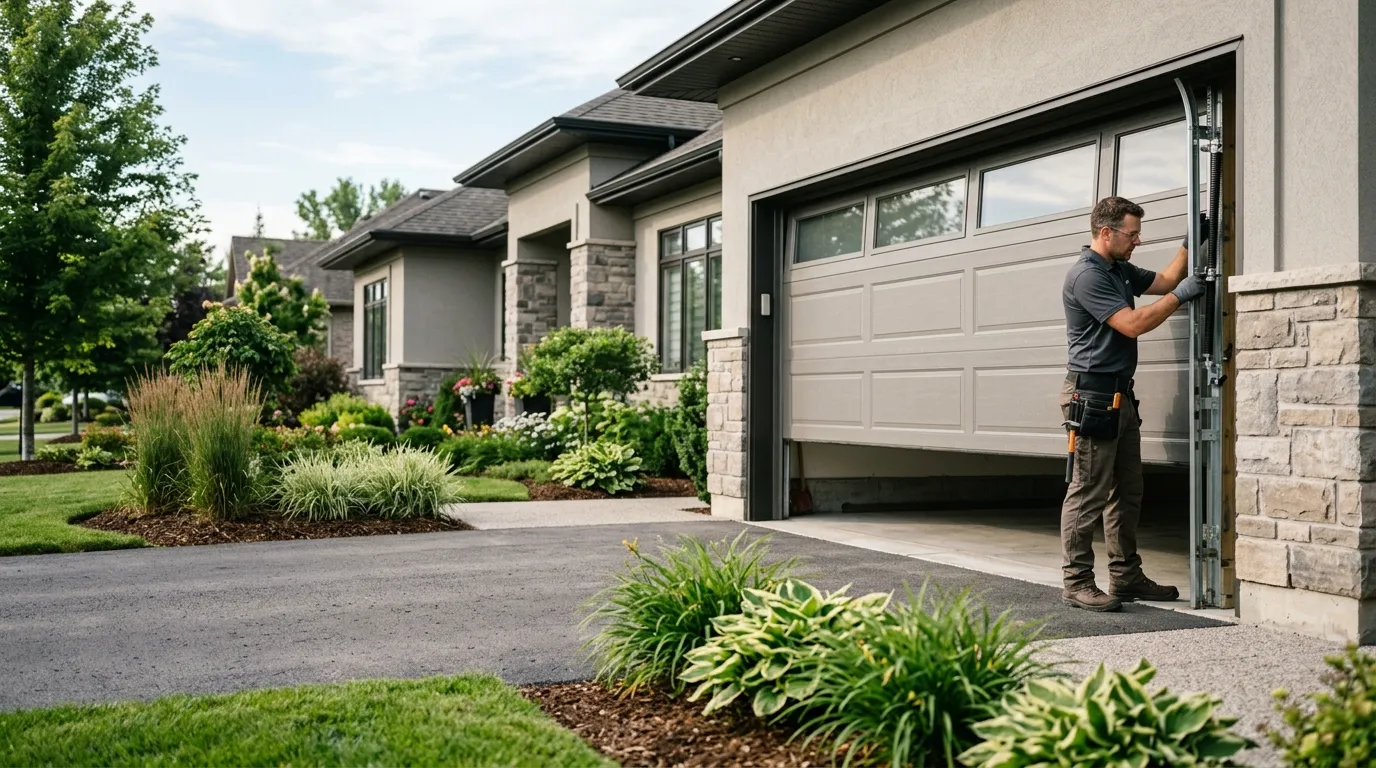
Most garage doors in Memphis went up around 1958, a good twenty years ahead of the median for our wider service area. That means a lot of these are still single-layer steel panel doors on torsion springs sized for a lighter door than what's often been swapped in over the decades - a heavier insulated section bolted onto old hardware, or a replacement door that doesn't quite match the original track width. The symptom people call about is usually the same: the door slams the last foot instead of settling, or it hangs cocked to one side when it opens. That's not a mystery. It's a 60-plus year old spring and roller setup carrying more door than it was built for, and gravity wins eventually.
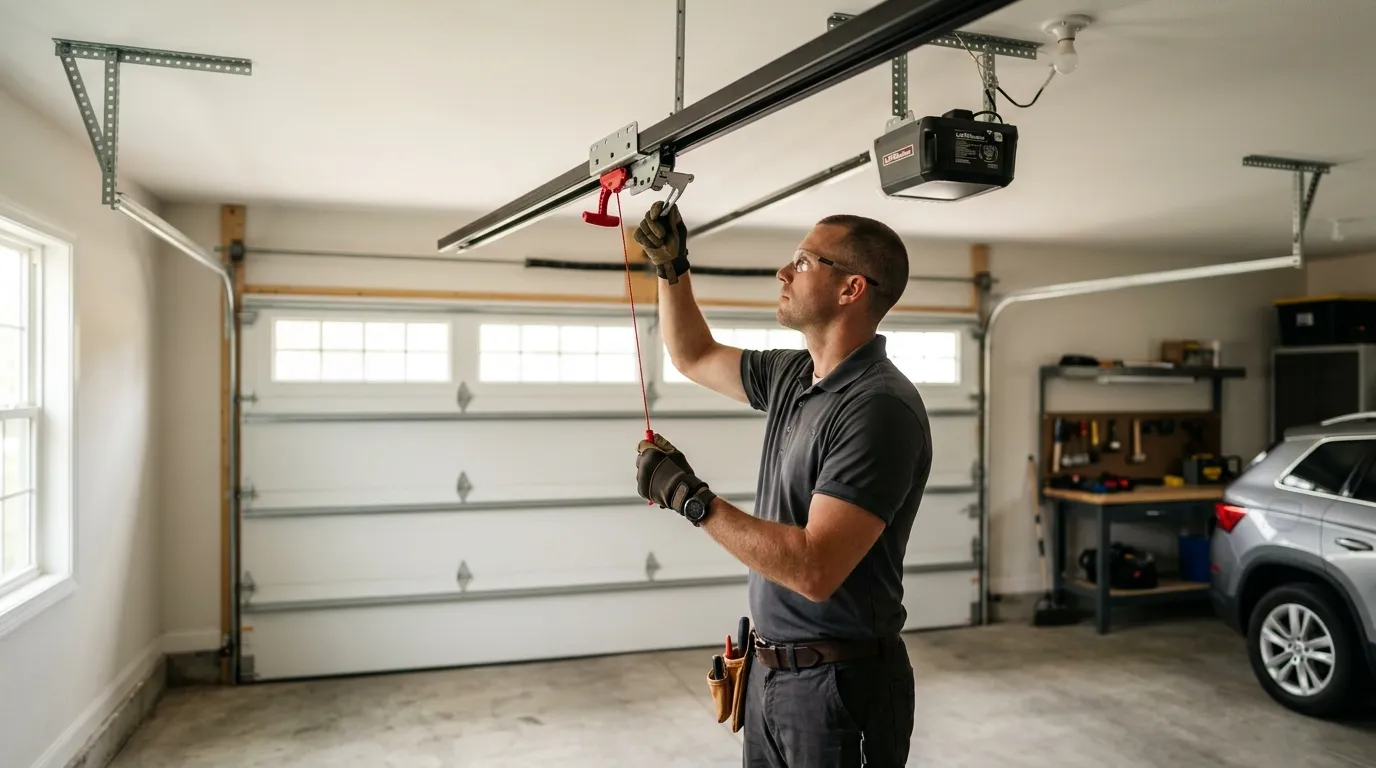
We hear less about openers failing outright here and more about doors that fight the opener - straining, reversing partway, or grinding on one track. On a door this old, that's the hardware talking before the opener ever gets blamed for it.
How We Fix It
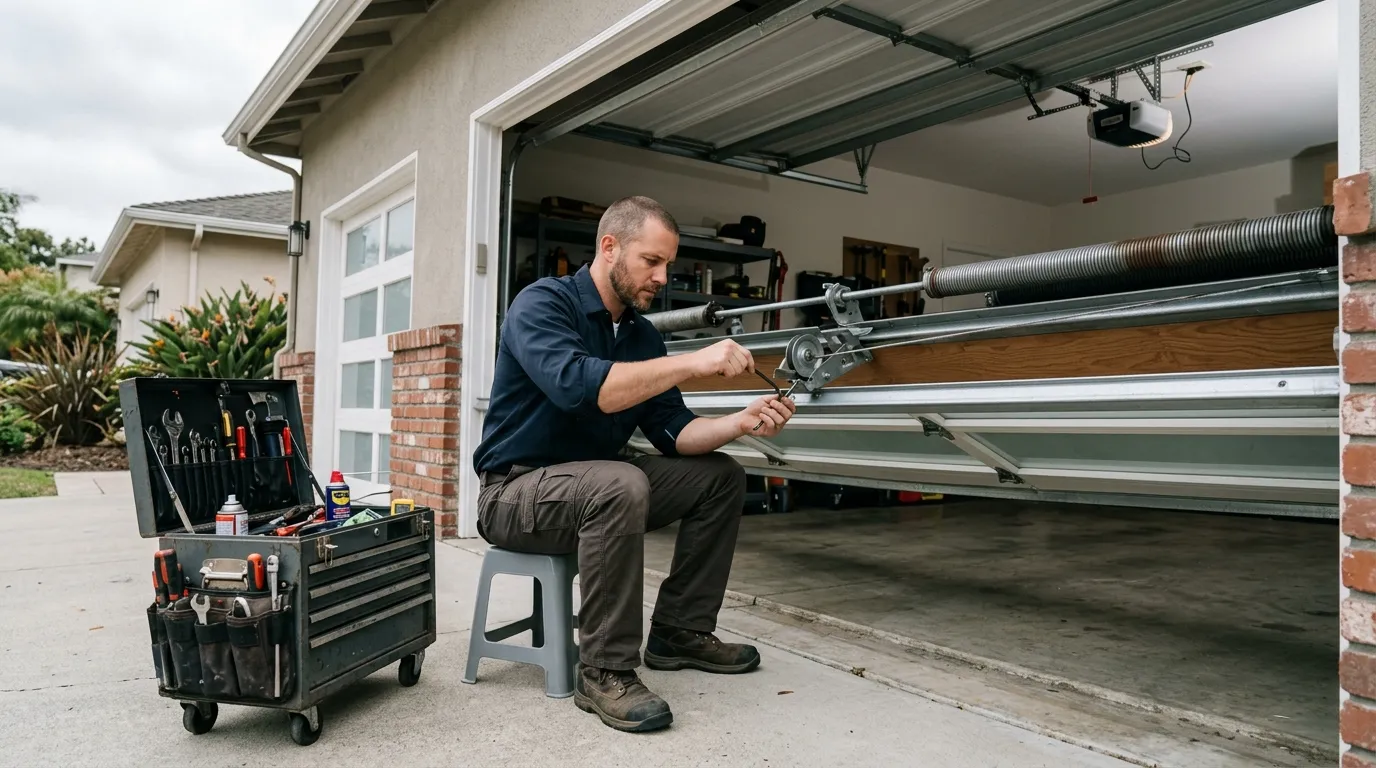
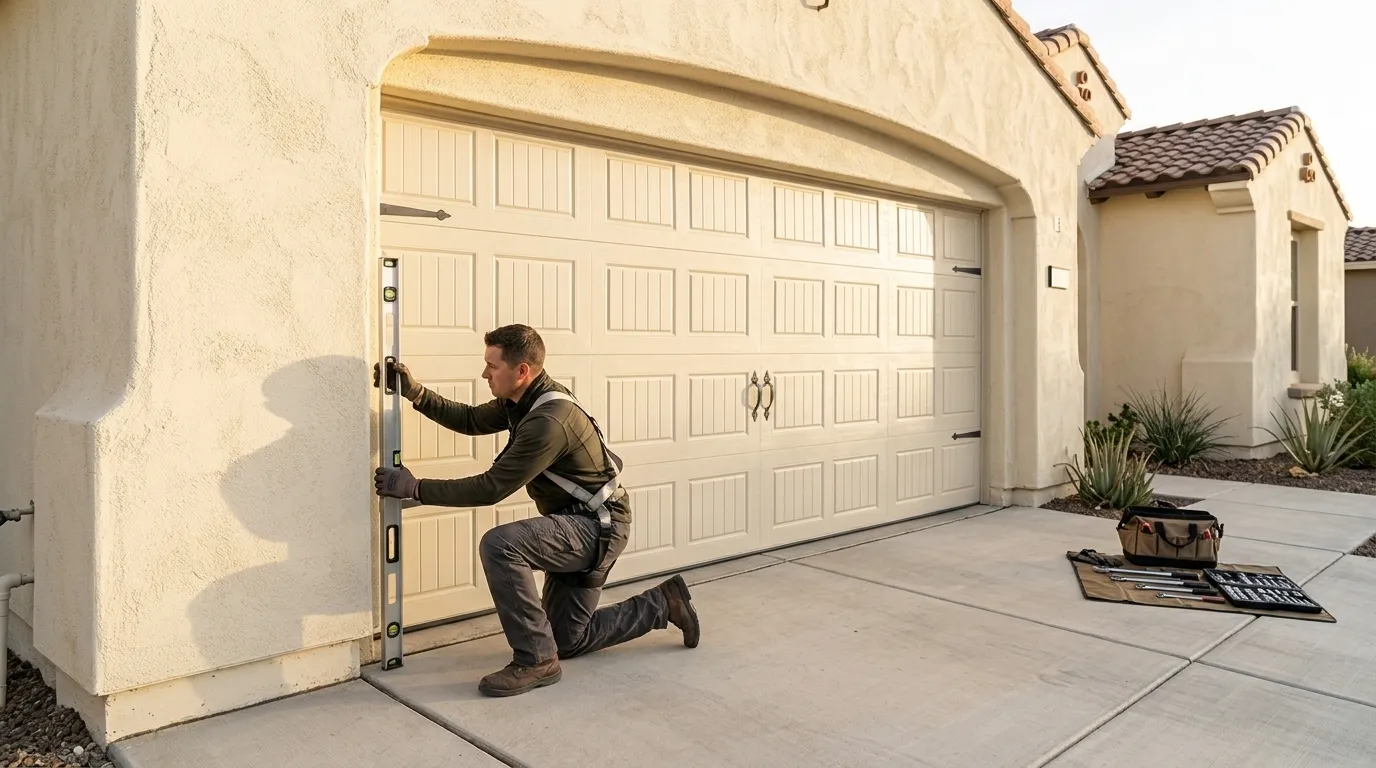
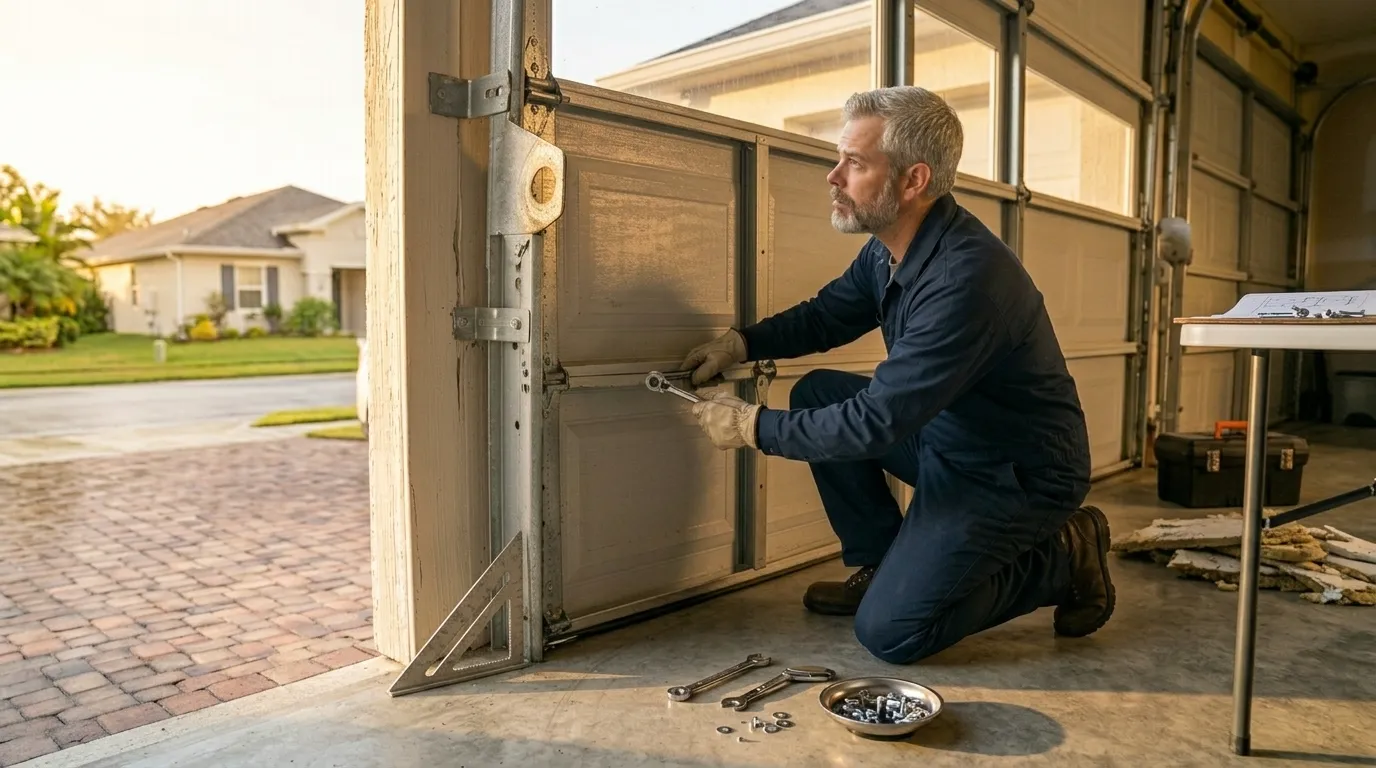
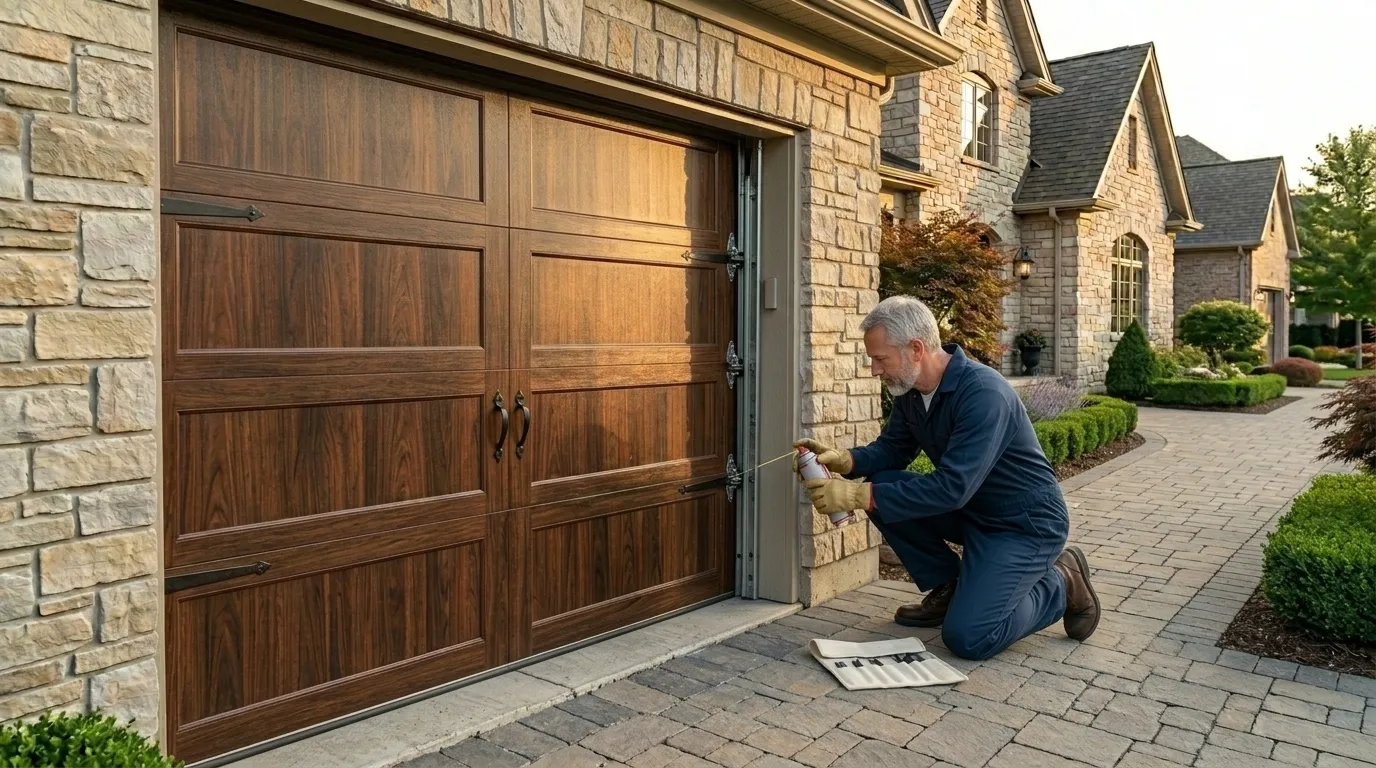
For a door of this era we check torsion spring wind and cable condition first, since that's where age shows fastest - steel fatigues even sitting still. If the springs are original or close to it, we replace the pair rather than one side, because a mismatched pair on an old shaft is how you end up back here in six months. Track alignment gets checked next; on a house this old the framing has usually settled some, and a track that was square in 1958 often isn't now. We re-anchor and shim rather than force a bent track straight, since forcing it just moves the failure point somewhere else.
Where the door itself, not just the hardware, is the problem - a steel panel that's rusted through at the bottom, or a section that's been dented and reinforced with something not meant for it - we'll say so and talk replacement instead of another patch.
Why This Fails Locally
Memphis sits in a cold-climate band with real winter severity, and a door built for a 1958 house wasn't engineered with today's insulation standards or wind load numbers in mind. Original steel doors from that era typically ran a single layer with no thermal break, which means the door itself flexes more in a hard freeze and the seals at the bottom and sides shrink and crack faster than they would on a newer insulated door. Combine that with springs that have had six decades of temperature swings working against the coil, and cold mornings are when we get the most torsion-spring calls out this way - the metal is stiffest and least forgiving exactly when someone needs the door to open.
What Can Go Wrong
On a door this old, one repair often surfaces the next problem behind it. Replace a worn cable and you sometimes find the drum it wraps around is grooved unevenly from decades of that same worn cable riding wrong. Fix a spring and the track brackets, original to 1958, can be too corroded to hold the new tension properly. We flag this upfront rather than after the fact: a repair quoted for one part can grow once we're inside the door, and on hardware this age that's more common than not. We'd rather tell you that before we start than surprise you with it partway through.