The Symptom
Memphis sits about 18 miles from Port Huron, and the houses here skew older than what we see closer to the city. The median home in Memphis was built around 1958, while the wider service area we cover runs closer to a 1978 median. That ten-to-twenty year gap matters more than it sounds like it should. A door and opener installed on a 1958 house has usually been replaced once or twice already, but the track spacing, the header clearance, and sometimes the spring configuration were set by a house built for a different door than what's hanging on it now. The symptom we hear most from this pocket of the county isn't a dead opener - it's a door that runs rough, drifts off-track slightly, or takes more effort at the bottom of travel than it did a year ago. That's wear talking, and on older framing it shows up faster because the tolerances were never generous to begin with. If you're hearing a grind, a shudder, or a door that hesitates a few inches before the floor, that's the maintenance window, not yet the repair window.
How We Fix It
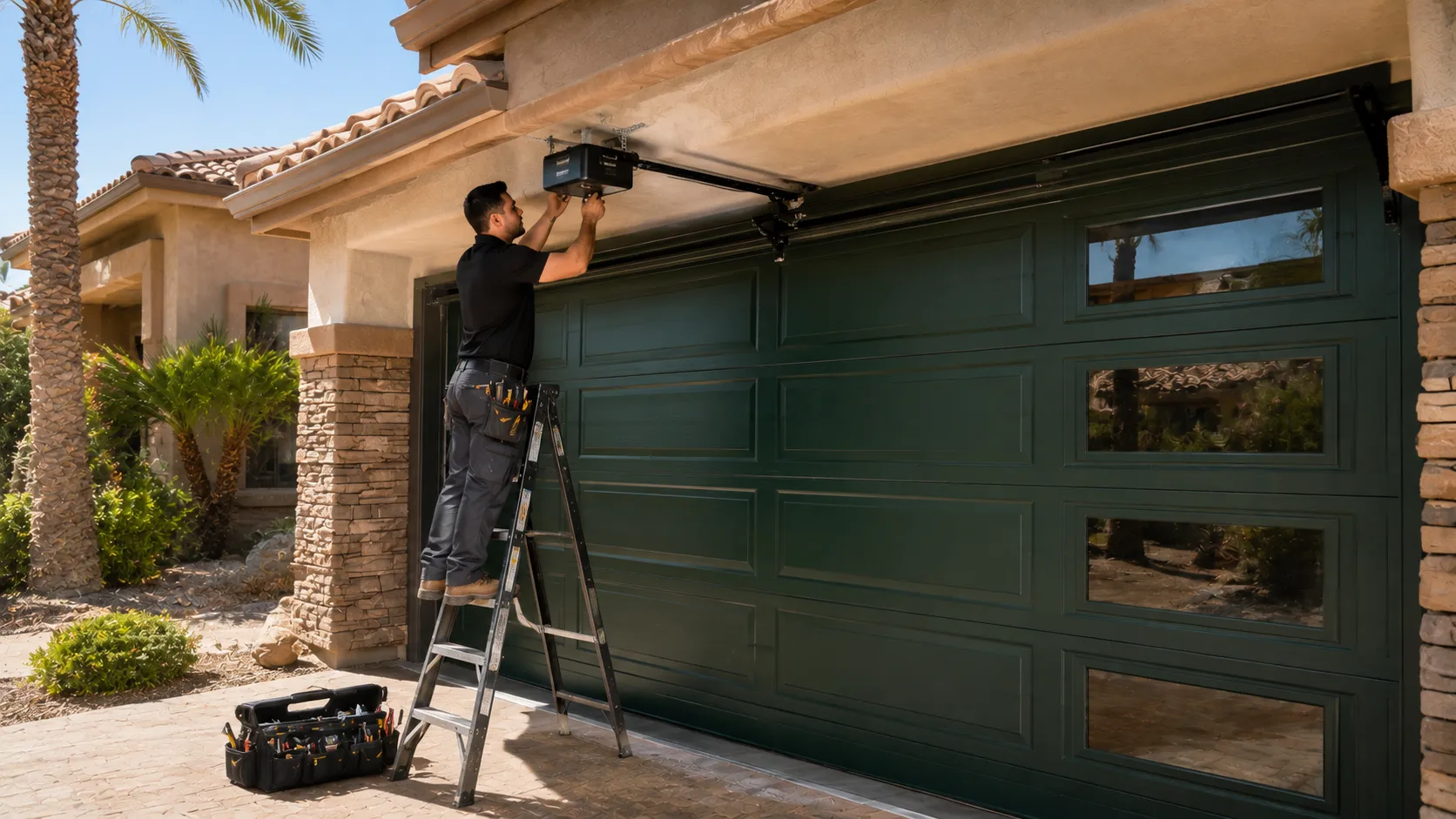
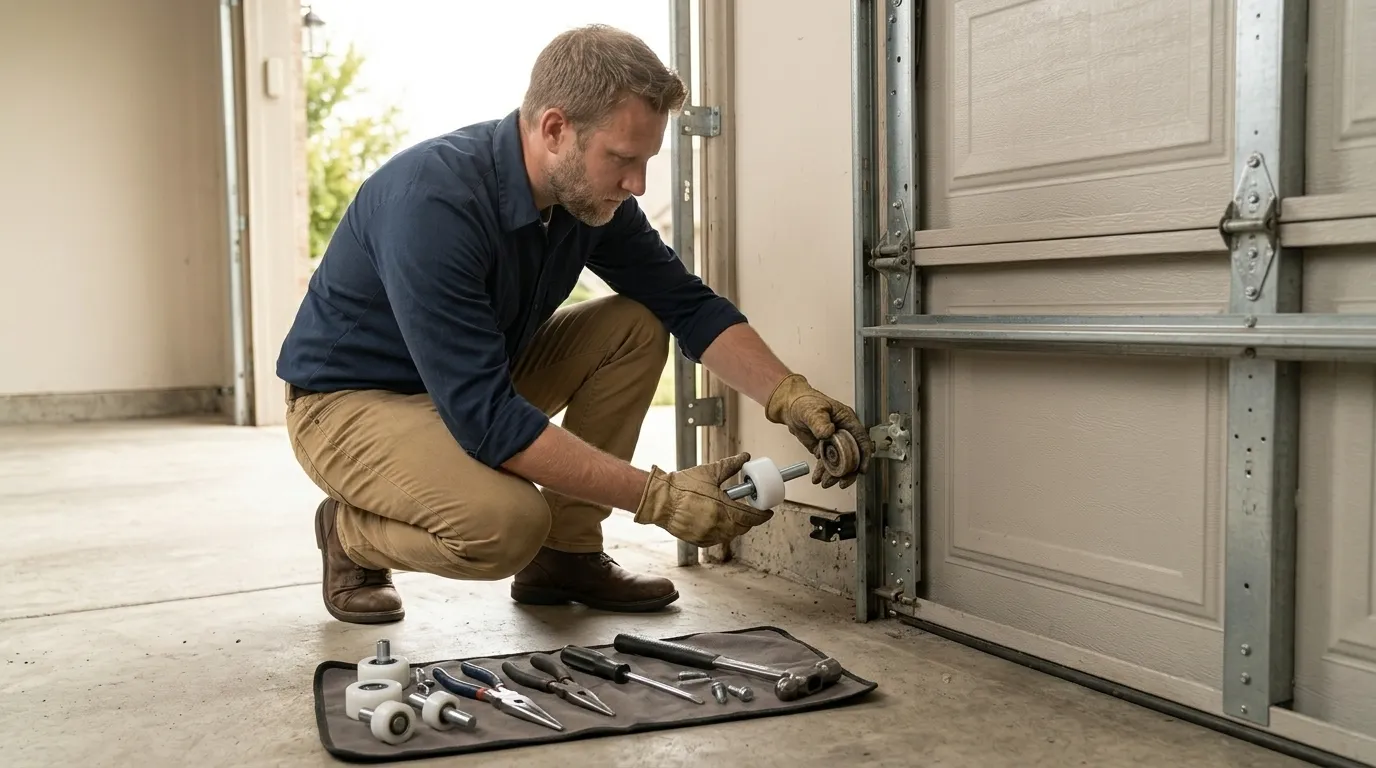
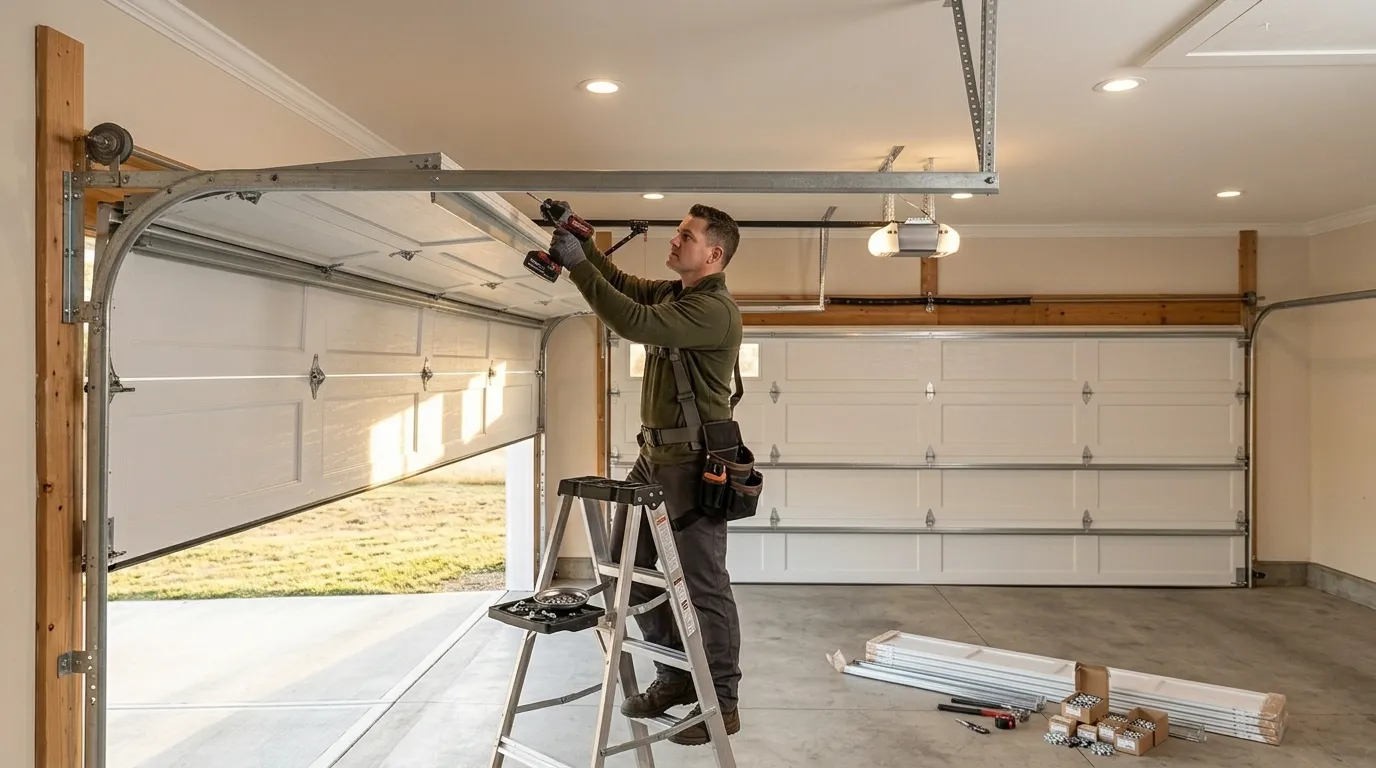
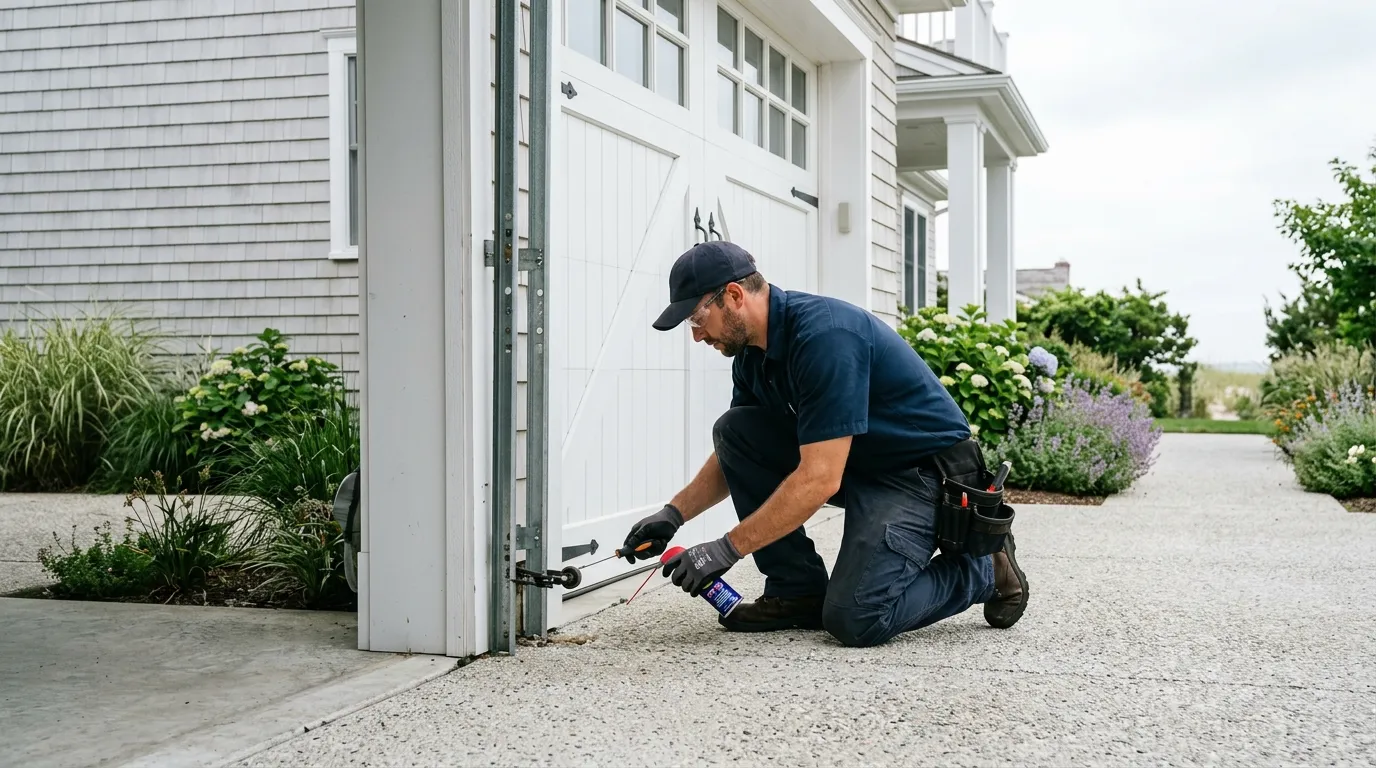
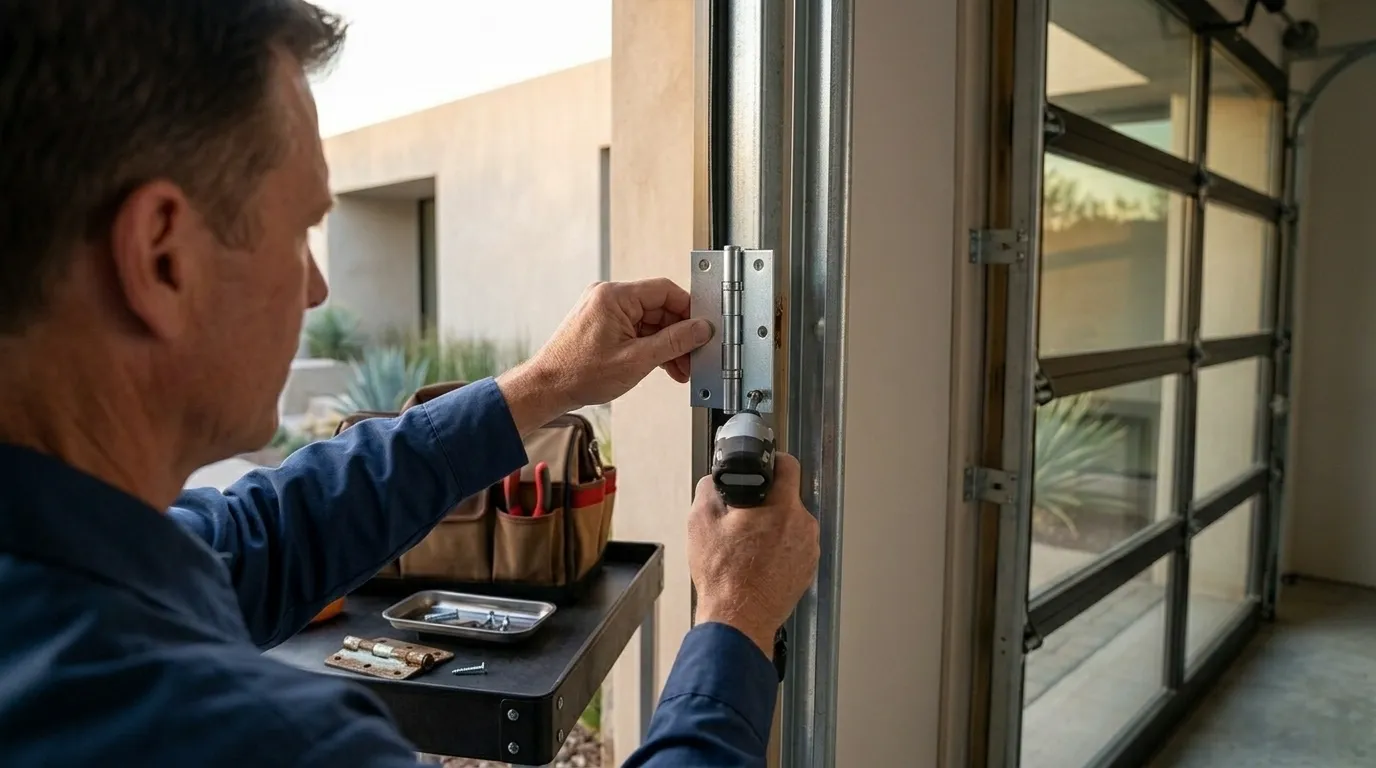
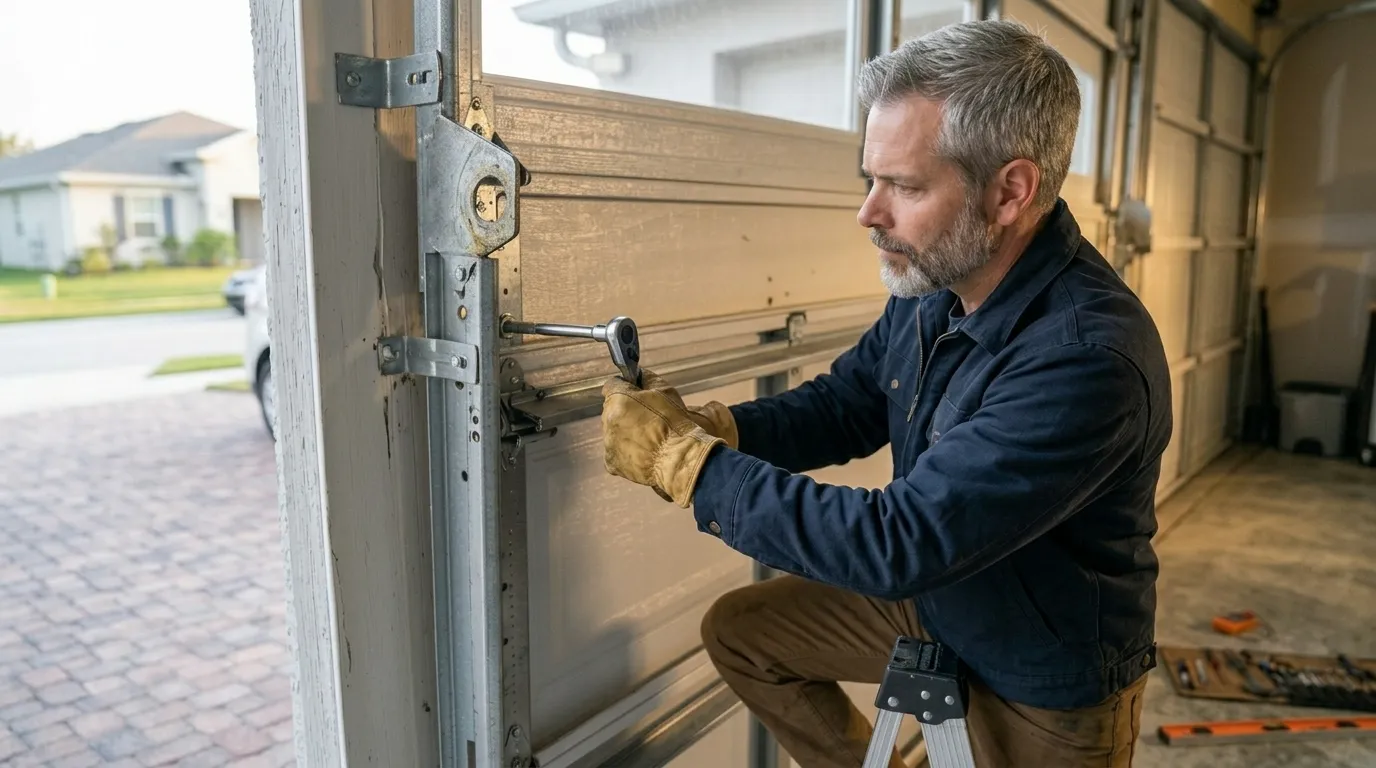
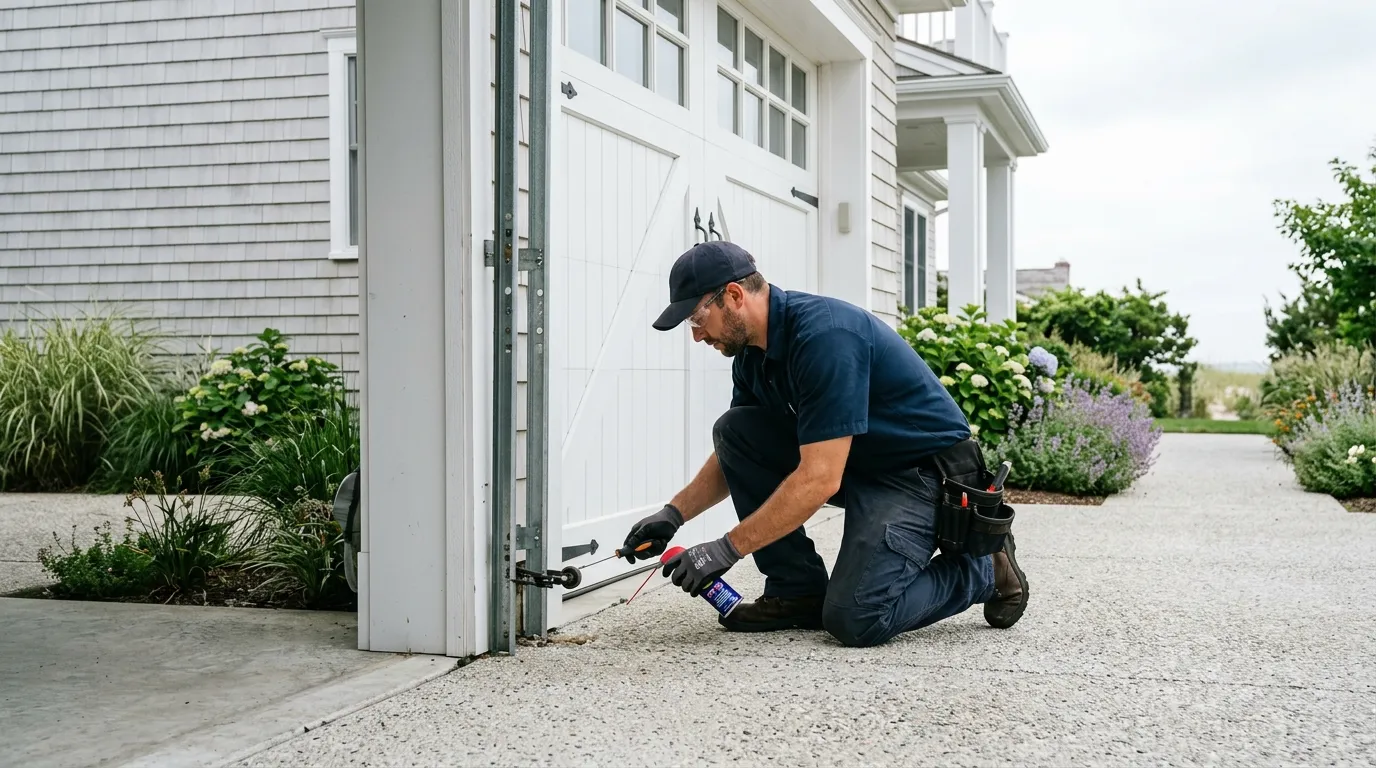
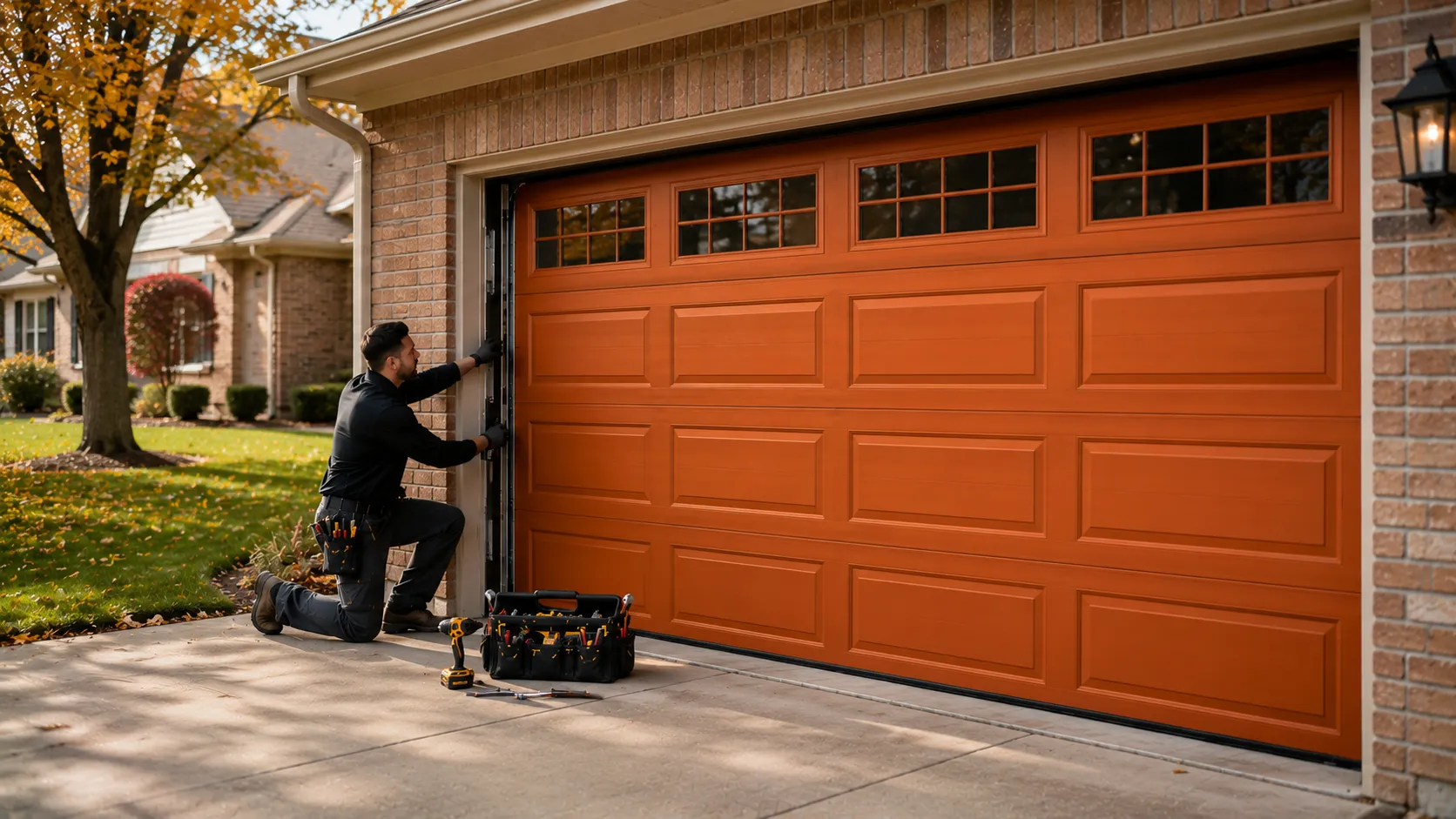
Maintenance here means lubricating rollers and hinges, tightening loose hardware at the track brackets, checking cable tension and drum wear, and testing balance by disconnecting the opener and moving the door by hand. On a house from the late 1950s, we pay particular attention to the track alignment against the original framing - decades of settling can pull a track fractionally out of true, and that shows up as noise and uneven wear long before it shows up as a stuck door. We also check weatherstripping and bottom seal condition, which matters more here given the cold climate this whole region sits in. A seal that's cracked or compressed lets in more than draft - it lets in the moisture that speeds up hardware corrosion. None of this is a rebuild. It's the difference between a door that ages another ten years and one that starts needing repair calls every winter.
Why This Fails Locally
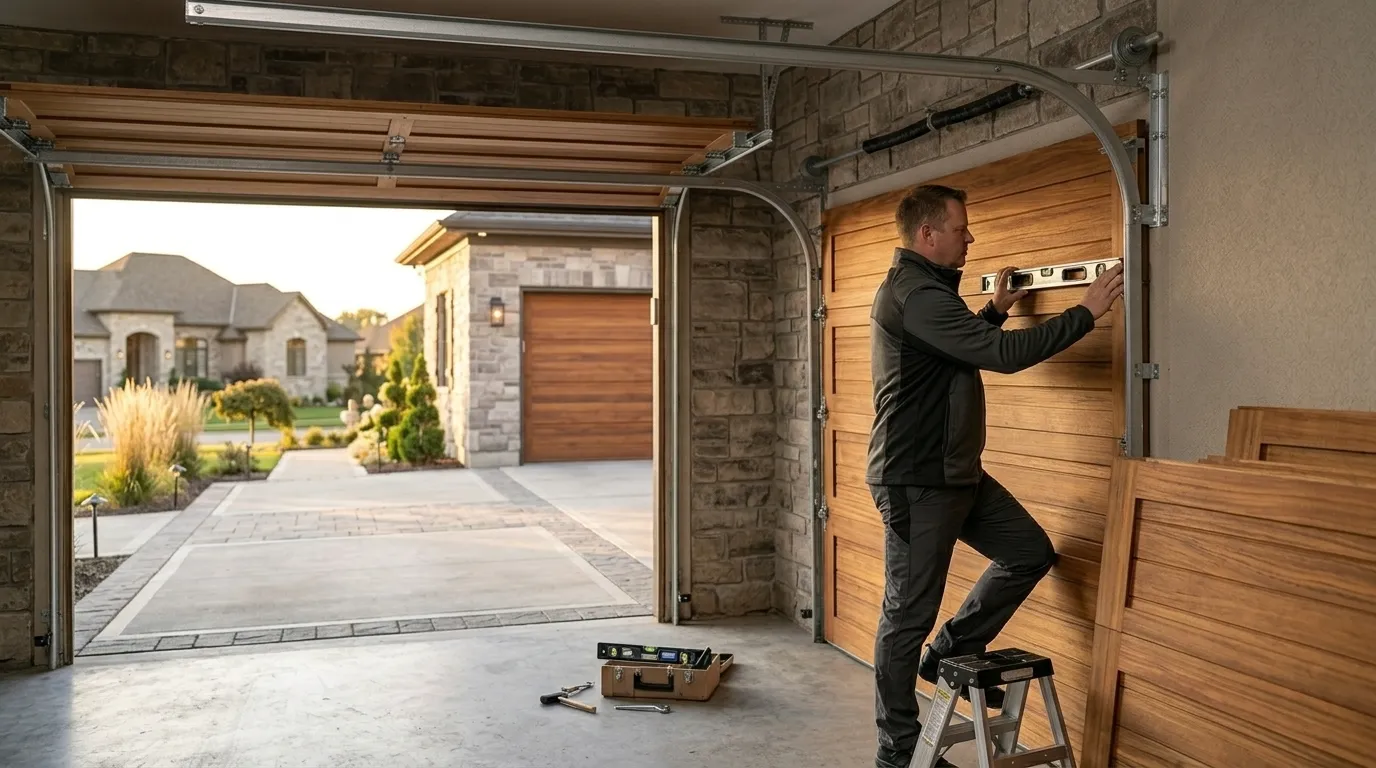
The area runs a severe cold winter climate, and that's hard on any garage door, but it's harder on doors and openers matched to older, lighter framing. Cold makes steel springs contract and lubricant stiffen, so a spring that's already borderline on tension for a heavier replacement door will show it first on a sub-zero morning. With roughly 485 households in Memphis and a median income of $60,884, a lot of homeowners here are maintaining a house that's outlasted at least one prior garage door - and the hardware underneath doesn't always get swapped out to match a heavier insulated replacement panel. That mismatch is a local pattern, not a universal one, and it's exactly why a maintenance visit tuned to this area looks at spring rating and track fit, not just lubrication.
What Can Go Wrong
The honest limitation: maintenance won't fix a door that's already out of balance or a spring that's undersized for the panel weight. If we find that during a visit, we'll tell you it's a repair, not a tune-up, rather than patching around it. We also can't promise same-day scheduling out to Memphis the way we might closer to Port Huron - we're traveling in from the city, so timing depends on the day's route. What maintenance does prevent, reliably, is the slow failure: cables that fray unnoticed until they snap, hinges that wear until a panel cracks, seals that let winter moisture into hardware that's already older than most of what we service. Catching that early is cheaper than any repair that follows it.