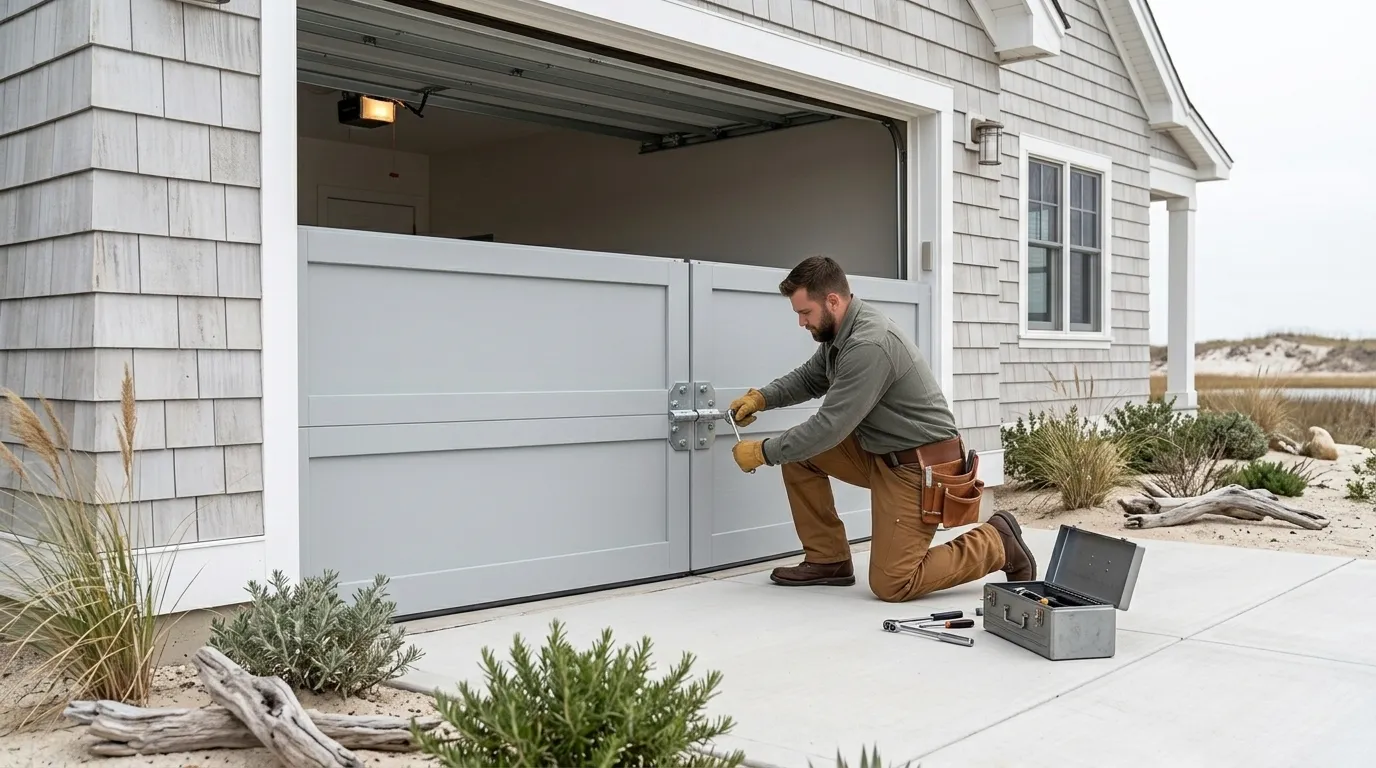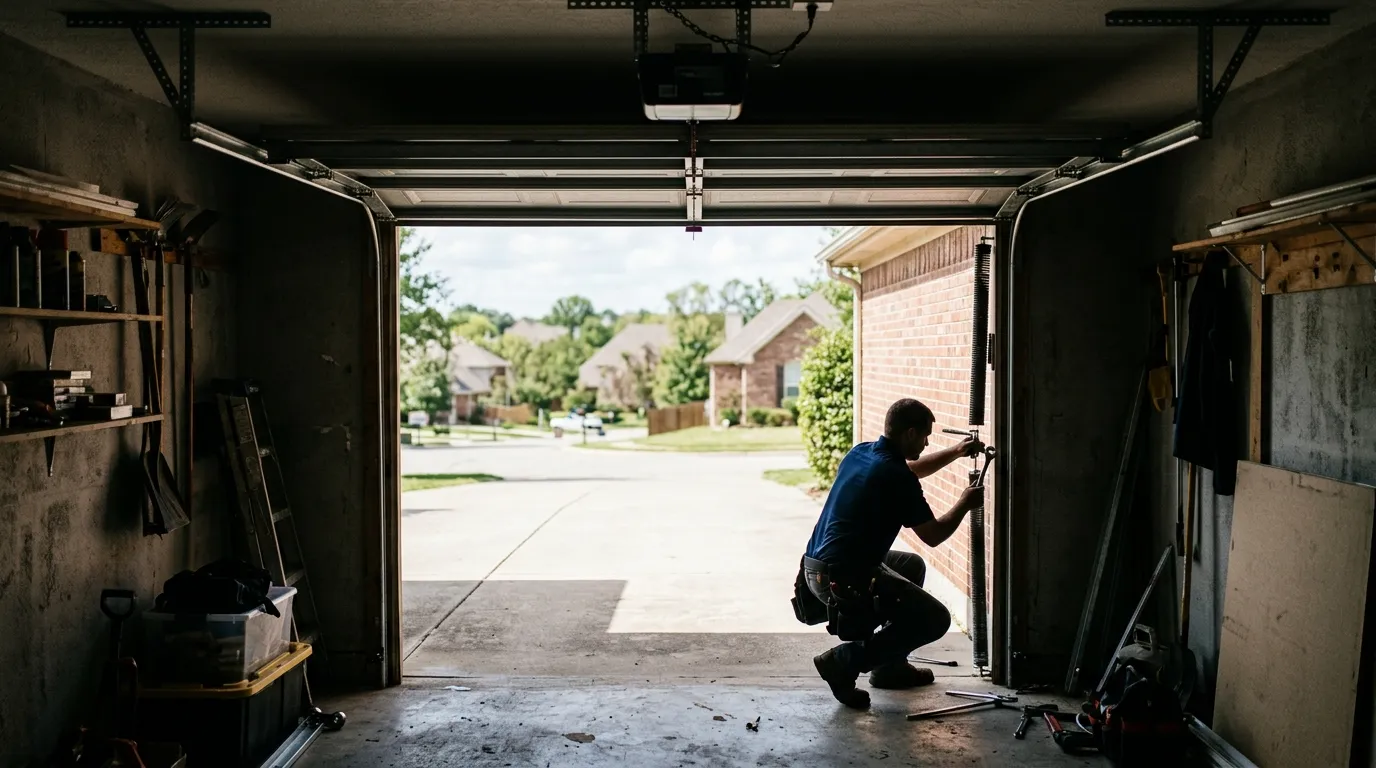
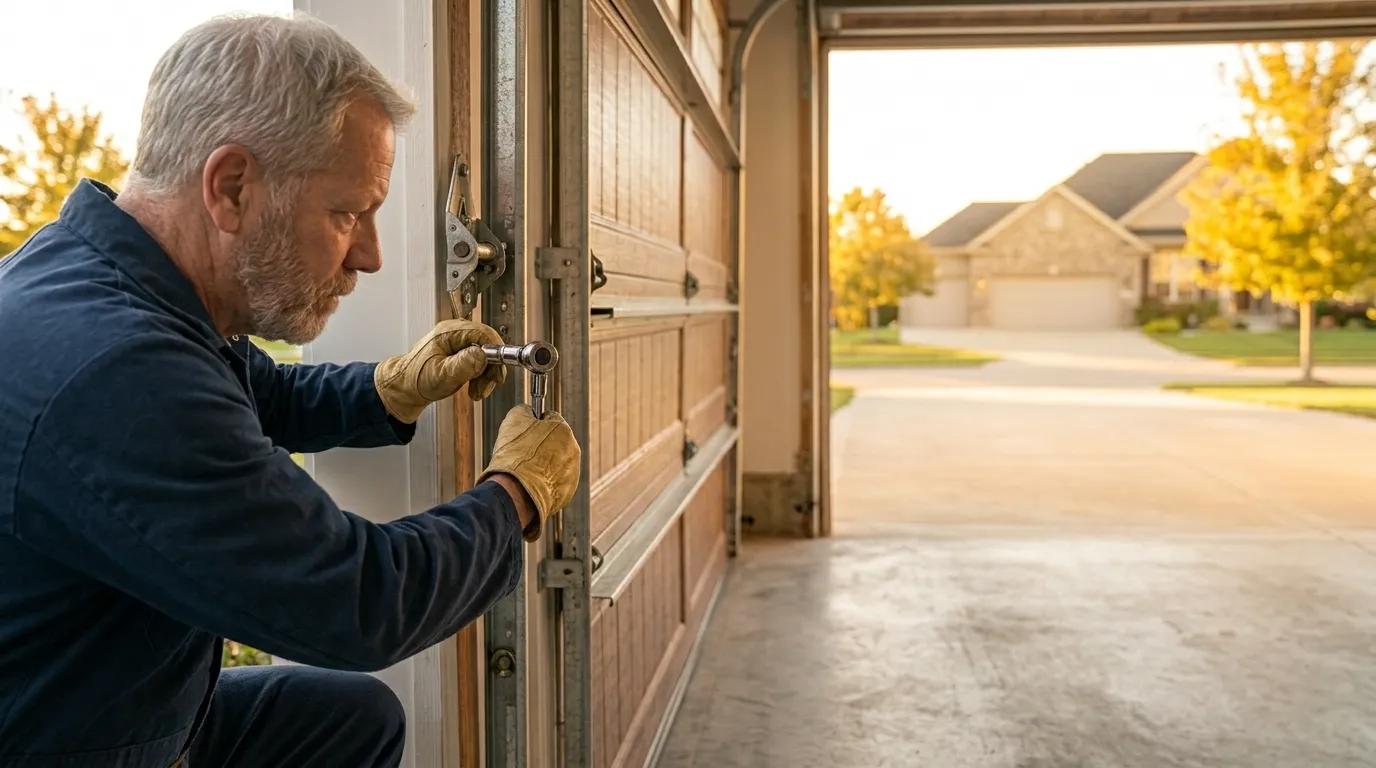
The Symptom
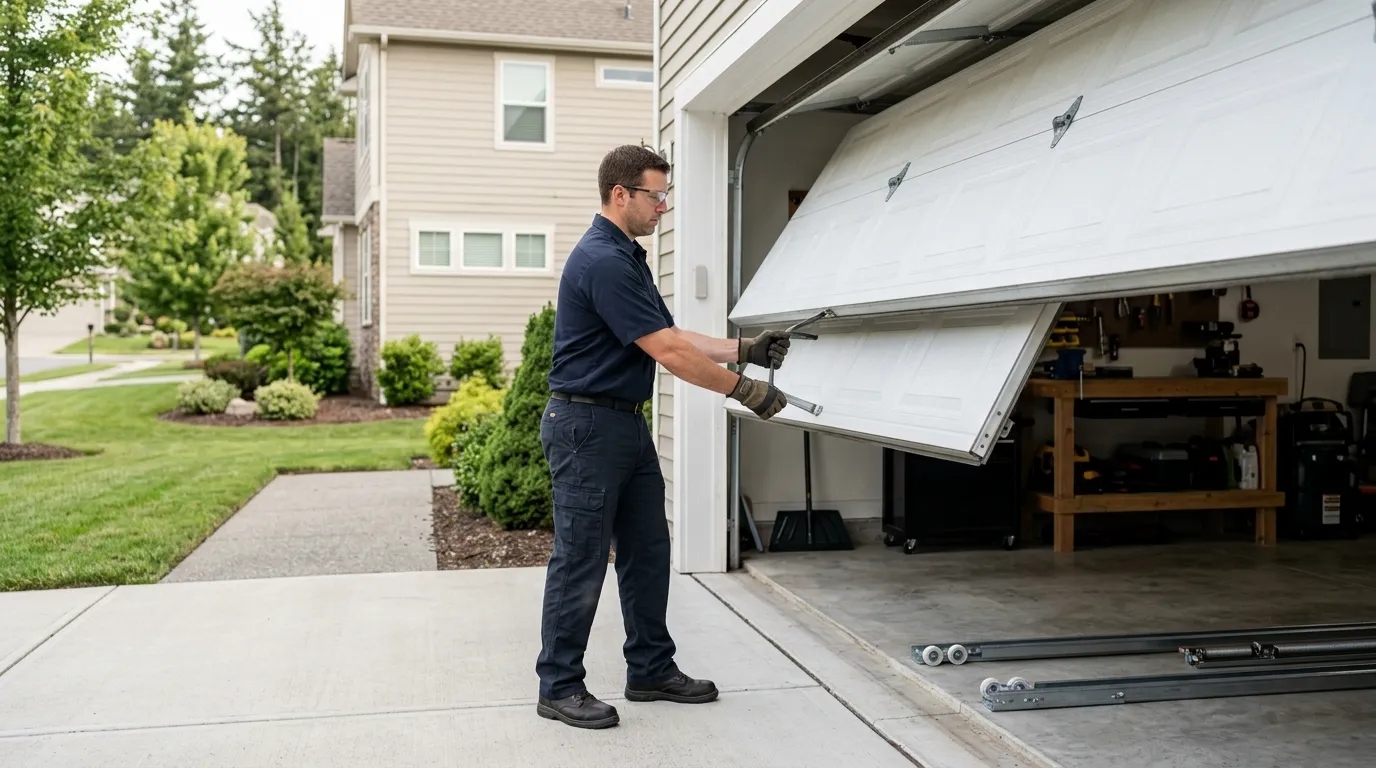
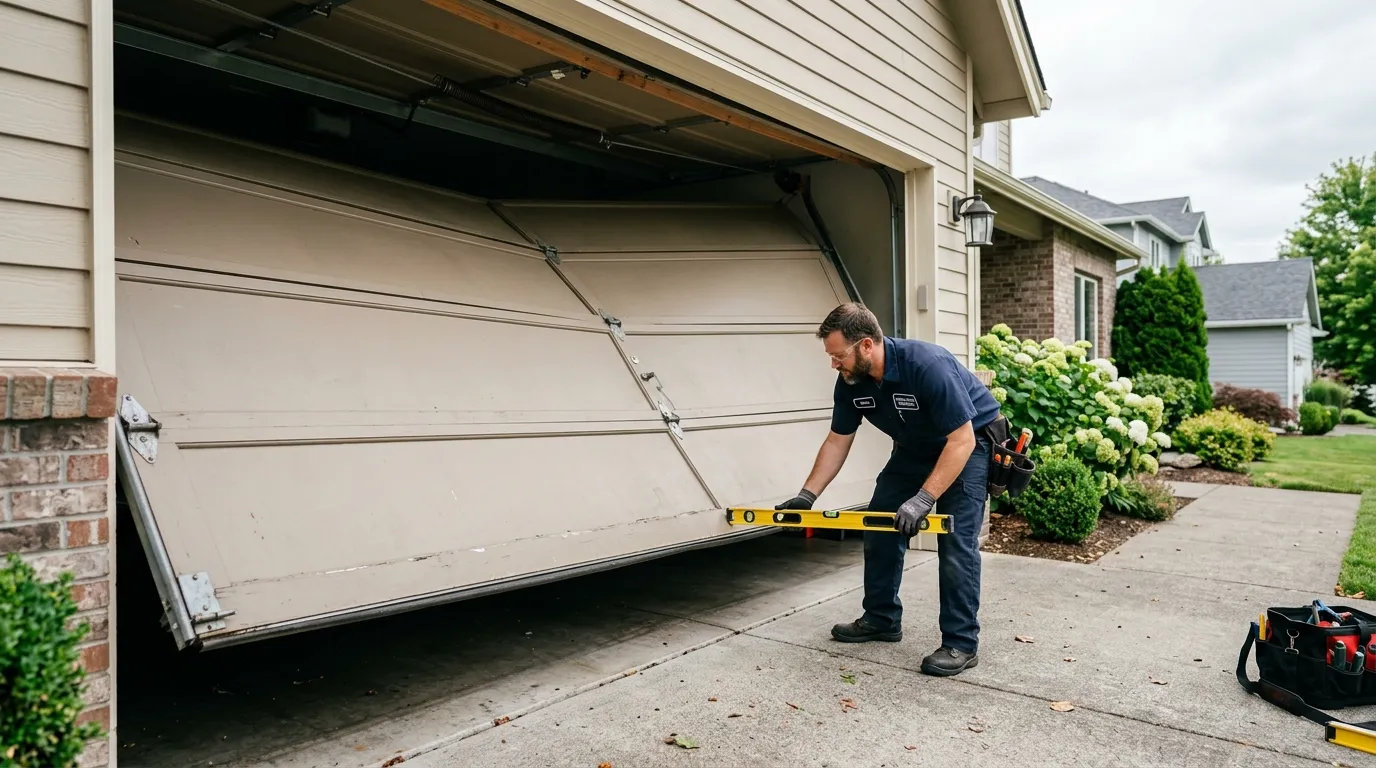
The door sits crooked in the opening, one side lower than the other, or it won't move at all and the opener just hums. Sometimes you'll see the cable itself hanging loose off the drum, frayed strands sticking out like a broken shoelace. Other times the door drops fast the last foot before it slams, because one cable let go while the other is still holding the weight on its own.
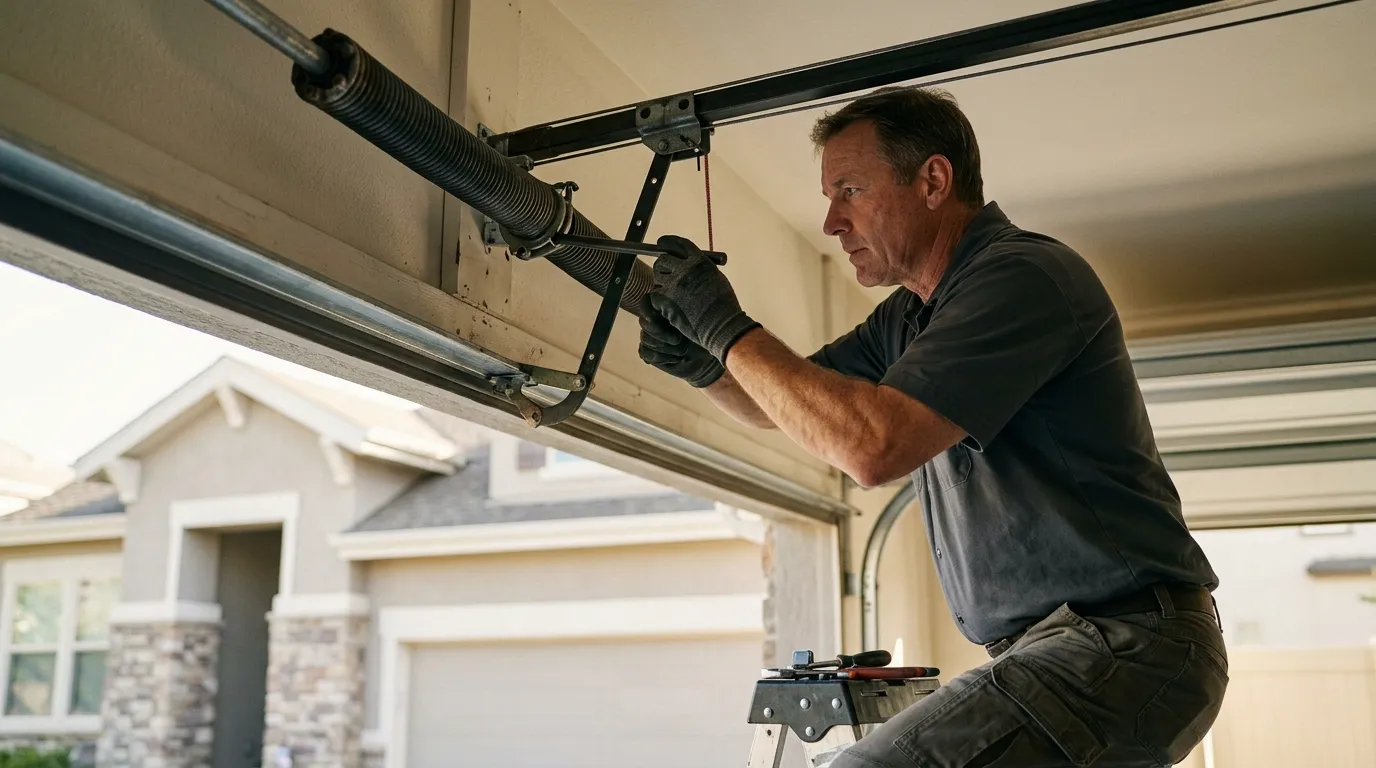
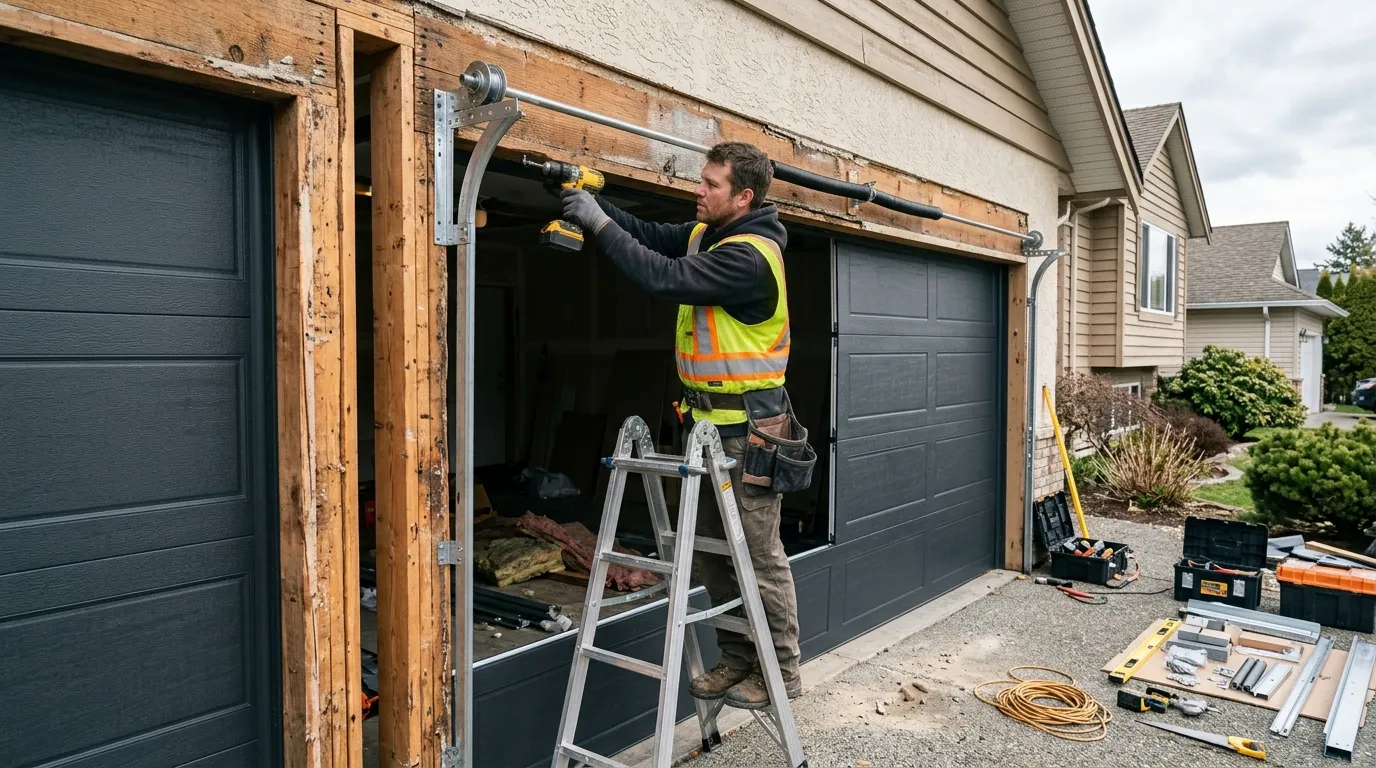
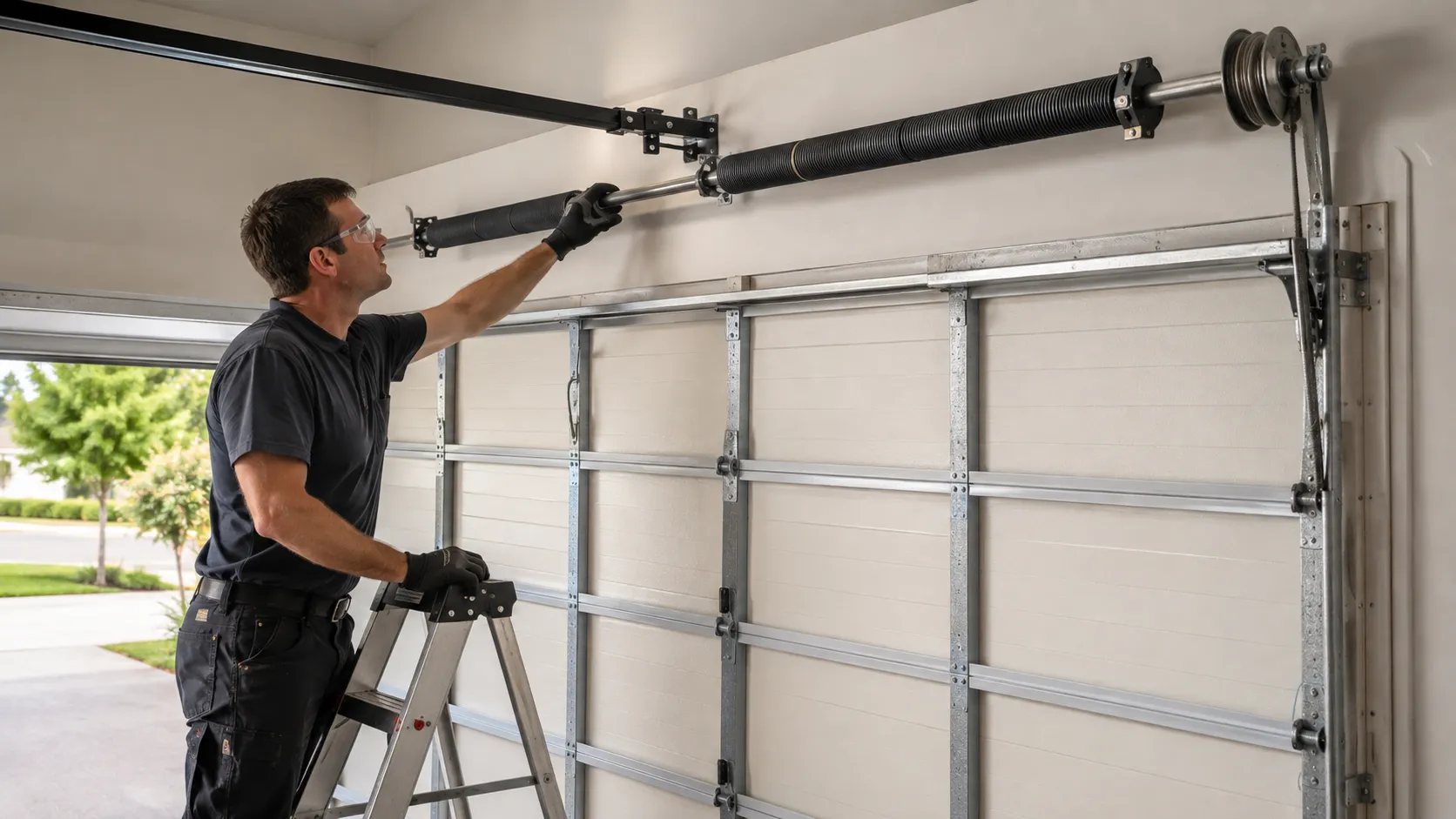
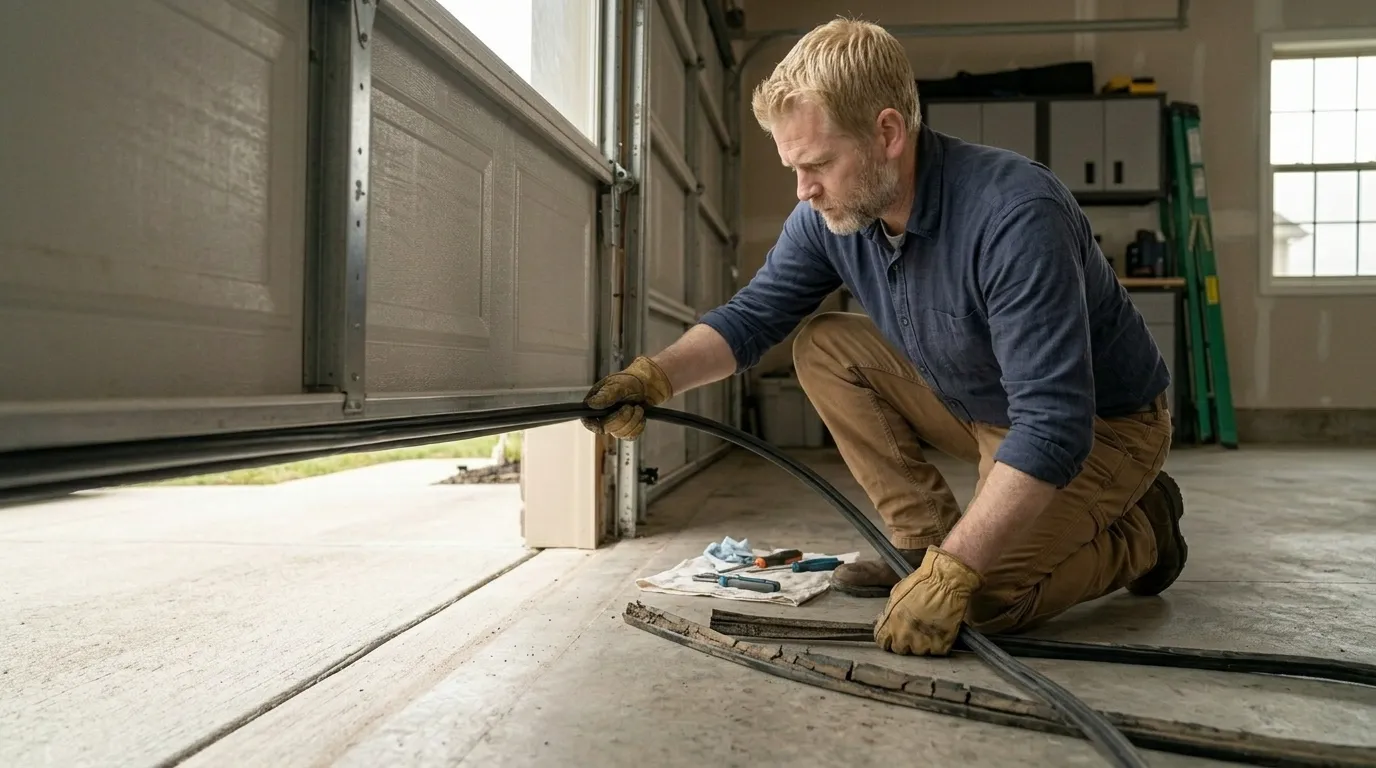
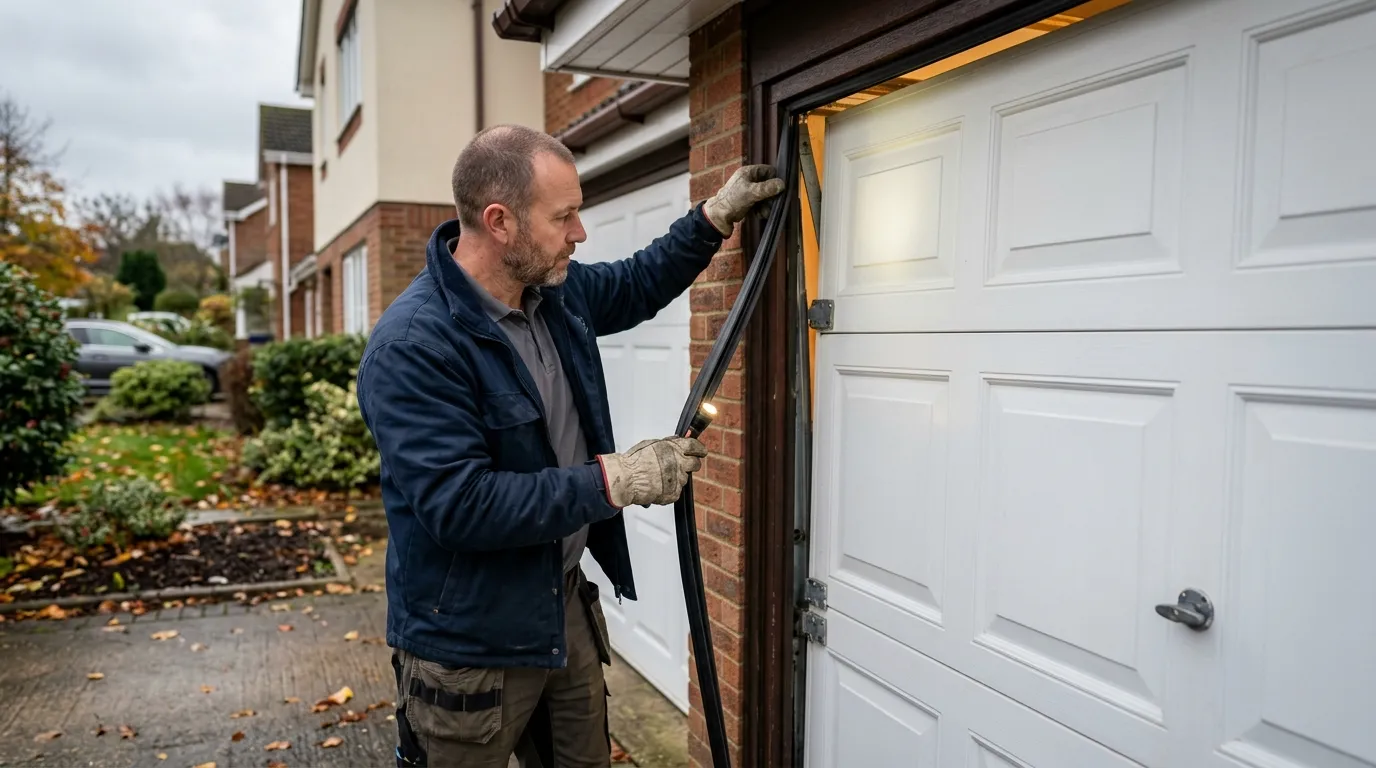
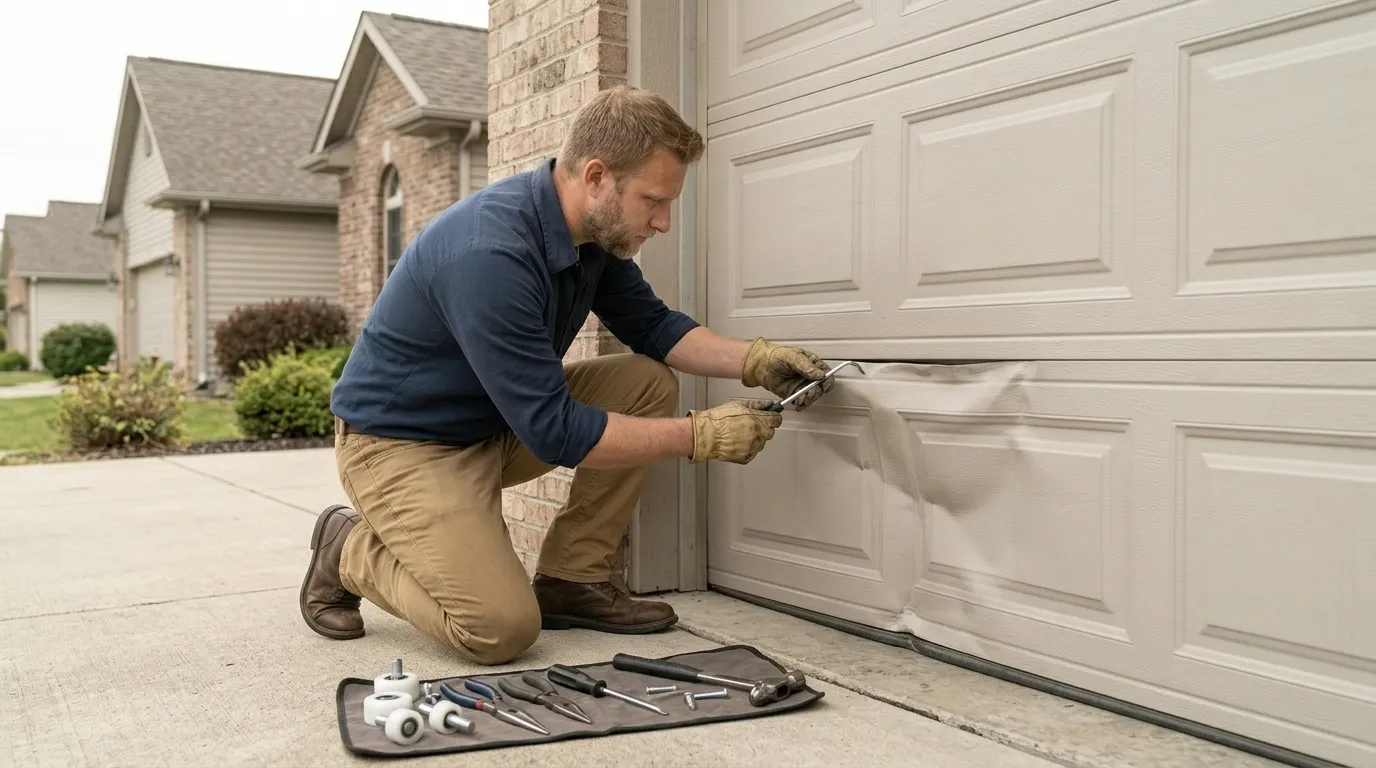
A snapped cable is not the same job as a broken spring, even though they get confused a lot. The spring stores the lifting force. The cable is what actually pulls the door up and down along the track, wound around a drum at the top of each track. When a cable frays through, the door loses its balance point on that side instantly, and a heavy door - especially a double-wide - can come down hard enough to bend a track or crack a panel on the way.
If you hear a snap and then the door won't budge, stop trying to force it with the opener. Running the motor against a broken cable strains the opener and can bend the track further. Pull the release and check by hand, or call before you touch it again.
What You Pay
We don't quote a flat number for cable repair on this page, because the honest answer depends on the door in front of us: single or double, torsion or extension hardware, one cable or both, and whether the drum or track took damage on the way down. A one-cable repair on a single door is a different job than replacing both cables on a heavy double door where the track got bent when it dropped.
What we can tell you is what drives the cost either way - the cable itself is a cheap part, so most of what you're paying for is the labor to safely unload the spring tension, pull the old cable off the drum, and reset the door's balance so it doesn't drift open or slam shut afterward. That balancing step matters as much as the cable swap itself; skip it and you'll be back to a lopsided door in a few months.
We'll give you a real number after we look at the door, not before.
Stocked Parts
We carry the common cable sizes and drum combinations that fit the torsion and extension setups still running on doors from this area's 1960s-70s housing wave, along with the aircraft-cable gauges used on most residential doors built since. That covers the bulk of calls we get for this exact problem.
What we don't keep on the truck is anything proprietary to a specific original manufacturer from that era - some of those old track and drum assemblies used non-standard cable lengths or fittings that nobody makes anymore. If your door has one of those, we may need to source a compatible replacement or talk through swapping that side's hardware to a current standard so it's serviceable going forward. We'll tell you straight if that's the case rather than jury-rig something that won't hold.