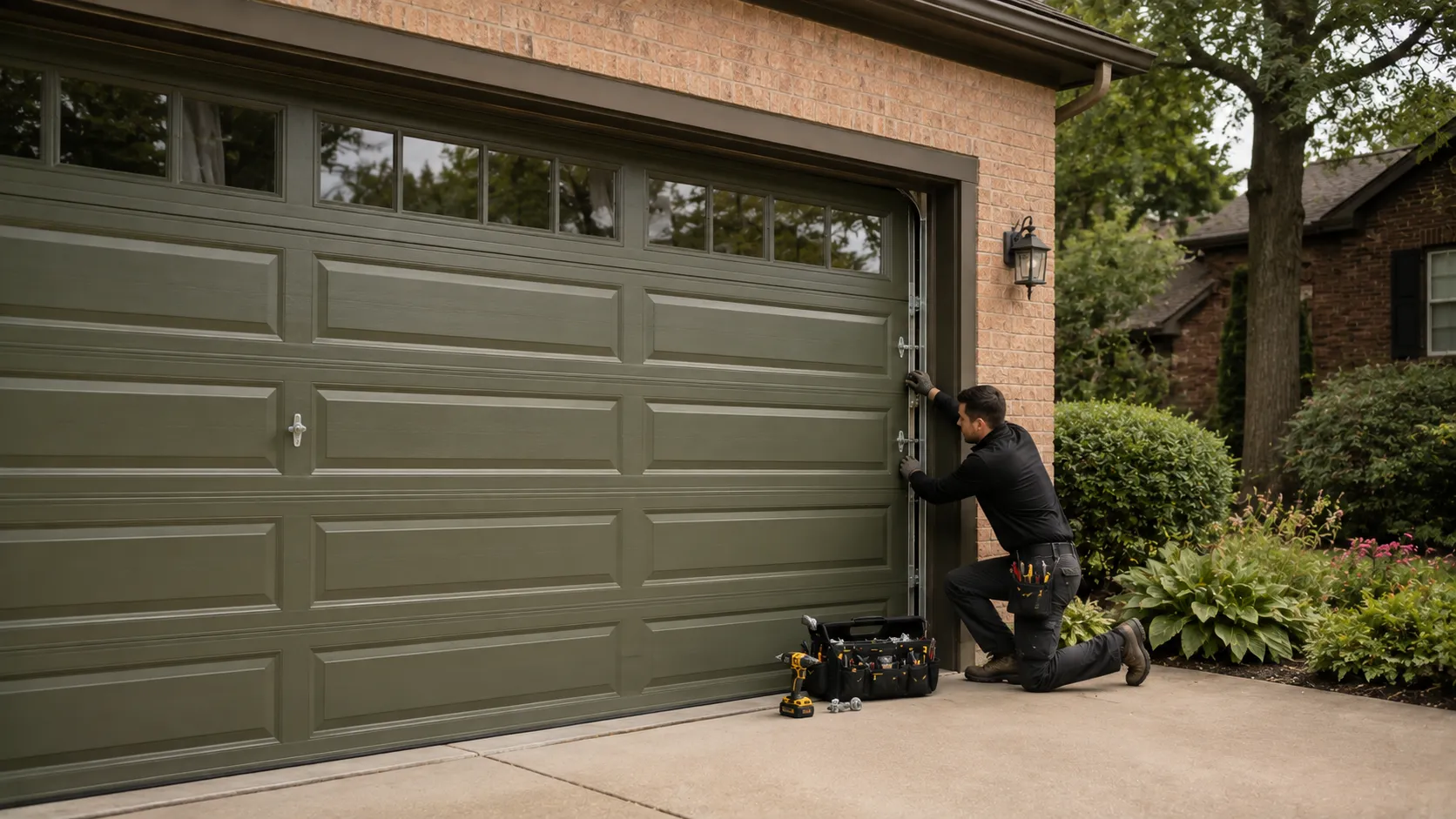
Why This Fails Locally
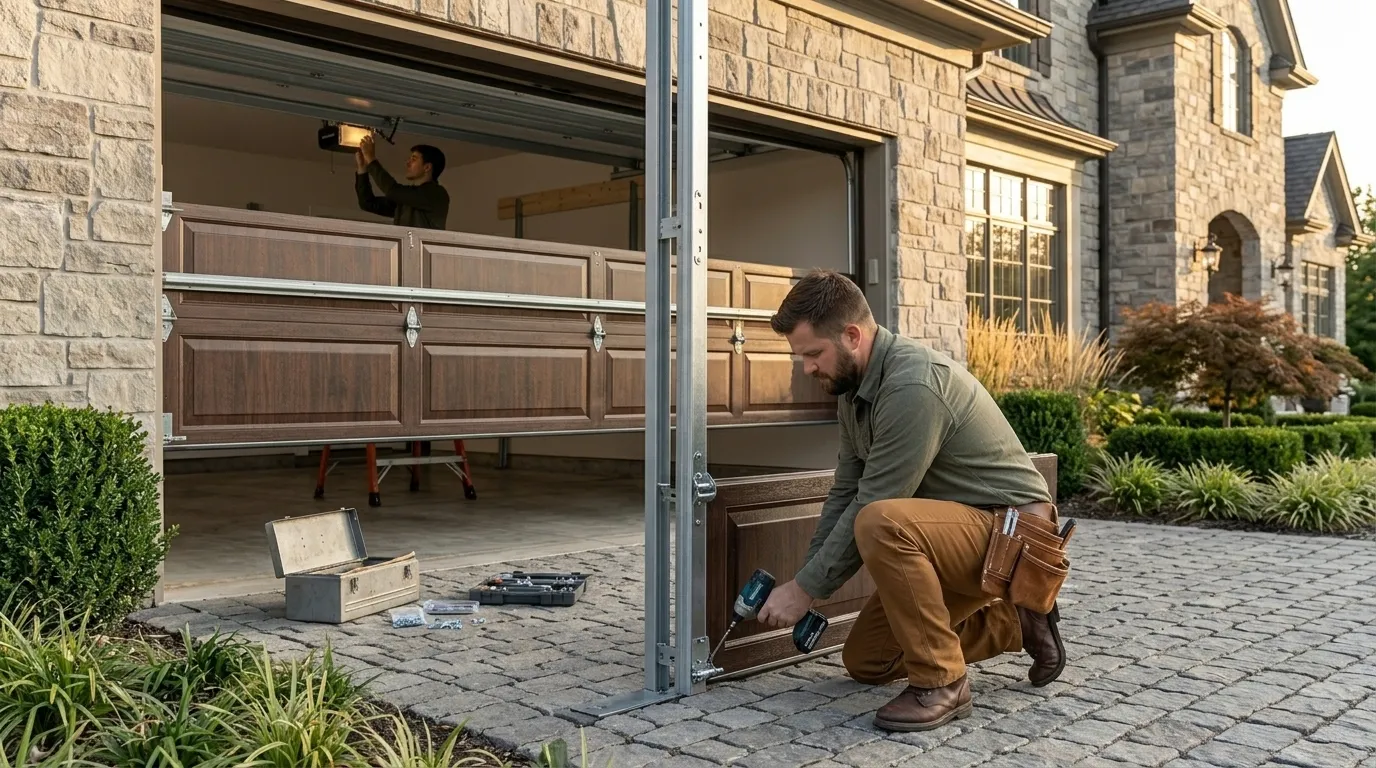
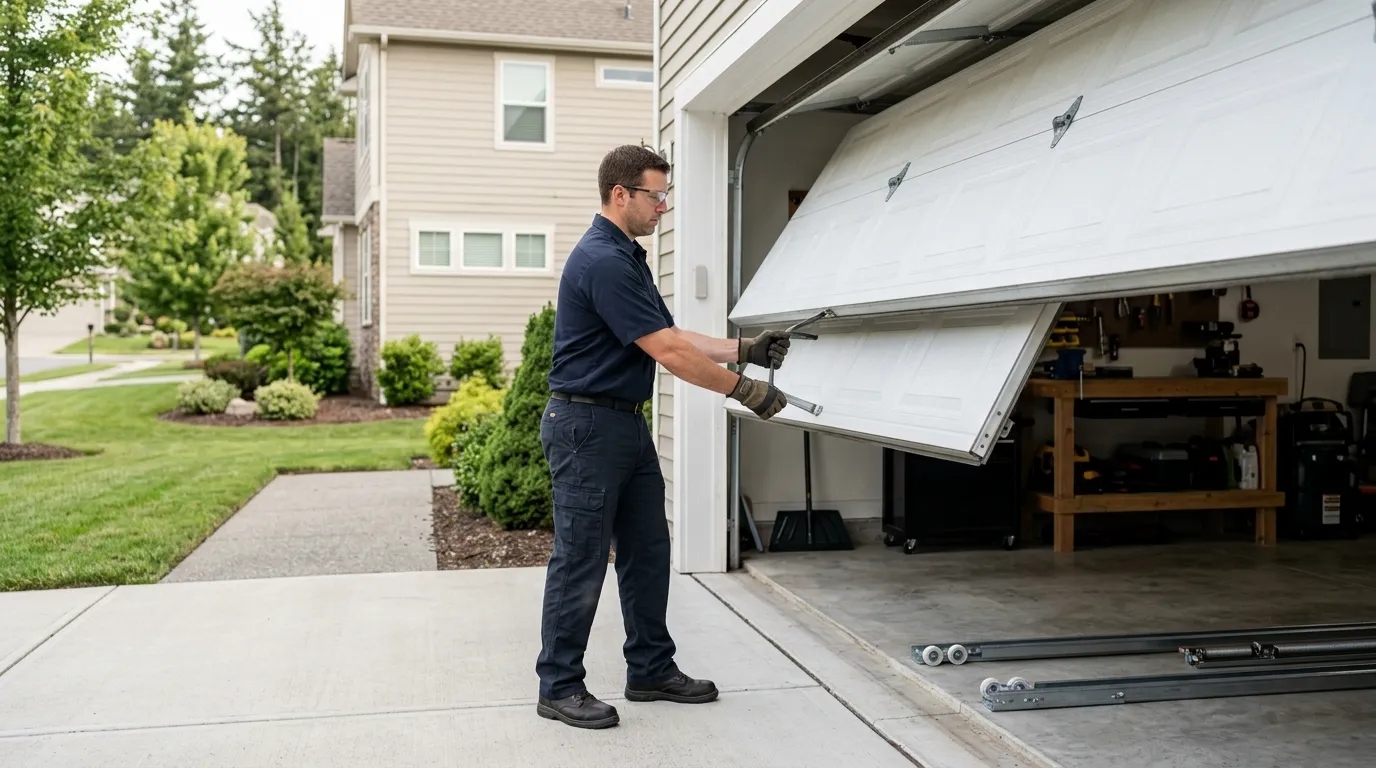
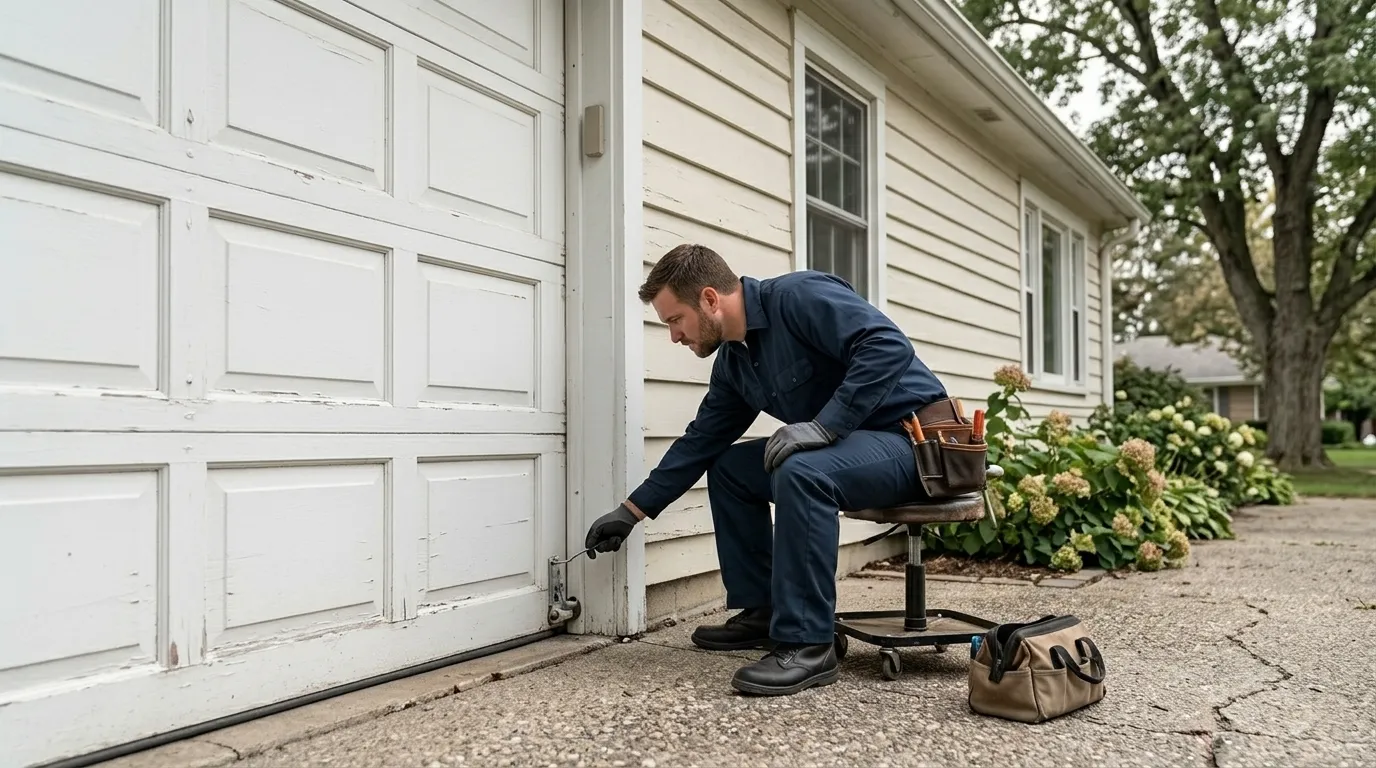
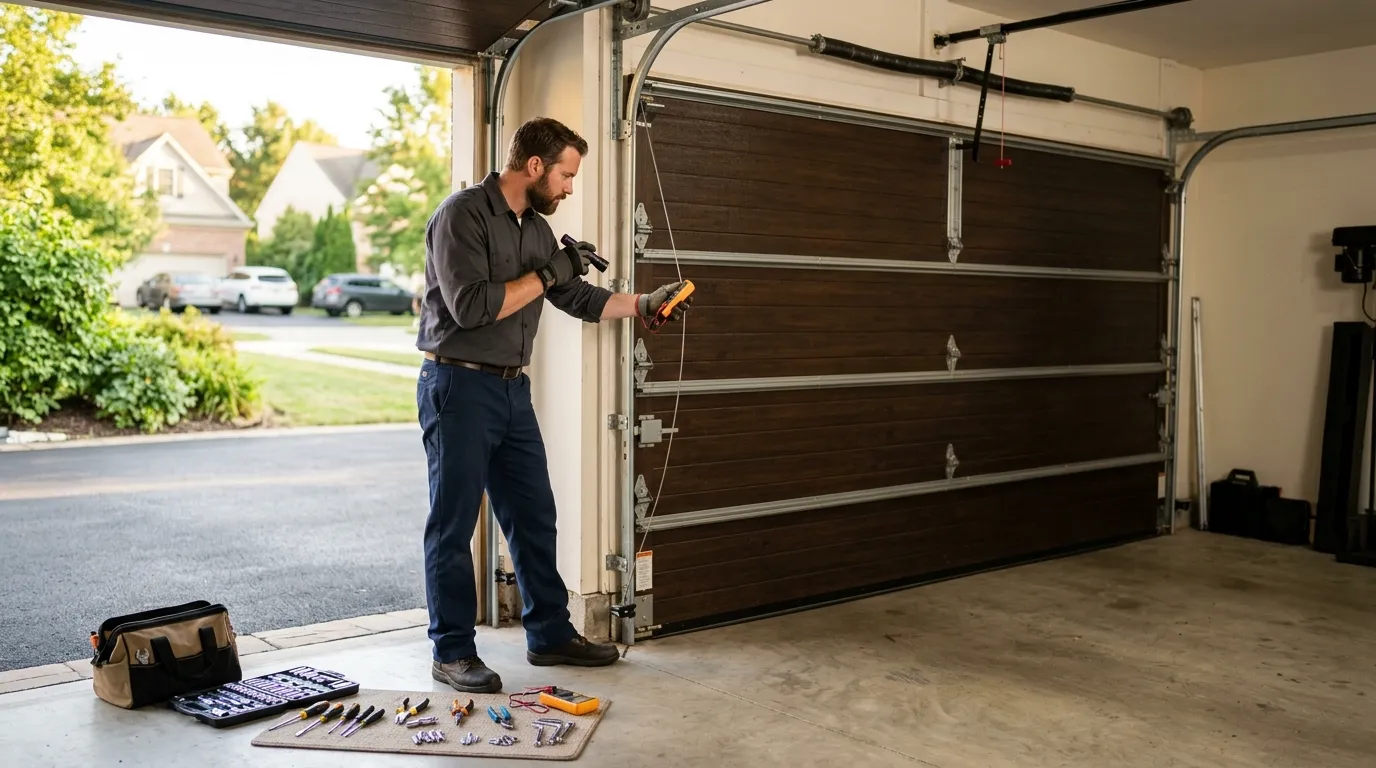
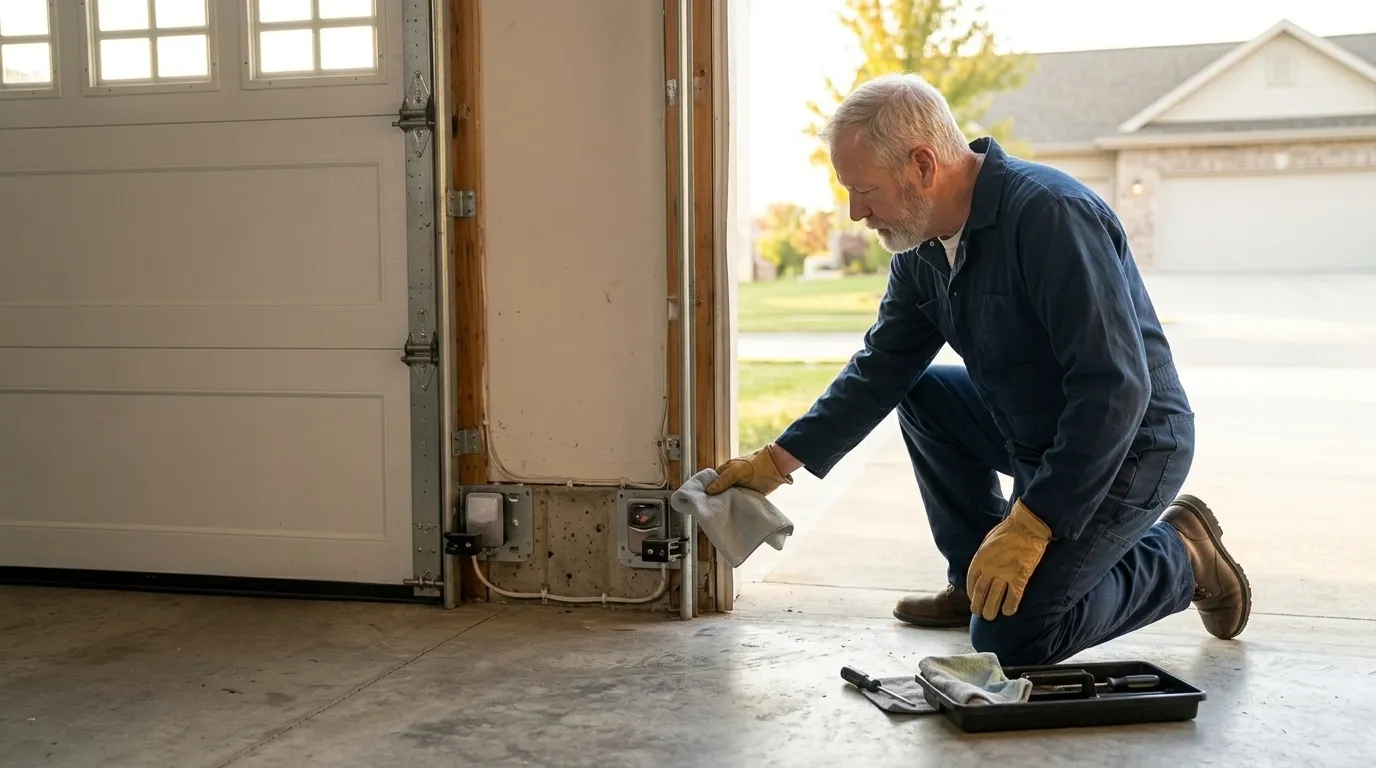
Most of the doors we see going off track in St. Clair were hung when the house was built, and St. Clair skews newer than the rest of the service area - median build year sits around 1989, a decade past the 1978 median across the wider ten-town territory we cover from Port Huron. That matters because a door installed in the late 80s came with steel tracks bolted to jamb brackets that were adequate for their time but were never meant to carry forty years of seasonal expansion and contraction without a check. Nobody has touched that hardware since the roofers left. The bracket screws work loose a sixteenth of an inch at a time, the track walks a few degrees out of plumb, and the rollers start riding the edge of the rail instead of the channel. It's slow enough that you don't notice until the day the door binds hard on the way down or jumps the track on the way up. Newer track hardware than what we see in the pre-1960s stock elsewhere in the area still fails the same way eventually - it just takes longer to get there, and by the time it does, the original brackets are usually the weak point, not the track itself.
What You Pay
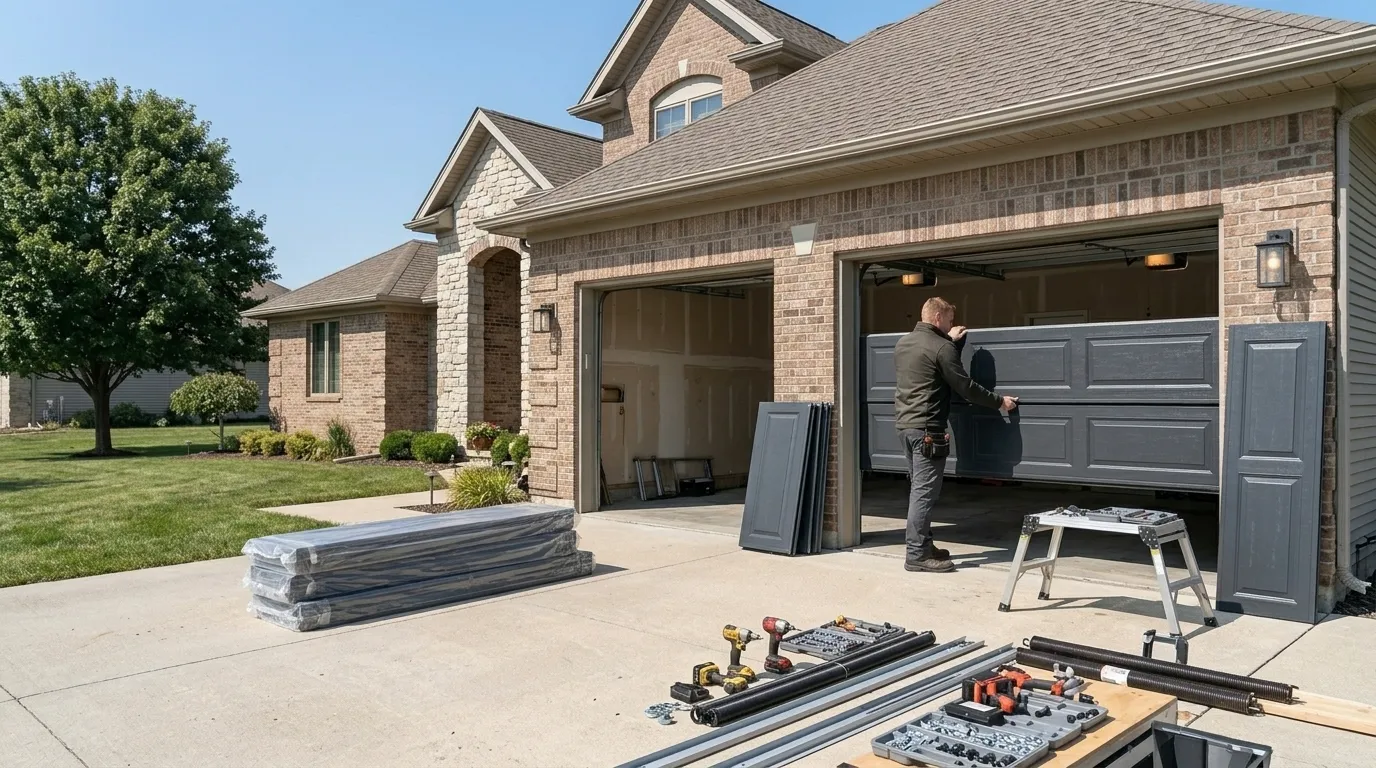
We don't quote a number here without seeing the door - a simple re-track and roller check costs a lot less than a bent-track replacement with new brackets - but the household economics of St. Clair do shape the conversation. Median household income here runs around $90,774, well above the roughly $68,482 median across the broader service area, and that gap shows up in the calls we get: more homeowners here choose to replace worn track hardware outright rather than patch a bracket that's likely to work loose again in a year or two. Neither choice is wrong. A patch job is honest work if the rest of the door is sound. Replacement makes more sense if the opener, springs, and panels are all the same age and all showing wear at once.
The Symptom
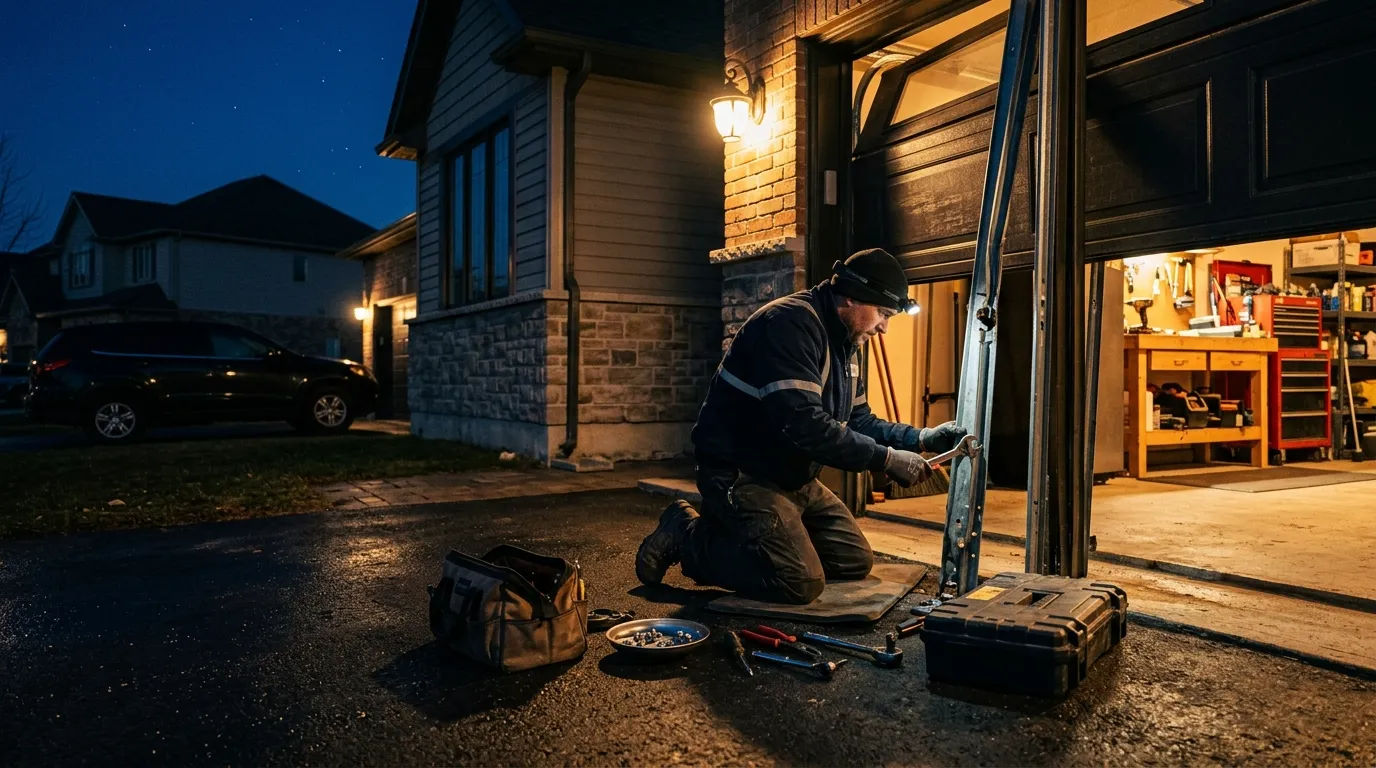
The tell in St. Clair is usually a door that runs fine most of the way and then catches or grinds near the top or bottom of travel, sometimes with a metallic scrape that wasn't there last month. That's a roller riding the lip of a track that's shifted out of parallel - not a spring problem, not an opener problem. Winters here fall into the same severe-cold climate band as the rest of the region, and cold is what usually finishes off a track that's already been slightly out of alignment for years: the metal contracts, the tolerance the roller had gets tighter, and the door that limped along in October jumps the rail in January. If you hear the scrape, stop running the opener. Running a door on a bad track can bend the track further or pull the section seam, and that turns a bracket job into a panel replacement.