Why This Fails Locally
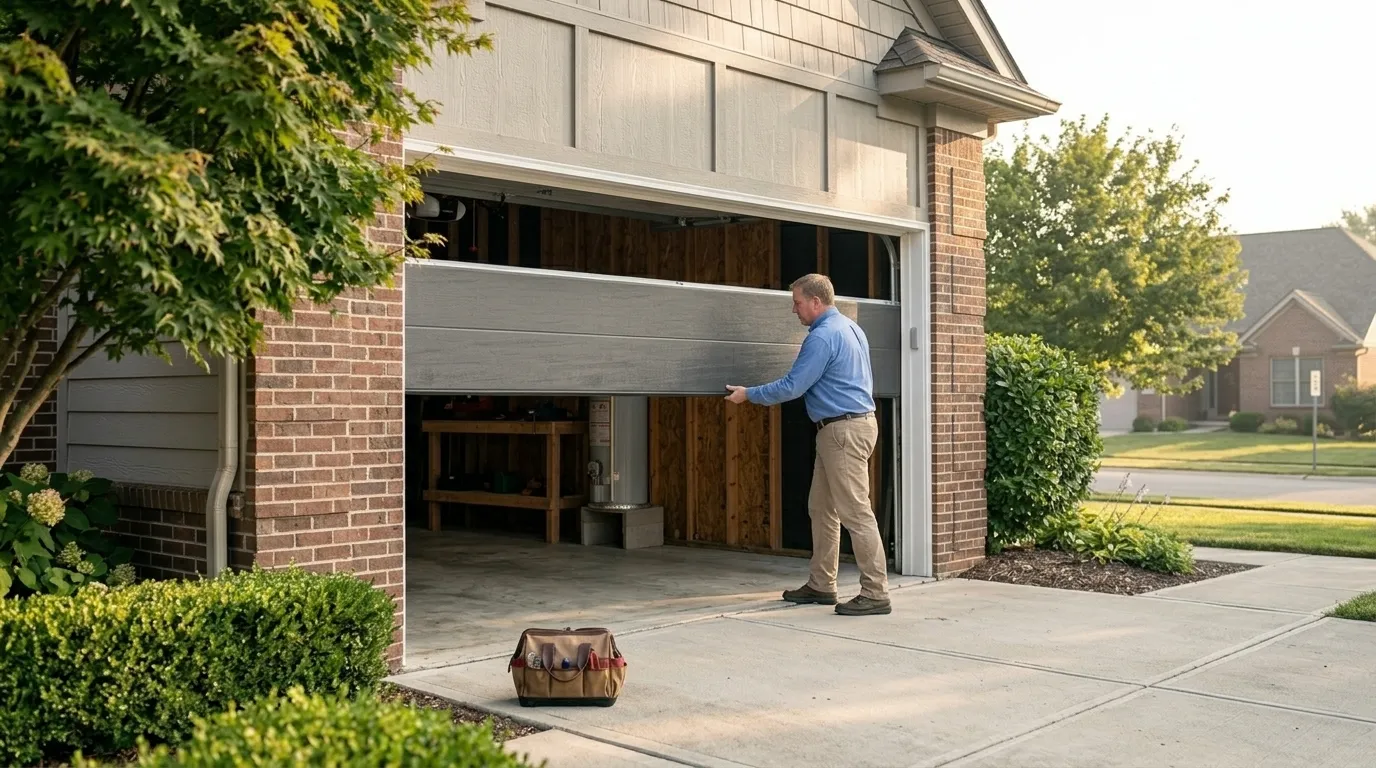
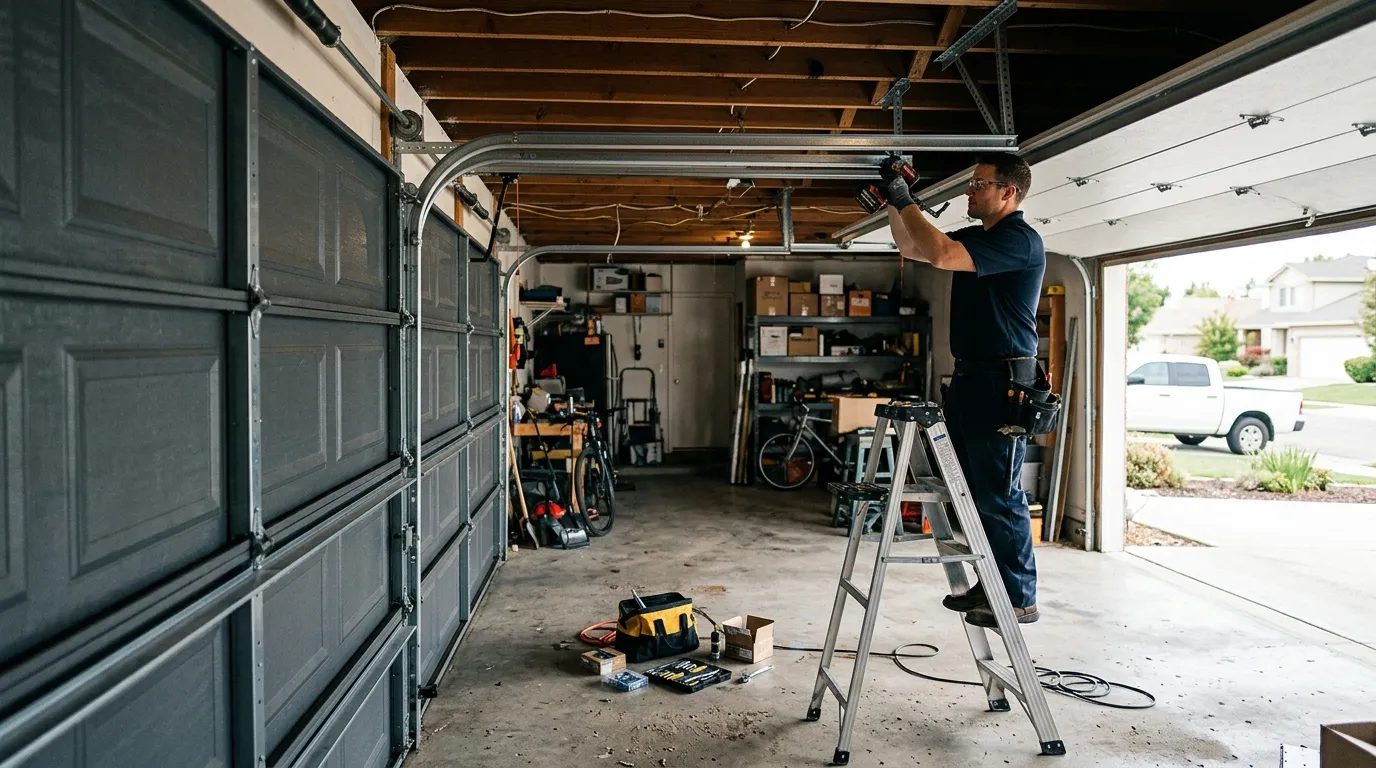
St. Clair's housing median lands around 1989, noticeably newer than the 1978 median across the rest of the service area. That gap matters more than it sounds. By 1989, steel sectional doors on torsion spring systems had already replaced the older one-piece doors and extension-spring rigs still common on the pre-1978 side of the territory. So the failures we see out here aren't the same ones we see in older pockets.
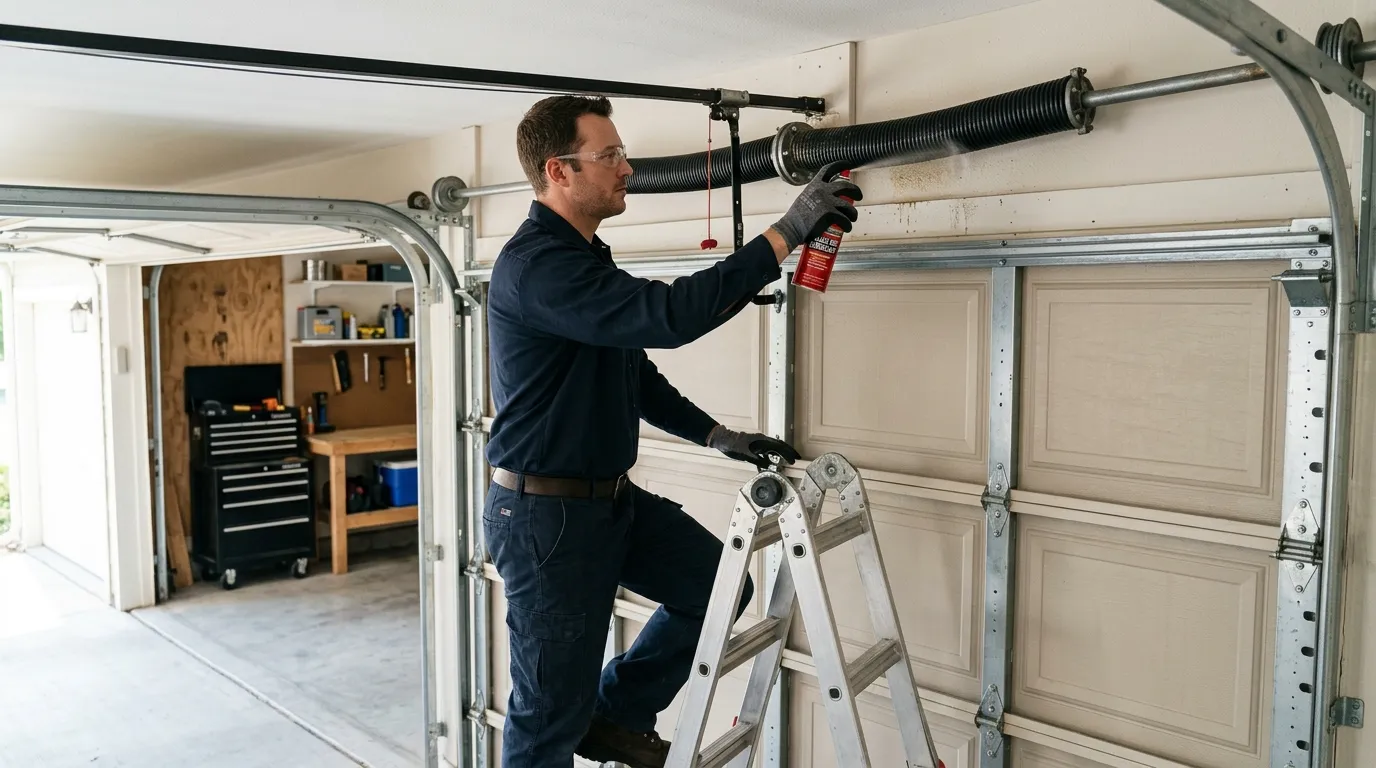
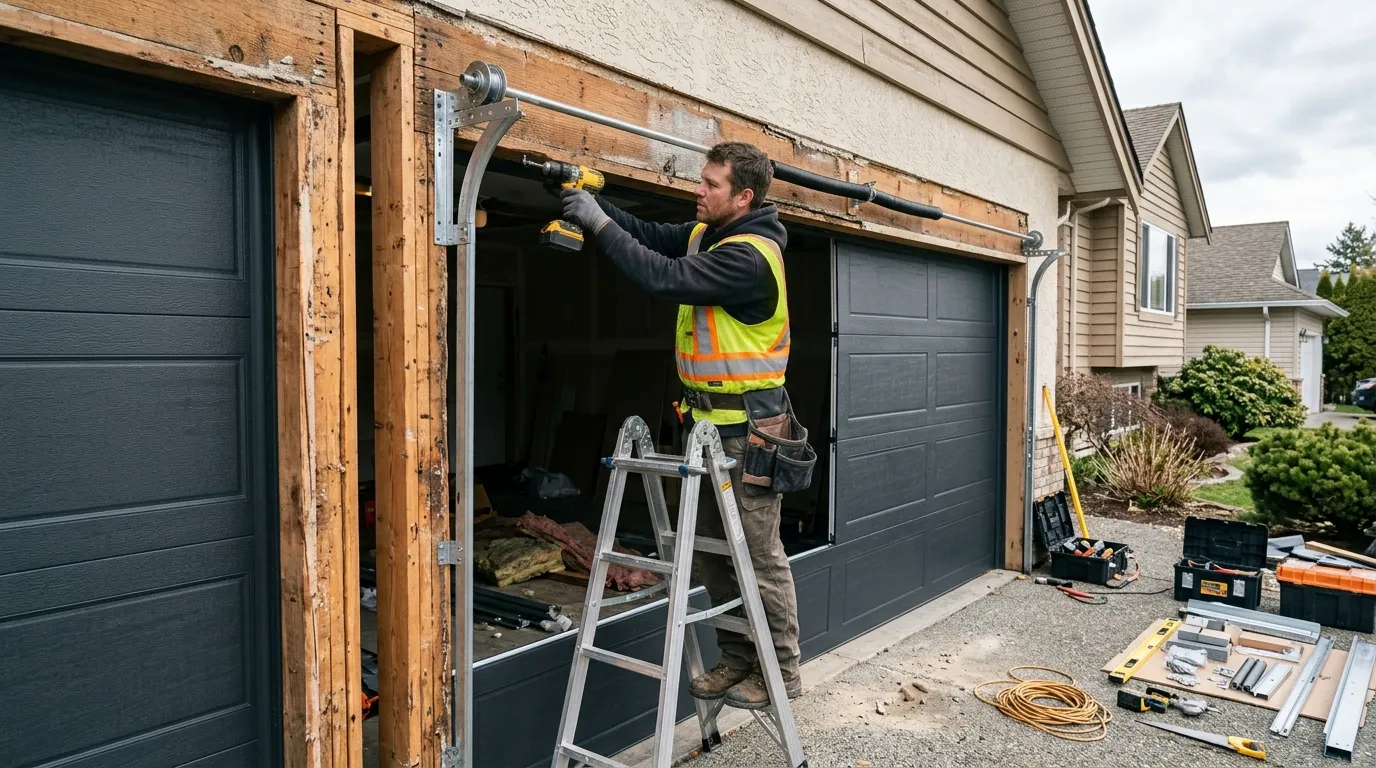
What that means in practice: a torsion spring installed new in 1989 is well past any reasonable service life, and the opener bolted to the ceiling next to it is likely on its second or third logic board by now, if it's even been touched. Steel panels from that build era also tend to be lighter gauge than what's sold today, so rollers wear through the track edges faster once the spring is out of balance and the door starts riding rough.
St. Clair's median household income, at $90,774, runs well above the wider area's $68,482. That doesn't change the hardware, but it does change what people ask for when it breaks - full opener swaps show up more often here than patch jobs. Cold-climate stress on steel and seals still applies the same as anywhere in the region, but the failure point is the spring and the board, not the panel.
What You Pay
We don't post a flat number for St. Clair because the job itself - one broken spring versus a full opener swap versus a cable and drum replacement - drives the cost more than the town does. What we can tell you is what tends to move the price in this area specifically.
Because St. Clair's opener and spring hardware is mostly original to houses built around 1989, most of what we're pricing is a straight replacement of worn-out parts rather than a repair of something newer that's under warranty or still in spec. That usually means the job is a known quantity once we see the door - no surprises from mismatched retrofit hardware, since the stock is fairly uniform for the era.
St. Clair's median income sitting above the regional average also shows up in what gets chosen, not what gets charged: more owners here opt for a new belt-drive opener over a patched chain-drive unit when both are on the table, simply because they can. That's a homeowner decision, not a markup - the part itself costs the same whoever's driveway it's in.
The Symptom
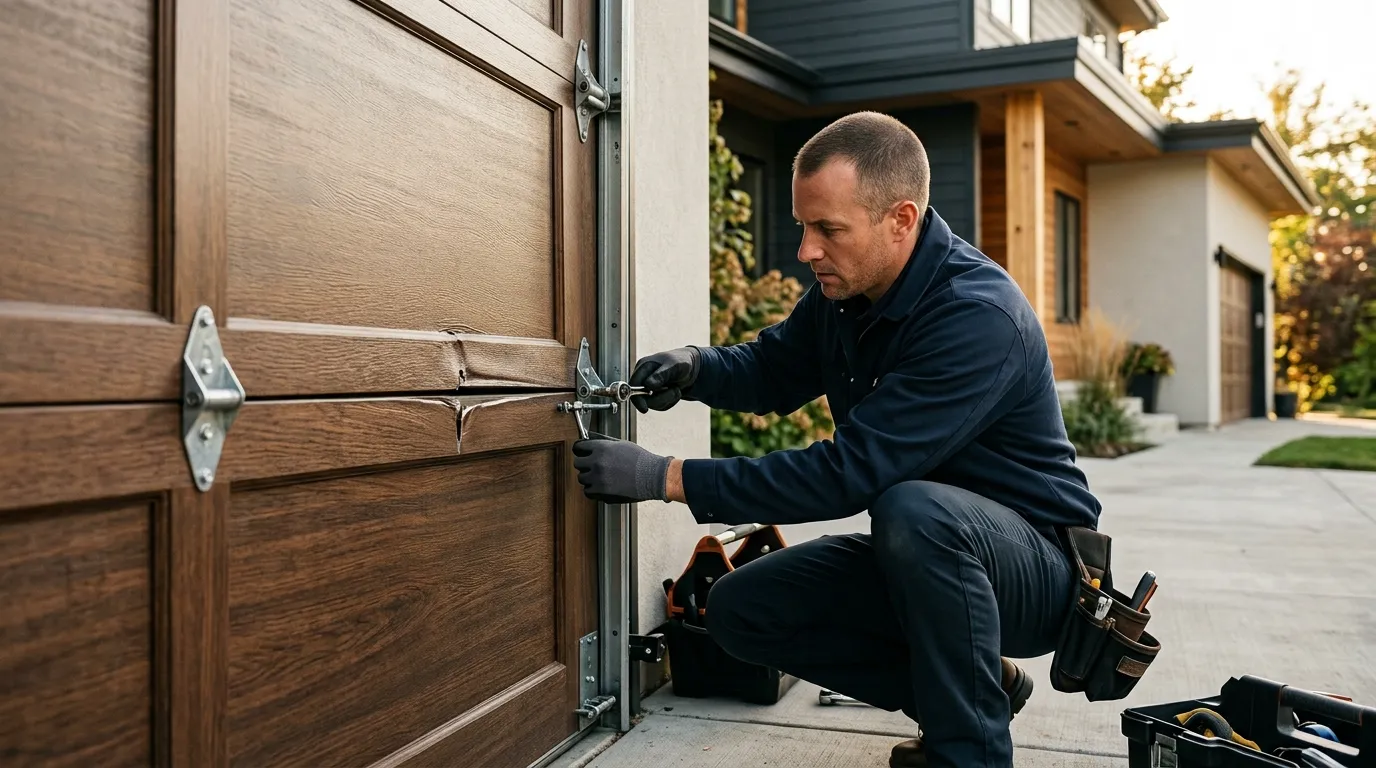
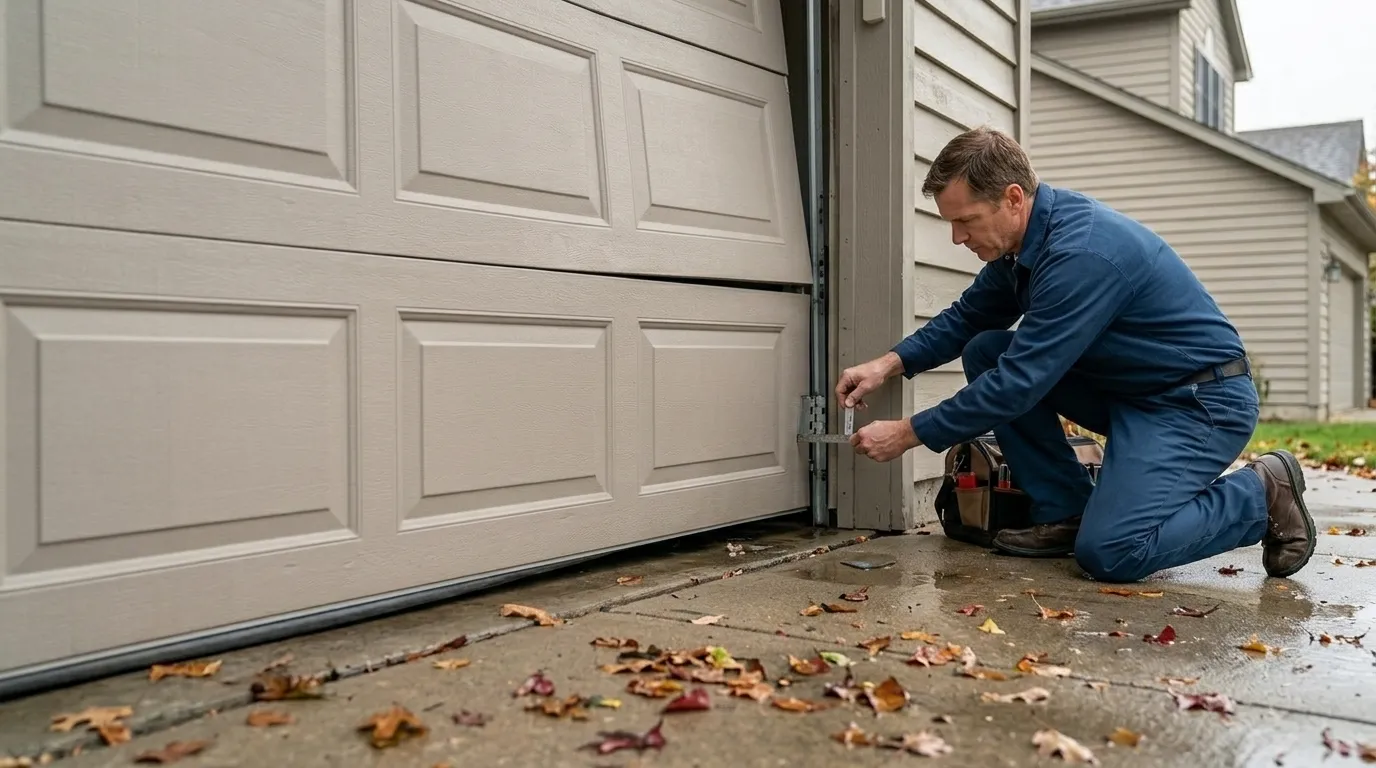
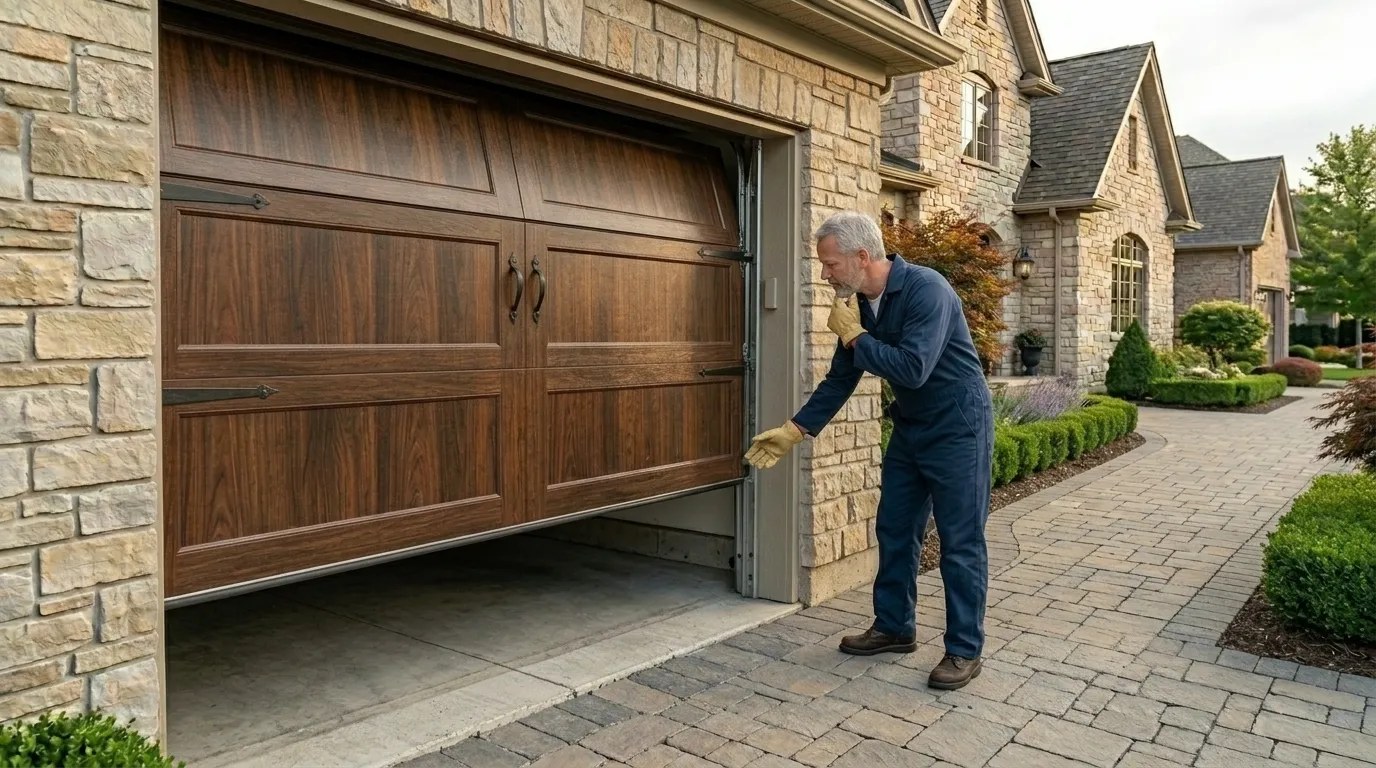
If your door in St. Clair has started sagging on one side when it opens, or the opener strains and reverses before it reaches the top, that's the classic sign of a torsion spring giving out on a door that's been running on the same spring since the house was built around 1989. The spring doesn't usually snap without warning - it loses tension gradually, and the opener tries to compensate until it can't.
A loud bang followed by the door refusing to move at all almost always means the spring did finally go, and at that age, that's expected, not unlucky. Don't try to lift the door yourself once that happens; a torsion spring under tension is the single most dangerous part of the system.
If instead the door moves but the opener clicks, hums, or resets itself mid-cycle, that's more likely the logic board on an opener that's now over three decades old - parts for boards that age are often discontinued, which again is usually where a full opener swap makes more sense than a repair.