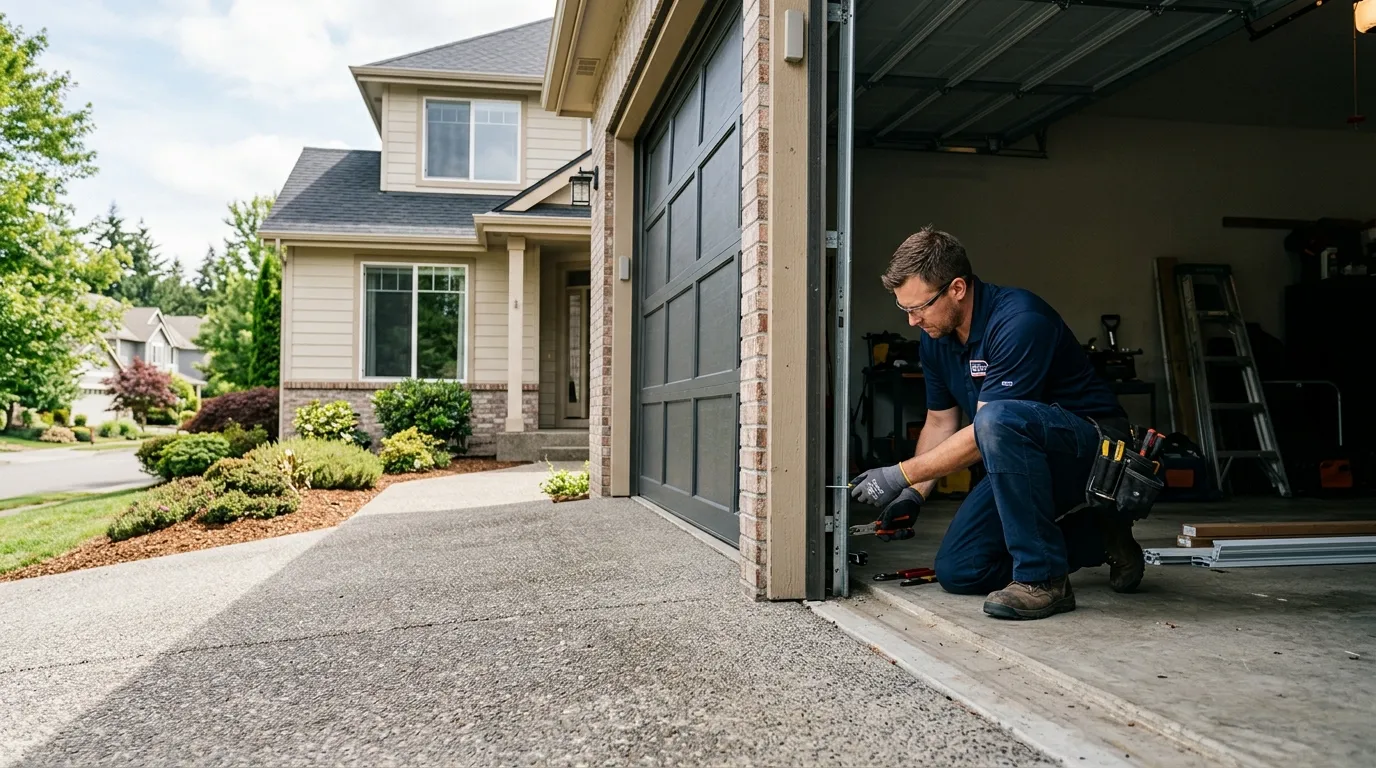
Why This Fails Locally
St. Clair sits 11 miles from our shop in Port Huron, and the houses here skew newer than most of the towns we cover. The median home in this service area was built around 1978, but St. Clair's typical build year runs to about 1989 - a full decade later. That matters because it changes what's actually breaking.
A door installed when a house went up in 1989 is now well past the working life of its original torsion spring, but the hardware itself is a different generation than what we find in the 1960s stock closer to Port Huron. Builder-grade doors from that era often shipped with lighter-gauge steel panels and single torsion springs sized for the door, not for extra insulation or a heavier opener bolted on later. When that spring finally lets go, it's usually the original - nobody's replaced it yet.
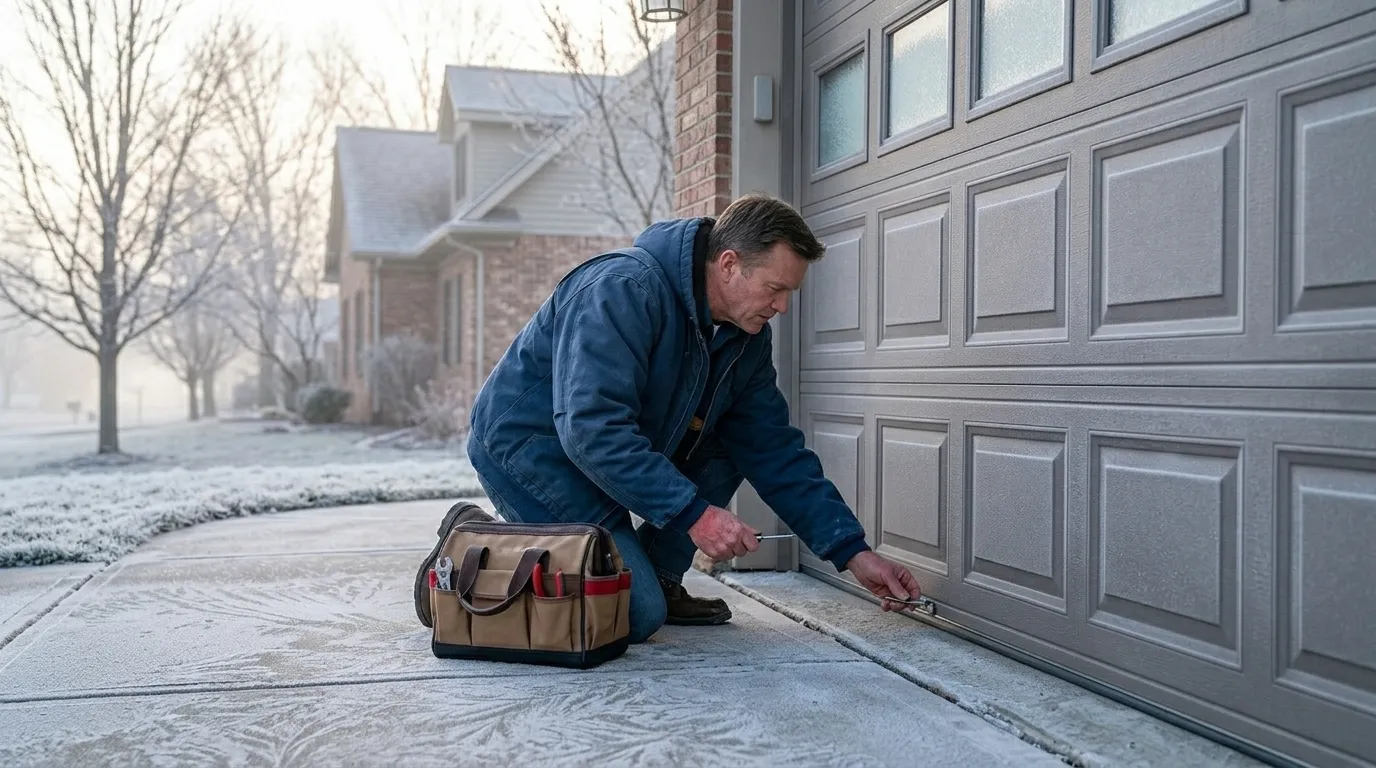
Cold-climate stress adds to it. Steel contracts in low temperatures, and grease in an untouched roller track thickens right when the door needs to move easiest. On a door already at the end of its spring life, that's often the push that turns a stiff door into a dead one.
We don't guess at your specific door without seeing it - this is what the numbers for St. Clair point to, not a diagnosis over the phone.
What You Pay
We don't set a different price for St. Clair than for anywhere else we drive to - the job costs what the parts and labor cost, not what the neighborhood's household income happens to be. St. Clair's median household income runs higher than the area average, but that's context for the town, not a pricing input for us.
What does move the number is the door itself. A spring swap on a standard door is a different job than tracking down a spring for a door built to an odd width in the late '80s, or replacing an opener board nobody makes anymore. We quote once we've seen the door, not before.
We won't quote a price here we haven't confirmed, and we're not going to publish a number that doesn't hold up once we're standing in front of your specific door and opener.
The Symptom
The complaint we'd expect most from a St. Clair address: the door was fine, then one morning - often a cold one - it won't lift, or it lifts a few inches and stops, or it slams down instead of lowering slow. That's the signature of a torsion spring finally giving out on a door old enough to be original to an early-to-late-1980s build.
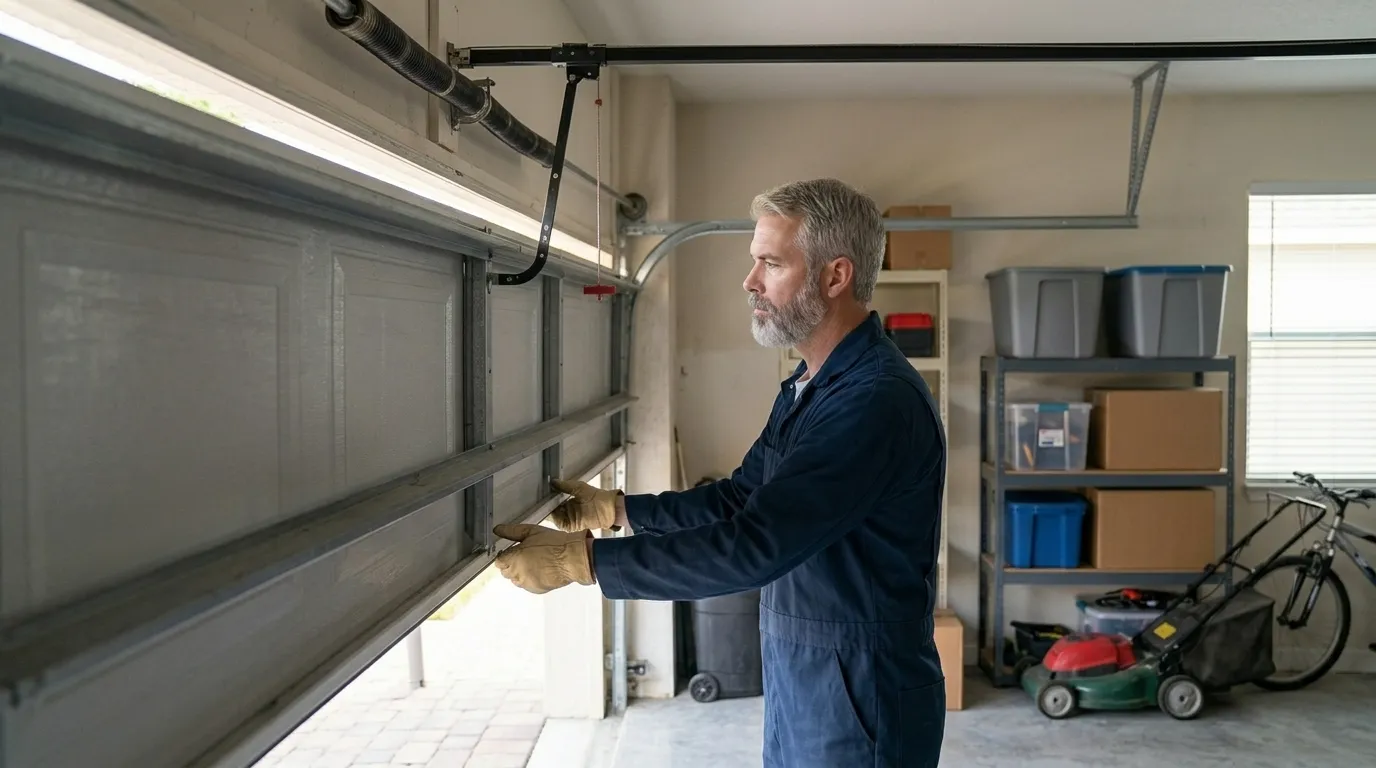
A door that reverses right after it starts closing, or that an opener strains and clicks on but the door doesn't move, points the same direction: spring, not opener. Don't keep hitting the button - a spring under load with the door partway up is exactly the setup that damages cables and tracks, and it's not a job to force by hand either.
A door that's merely noisy, slow, or dropping at an angle is a different repair, usually rollers or track alignment, and it's a smaller job. We'll tell you which one it is before we quote anything.