How Long It Takes
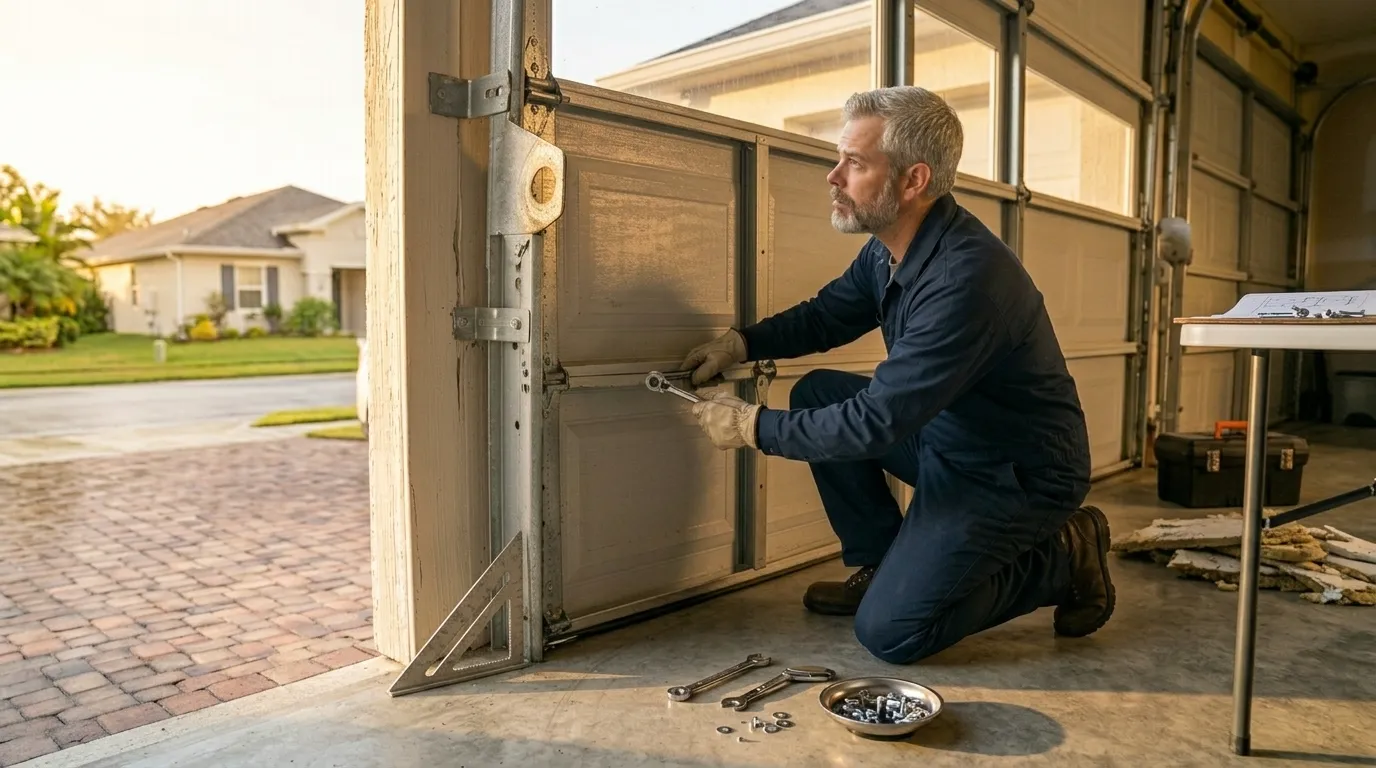
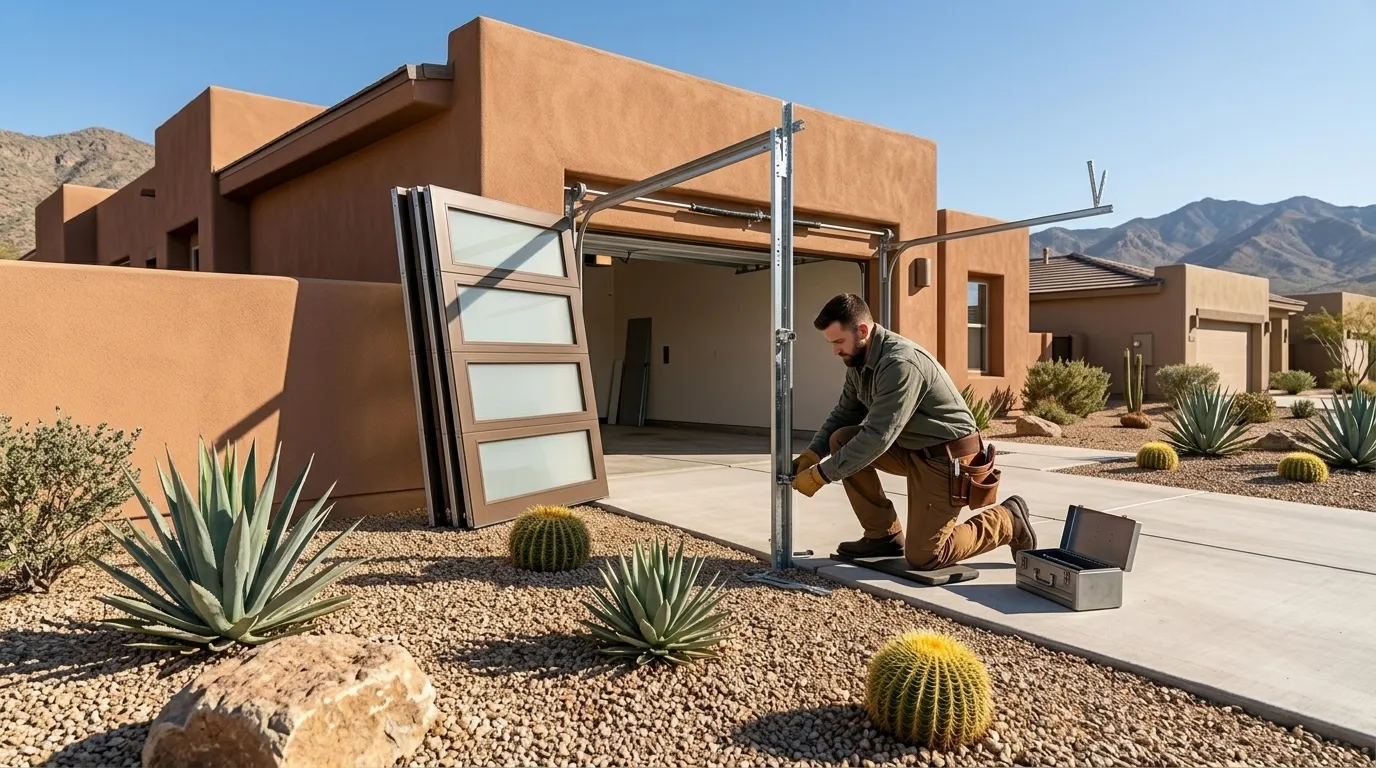
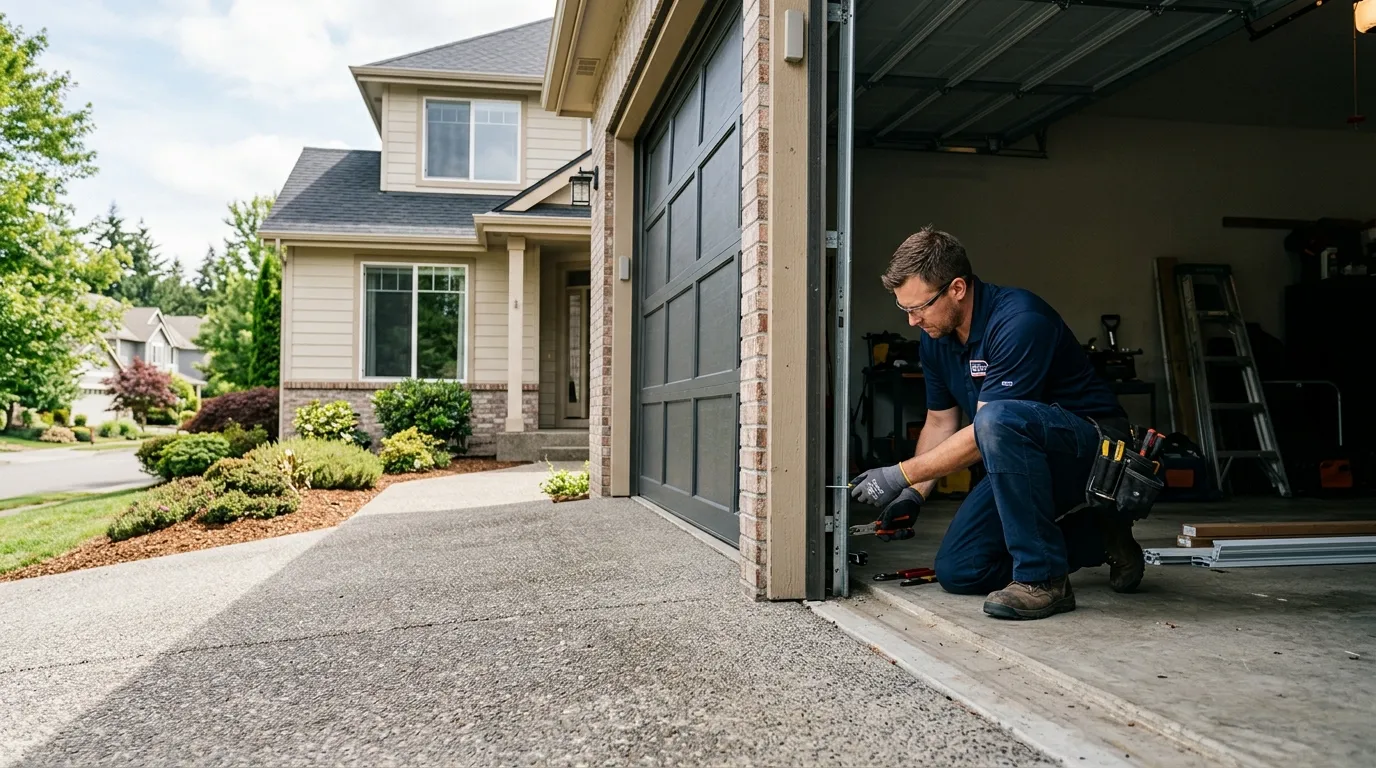
A single-panel swap on a steel sectional door is usually a same-visit job once the crew has the right panel on the truck - no cure time, no paint match to chase, just fasteners and a hinge reset. The part that eats time isn't the install, it's sourcing the exact panel profile. Grant sits far enough out - 12 miles from the Port Huron shop - that guessing wrong on panel width or rib pattern means a second trip, so the crew confirms the door's brand and section height by photo before loading the truck.
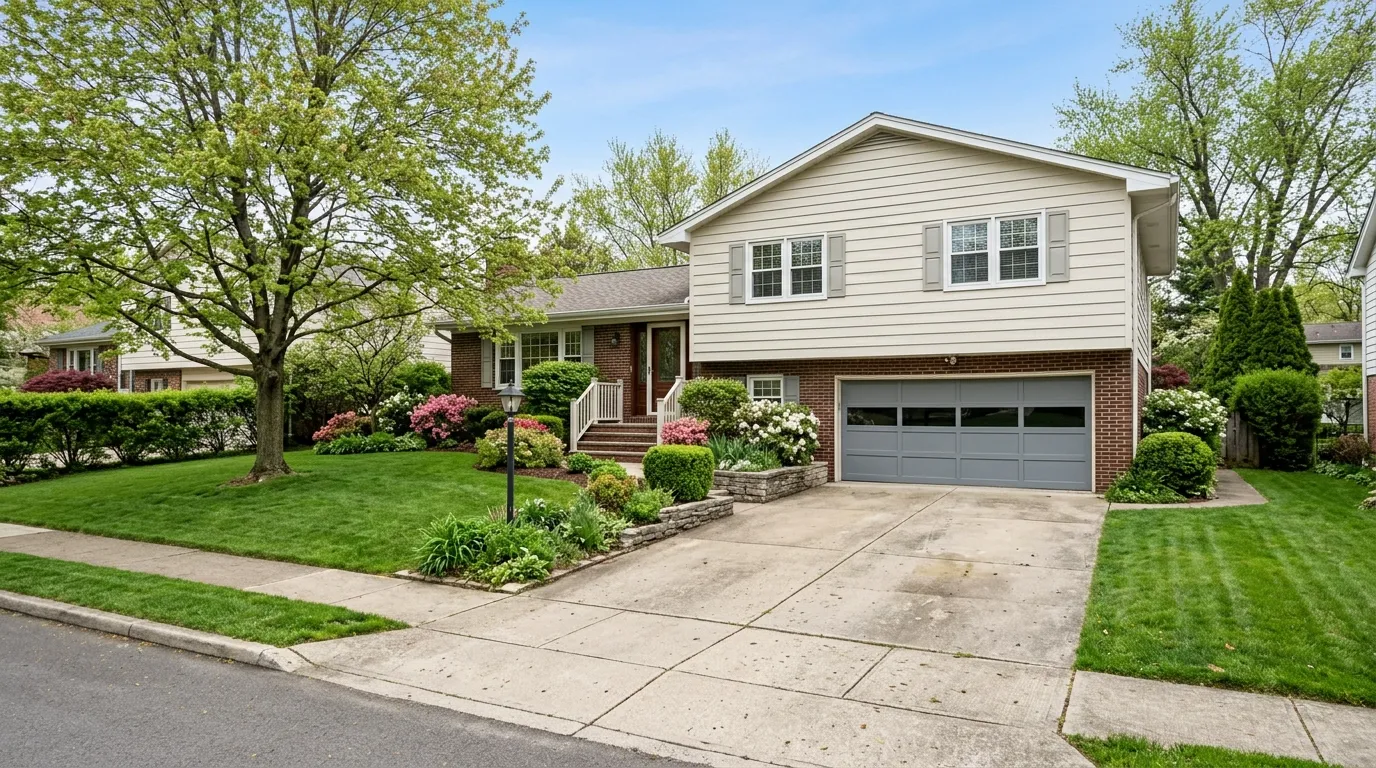
Because Grant's housing runs newer than most of the towns this company covers - median build year 1989 against roughly 1978 for the wider service area - a lot of these garages still have their original steel sectional doors, not the wood or fiberglass panel stock older neighborhoods have. That's good news for parts: raised long-panel steel sections from the '80s and early '90s are still a common size, and most jobs here run one visit, one panel, no return trip. Full replacements, when a door's beyond patching, take longer and get scheduled separately.
Why This Fails Locally
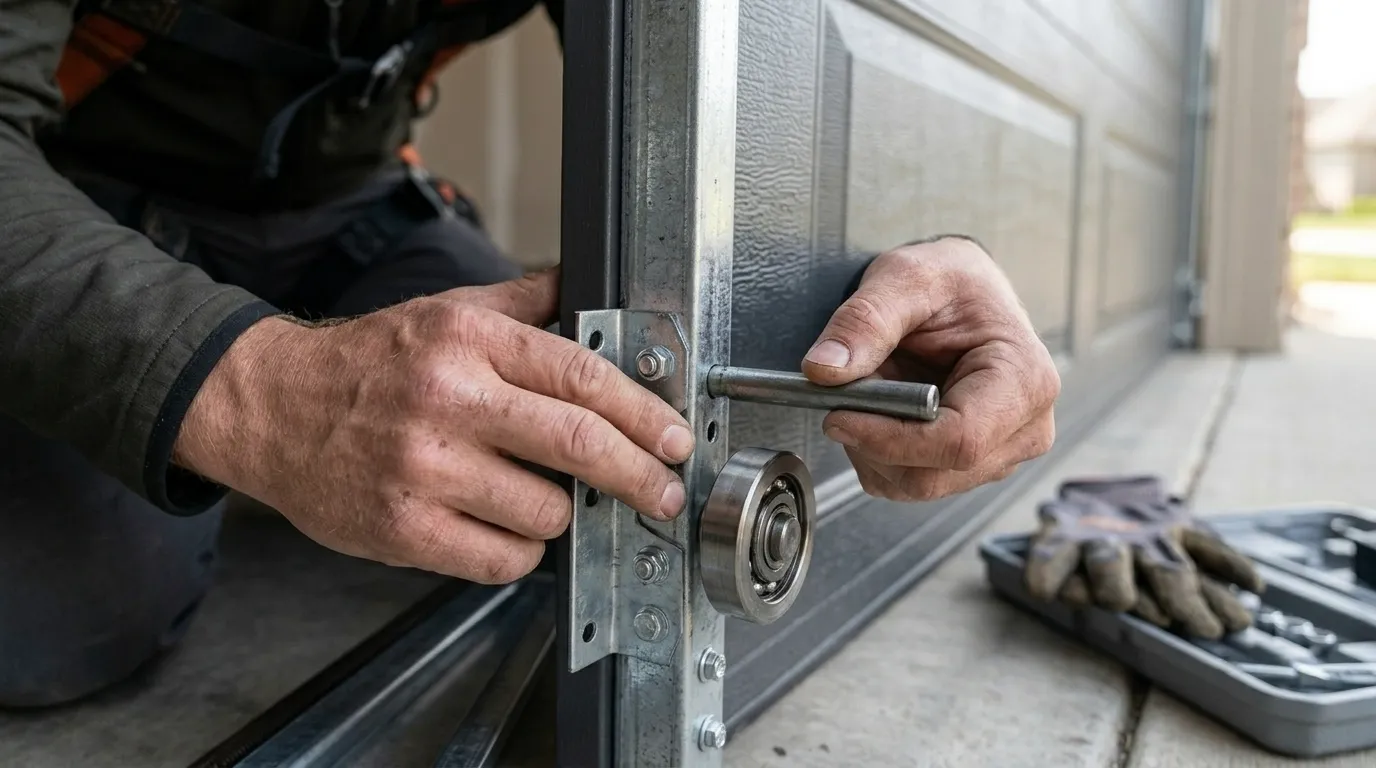
Grant's garages are newer than the region's median but they're not new - 1989 puts most of this stock at 35+ years old, right at the point where steel gauge starts thinning from corrosion at the bottom section and hinge screws start backing out everywhere else. That's a different failure pattern than the flush wood-panel doors common on 1940s-60s housing elsewhere in the service area, where rot and warping are the issue instead of hinge wear.
Cold matters here too. This area sits in a severe cold climate band, and steel panels contract enough in winter that a section already loose on its hinges will visibly gap at the seam by January even if it looked fine in October. A panel repair done in warm weather without checking hinge tension can look perfect for three months and then fail the first hard freeze.
The Symptom
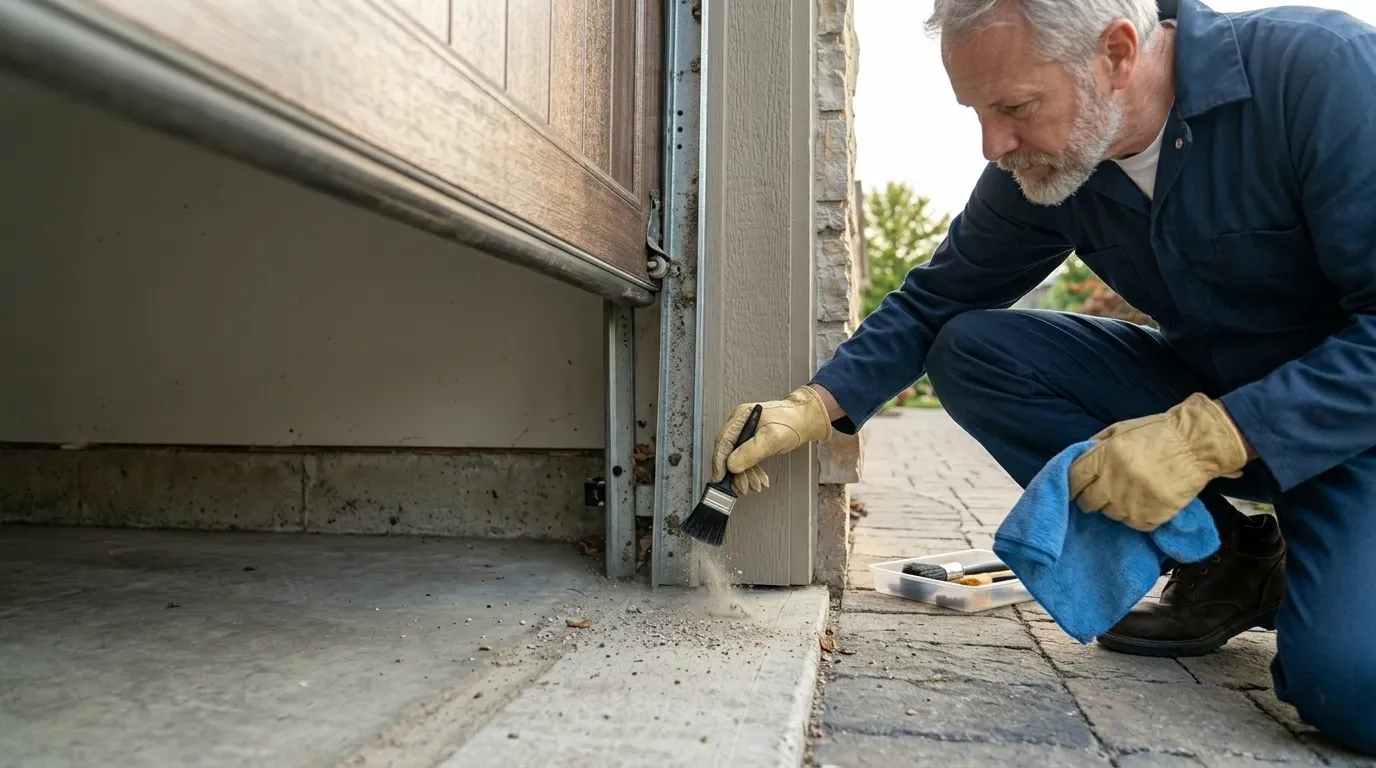
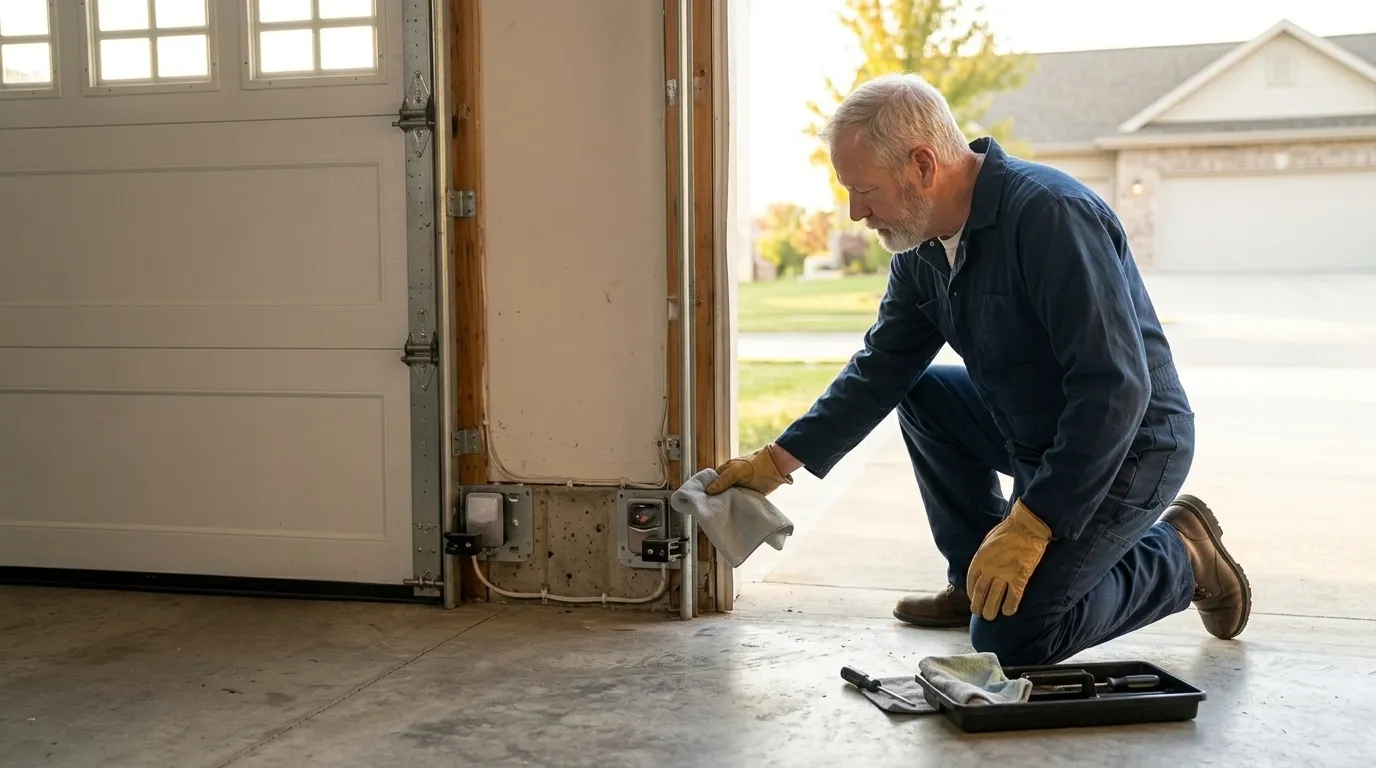
The giveaway on this stock is usually a bottom panel that's dented or rusted through at the corner while the rest of the door looks fine - a mower, a bumper tap, road salt working under the bottom weatherstrip over the years. Above that, watch for a section that doesn't sit flush with its neighbors when the door's fully down; that's the hinge wear talking, not the panel.
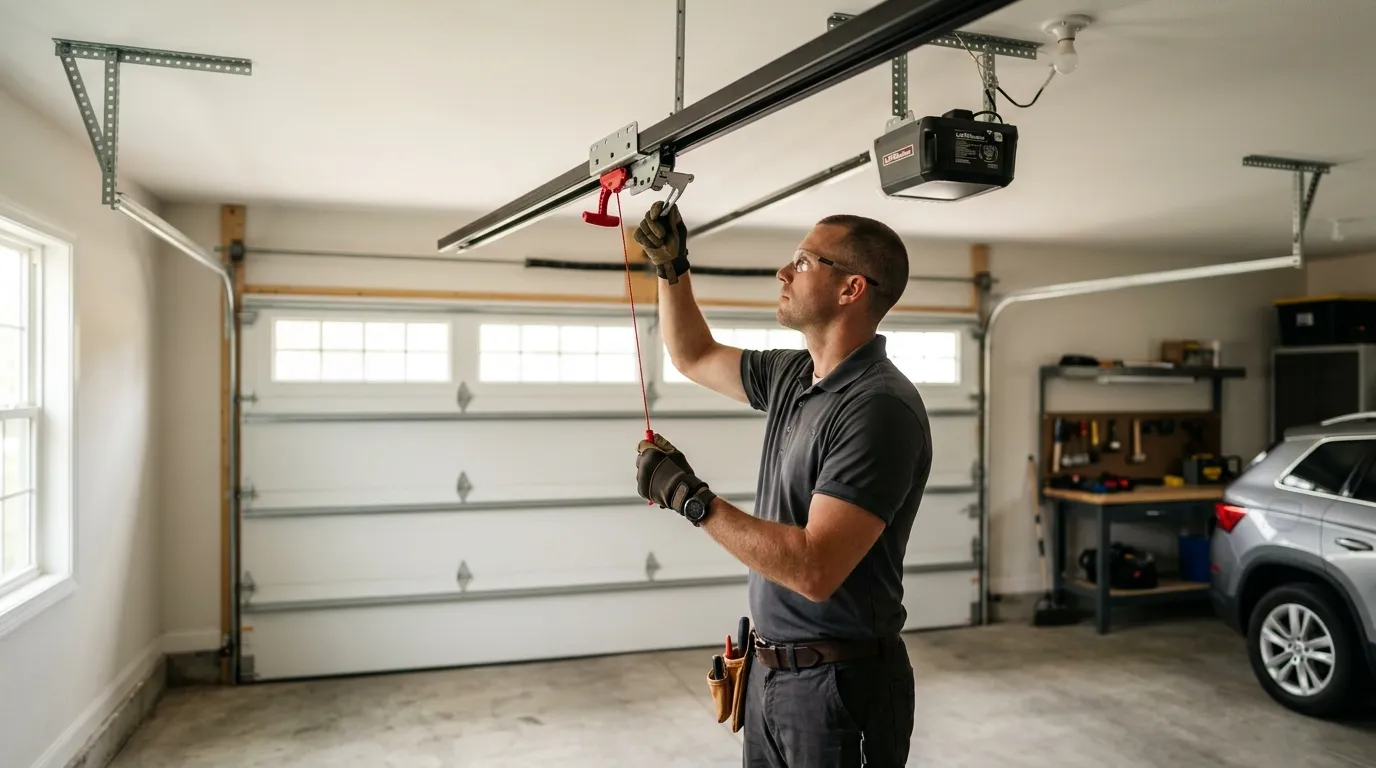
If the door binds or groans partway through its travel rather than failing cleanly, that's often the springs compensating for a panel that's now a different weight than it was in 1989, not a spring problem on its own. Homeowners here tend to call about the dent and end up needing the hinge and spring check too - worth mentioning before the truck rolls.