How Long It Takes
Grant sits about 12 miles out from Port Huron, so a cable call here isn't a five-minute hop across town. That distance gets folded into how the day gets scheduled - we're not driving past your street twice, so when we book a Grant call, we plan the truck's route around it rather than squeezing it in between closer jobs. It doesn't change what the repair itself takes once the truck is in your driveway; a snapped cable is a snapped cable whether it's six miles or twenty. What it does mean is that same-day windows in Grant depend more on where else the truck is already headed that day. With only 686 households out this way, we're not running a dedicated route through the area - every visit here gets built into the day's plan rather than picked up on the way past. If you call early, we can usually work the drive into a morning or afternoon block instead of a special trip.
Why This Fails Locally
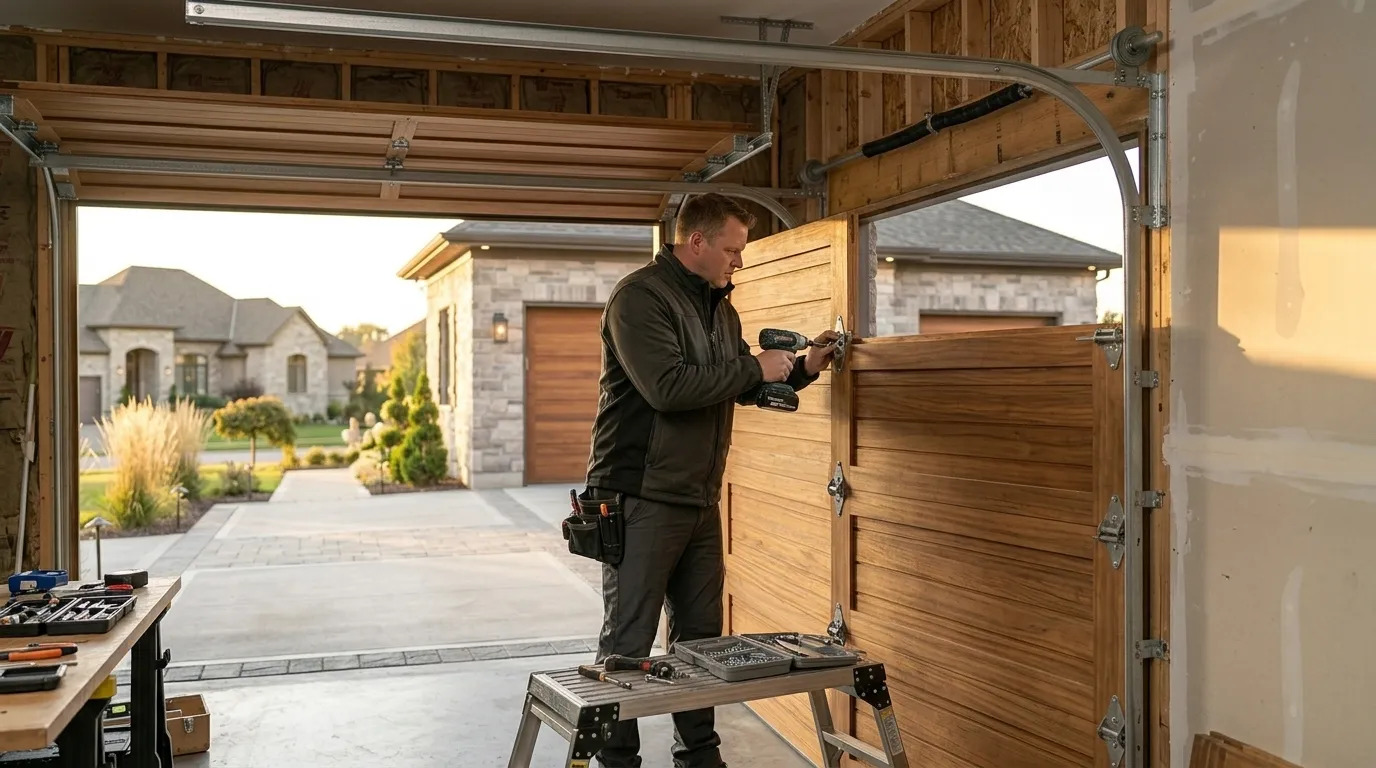
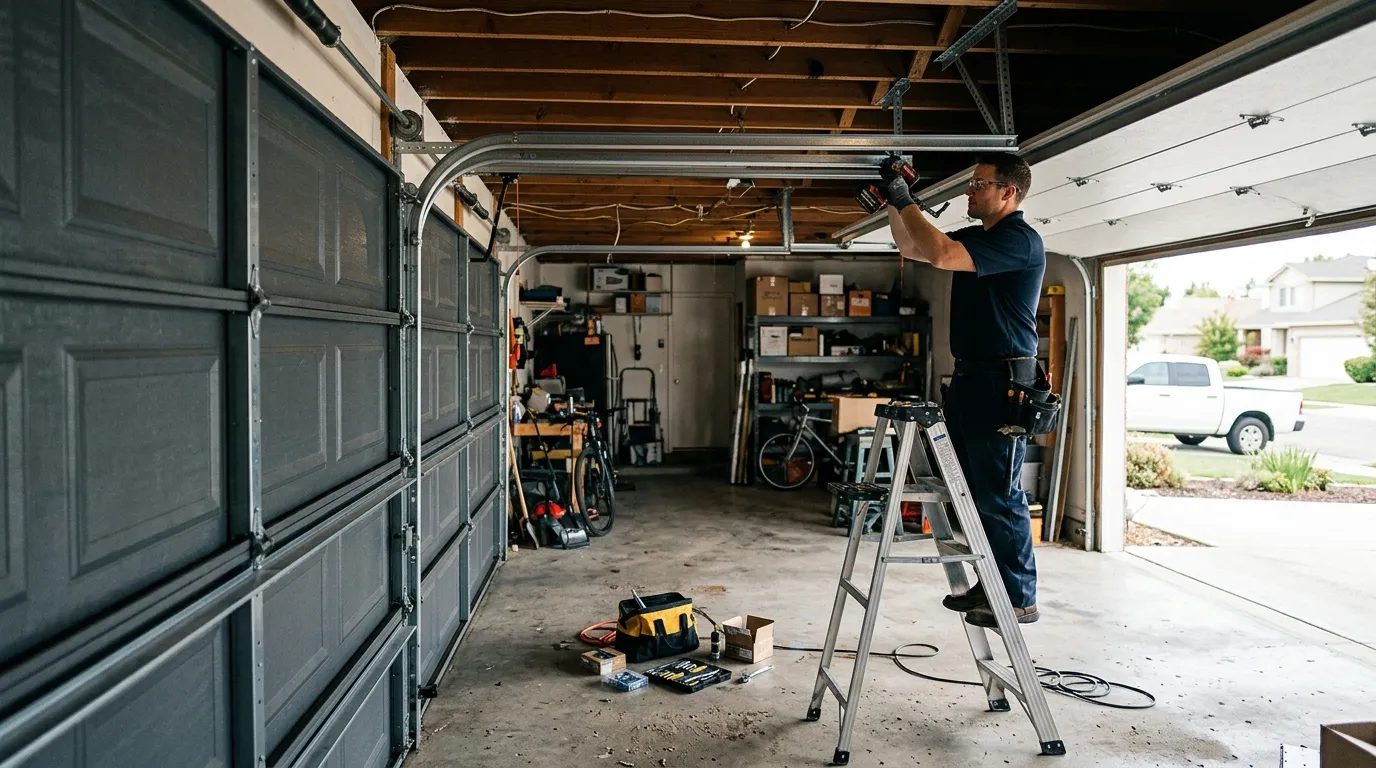
The median home in Grant was built around 1989, noticeably newer than the 1938-1989 span with a median closer to 1978 that covers most of the wider Port Huron service area. That gap matters for cable work: doors from this era more often run on galvanized steel cable with extension springs rather than the older torsion setups still common on the region's 1960s and '70s housing. The hardware wears differently - extension cable systems put more stress on the bottom bracket and pulley than torsion cable does, so fraying shows up there first. Winters here are the same severe cold the rest of the service area gets, and cold makes steel cable stiffer and more prone to snapping at a stress point rather than stretching. On a newer door with lighter-gauge hardware, that stiff cable under load is exactly the kind of failure we see after a hard freeze. It's not that Grant's doors are worse - they're just a different generation of hardware than what's common a few miles closer to Port Huron, and that changes where the wear shows up first.
The Symptom
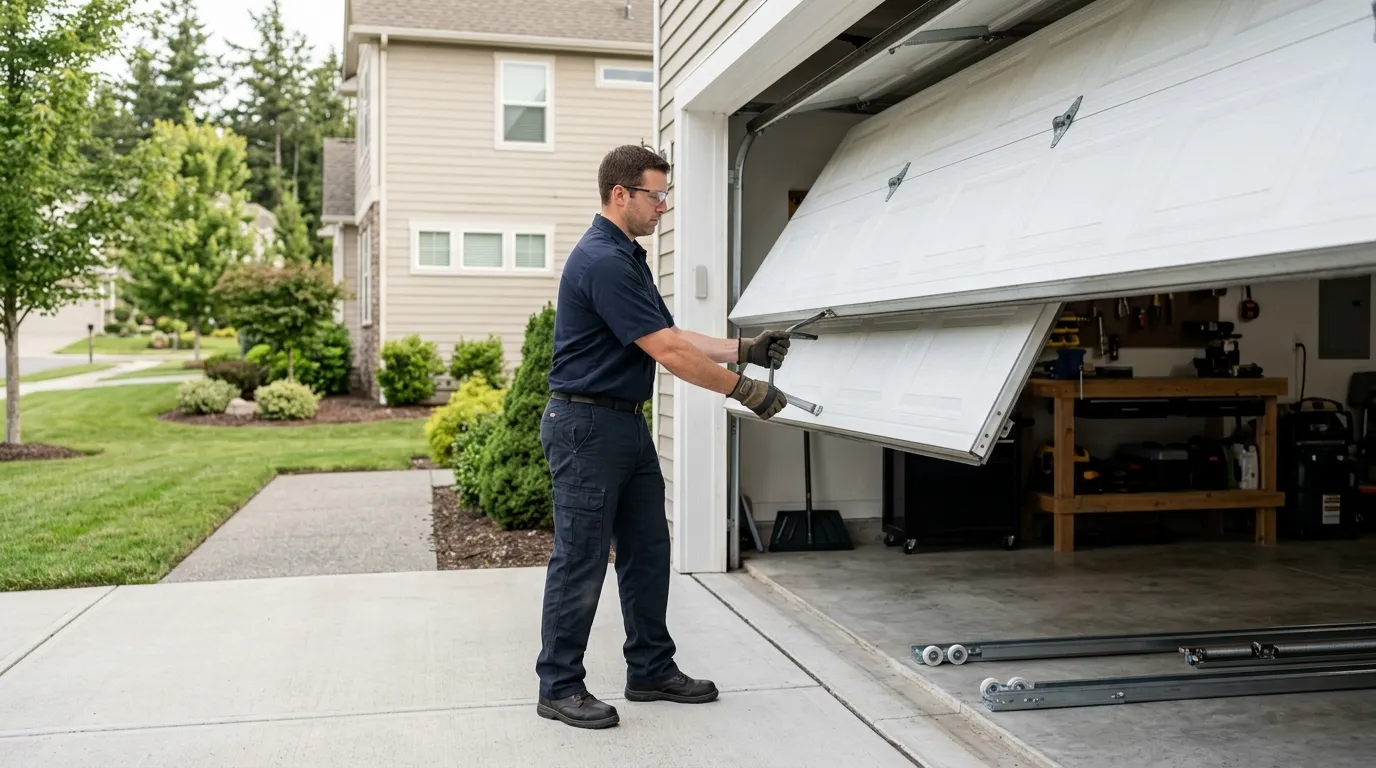
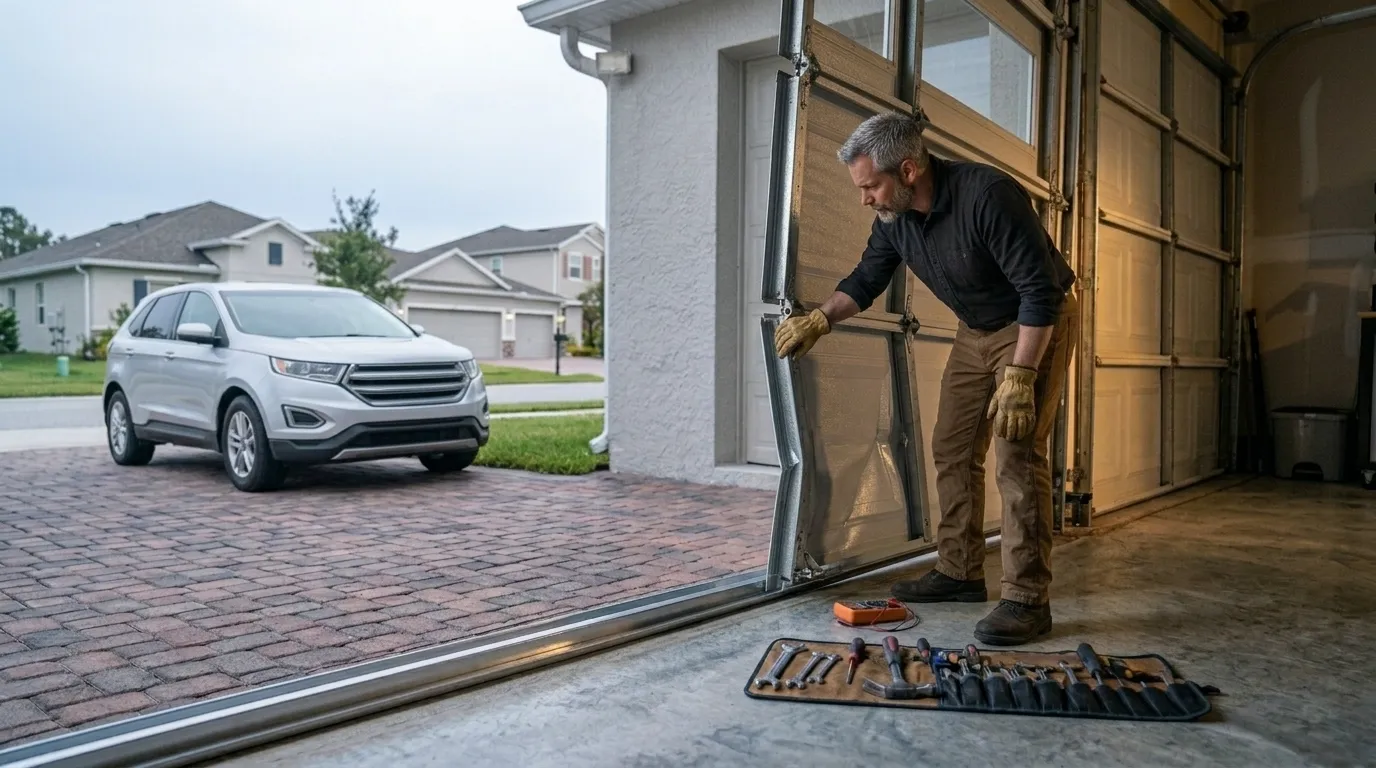
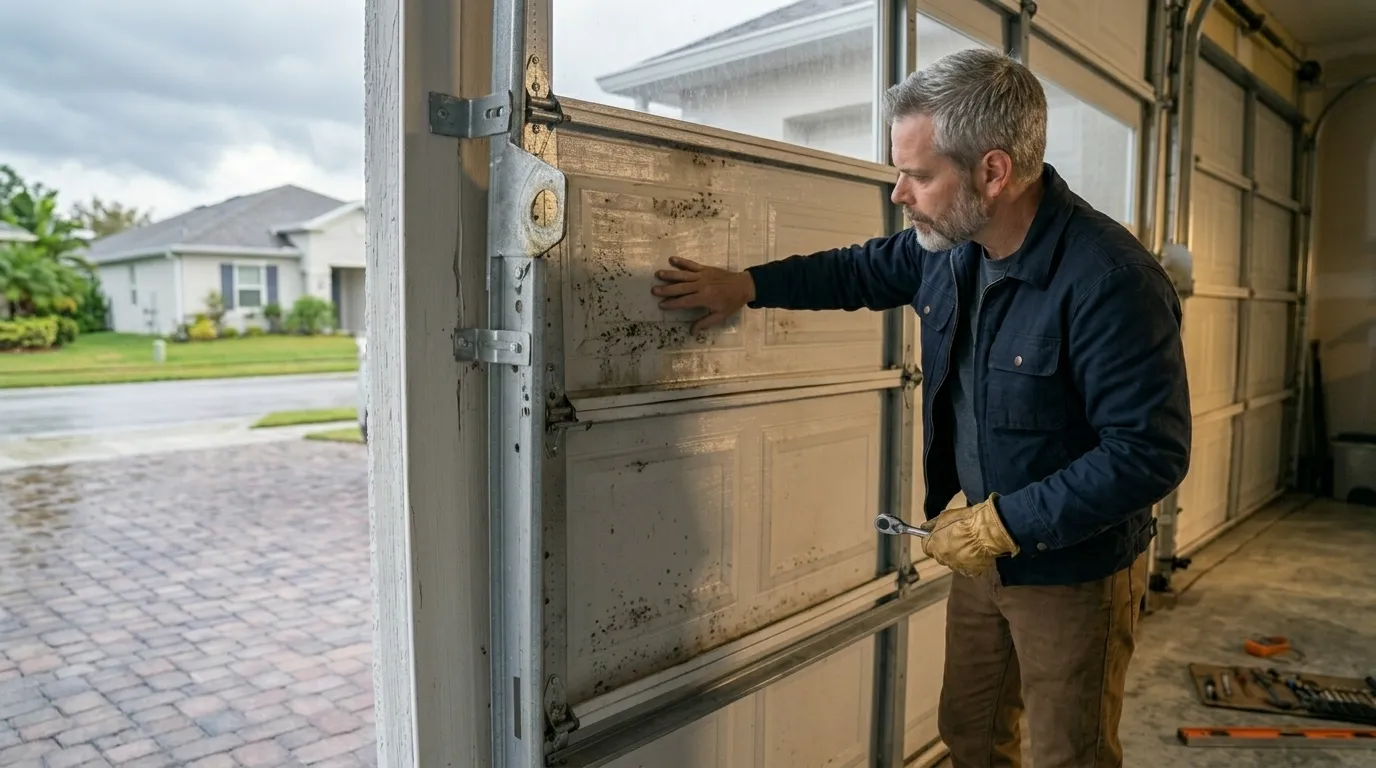
If your door in Grant is hanging crooked, dropping fast on one side, or making a loud bang followed by the door refusing to move, that's almost always a cable, not the opener. A door that slams down instead of closing smoothly has usually lost cable tension on one side; a door that won't budge at all, with the opener straining and clicking, often has a cable jumped off the drum rather than snapped outright. Don't try to force the door up by hand or run the opener again - a partially failed cable under load can let go the rest of the way while someone's hands or head are near it. Households in this area, with a median income around $85,909, more often lean toward replacing rather than patching once a door's hardware starts showing its age across the board, and that's a fair call on a door with more than one worn part. But a single frayed cable on an otherwise sound door is usually a straightforward fix, not a reason to replace the whole unit.