What You Pay
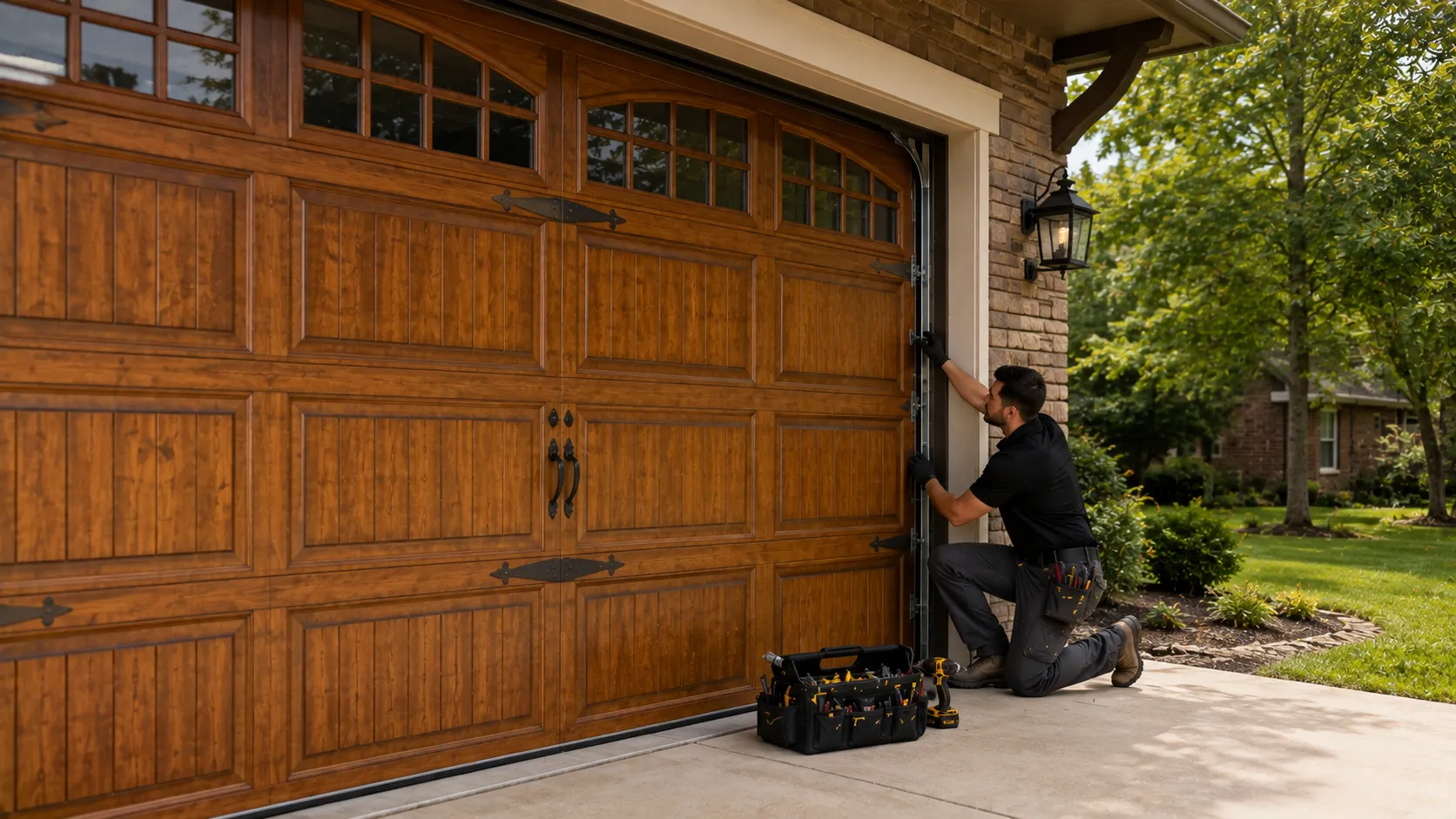
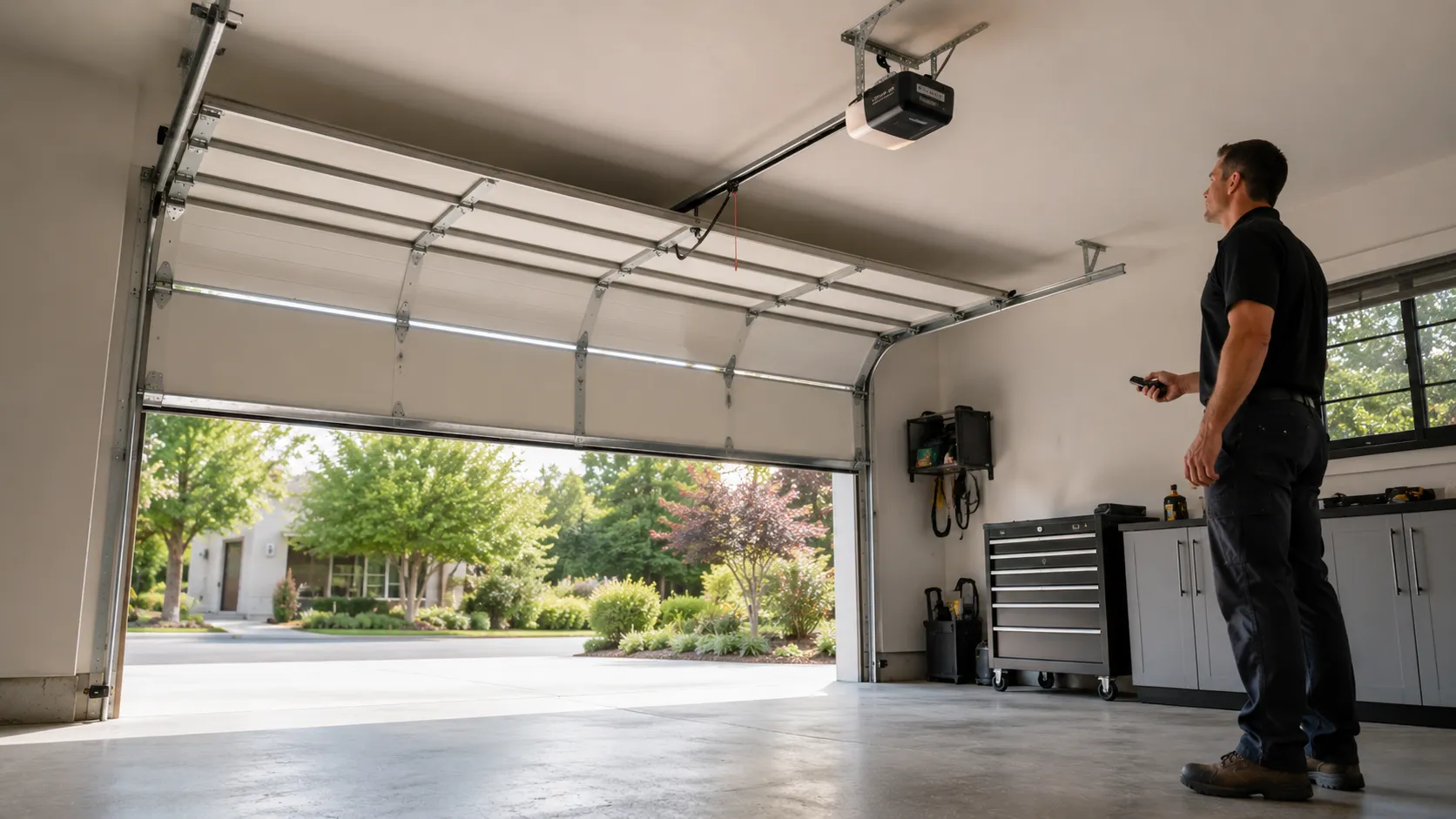
We don't quote a maintenance price on a page - every door is different and we're not going to pretend otherwise. What we can tell you is that a tune-up call to Fremont means a truck making a 19-mile trip from Port Huron, and that gets factored into how the visit is scheduled, not stacked onto a same-day route the way a job five minutes from the shop might be. Fremont's median household income sits at $62,361, a bit below the wider service area's $68,482, and we hear that in the calls: more folks asking what maintenance actually buys them versus a straight repair later. Fair question. A lube-and-adjust visit on a door that's still tracking true costs a fraction of a torsion spring replacement done as an emergency. We'll tell you plainly if your door doesn't need the visit yet, and we'll tell you if it's past the point where maintenance is the honest answer instead of replacement.
Stocked Parts
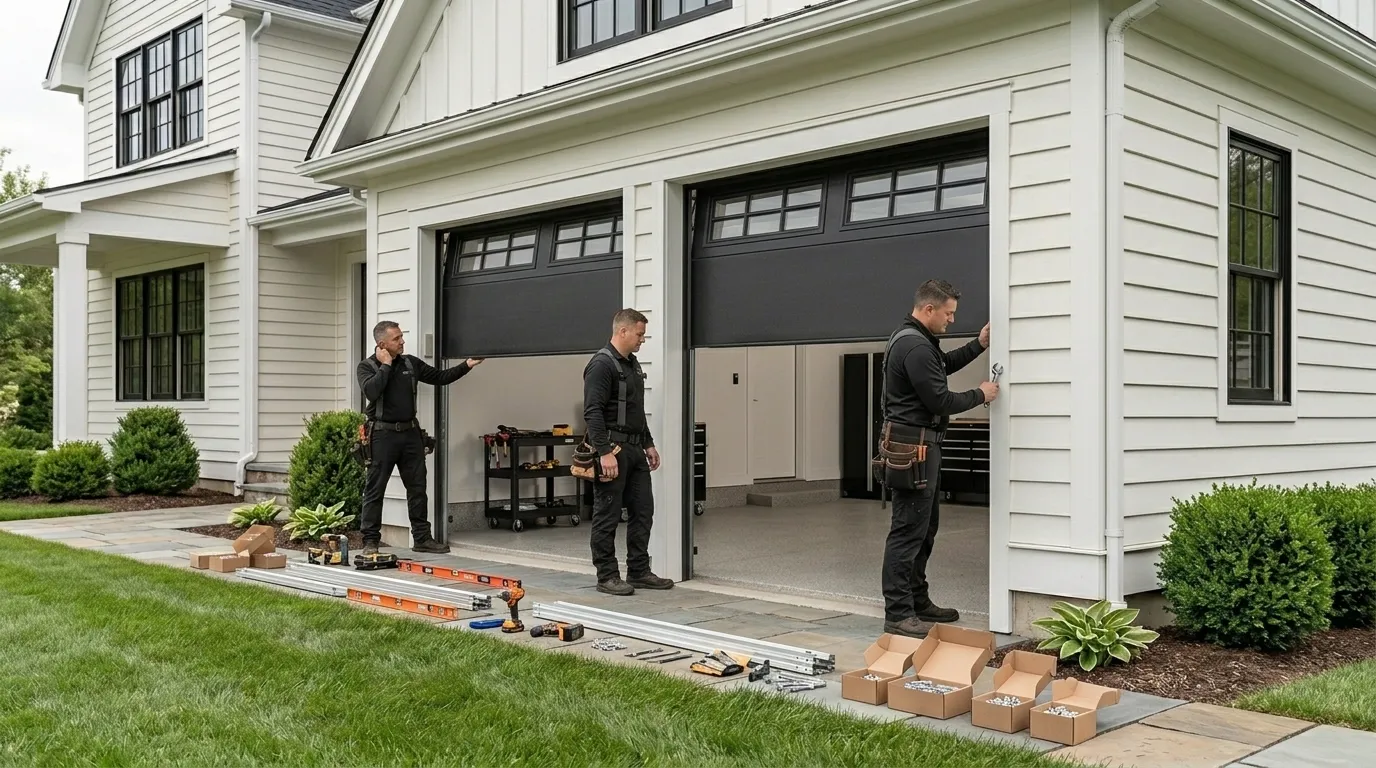
Housing across the wider service area mostly went up between 1938 and 1989, with a lot of it concentrated in the 1960s and '70s. Fremont's own median year built lands at 1979, which puts a good share of its garages a notch newer than the older 1960s stock elsewhere in the territory, but still old enough that original springs, rollers, and cable have had four decades-plus to wear. On a late-'70s door that's never had a hand on it, we're usually looking at galvanized rollers gone stiff, cable fraying at the drum, and torsion springs sitting well past their cycle count. We carry standard torsion and extension springs, rollers, and cable stock on the truck for doors of that vintage. What we don't stock is anything proprietary to a specific opener brand's obsolete circuit board - those we order in, and that can mean a wait.
What Can Go Wrong
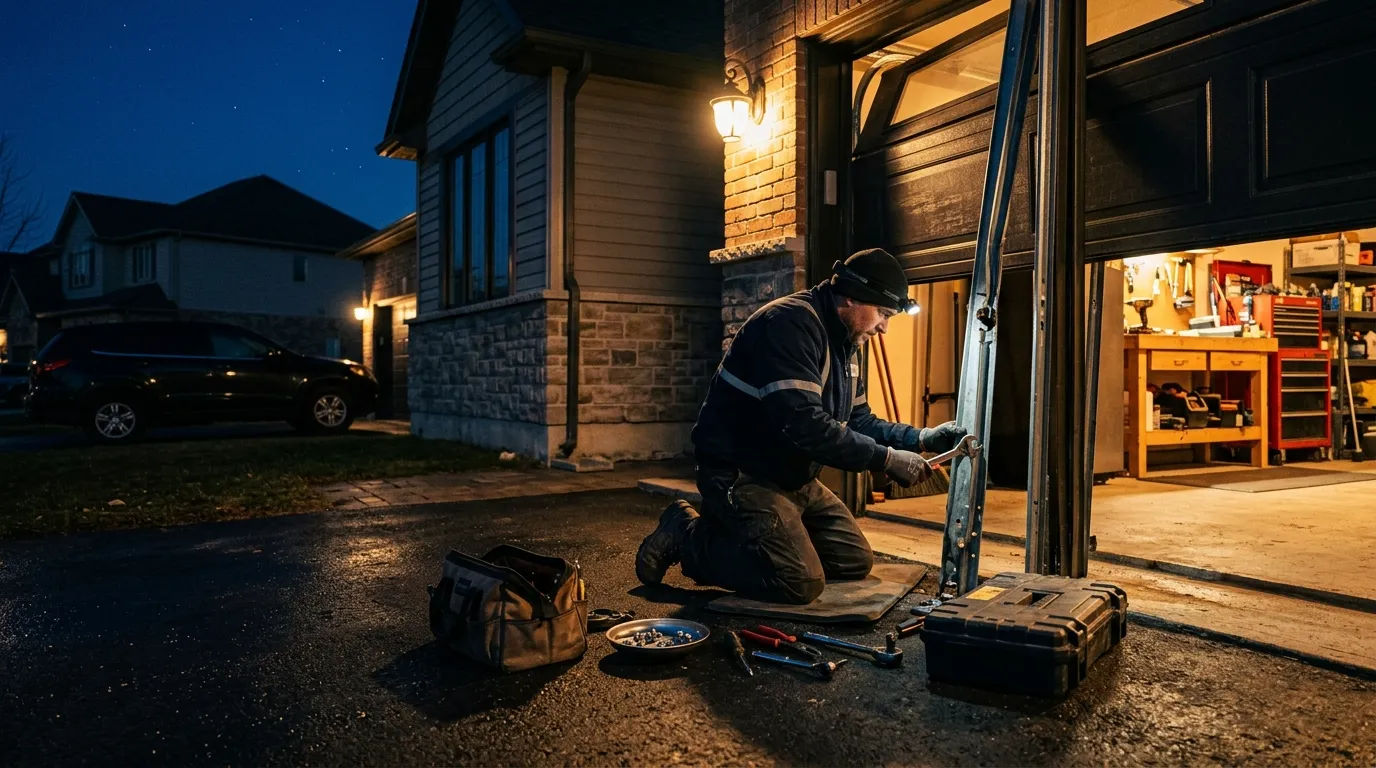
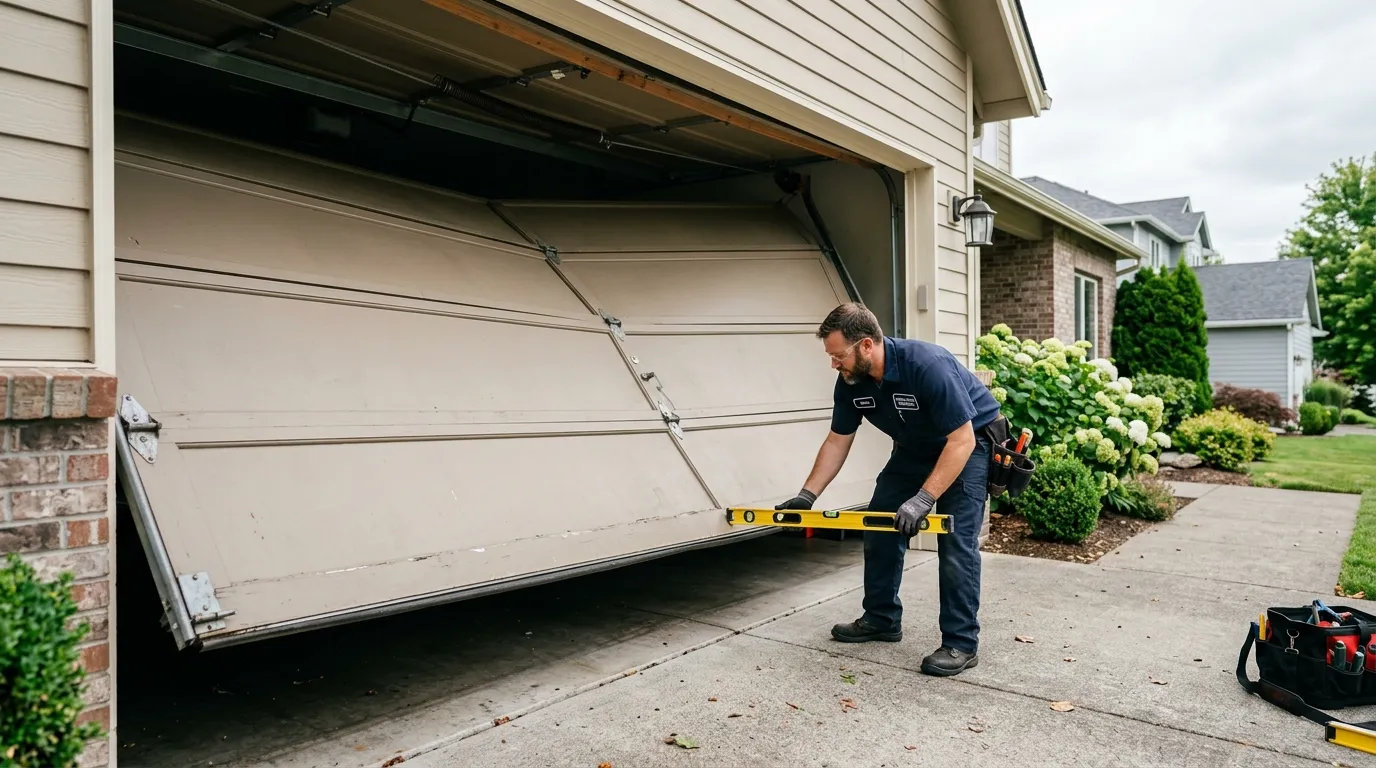
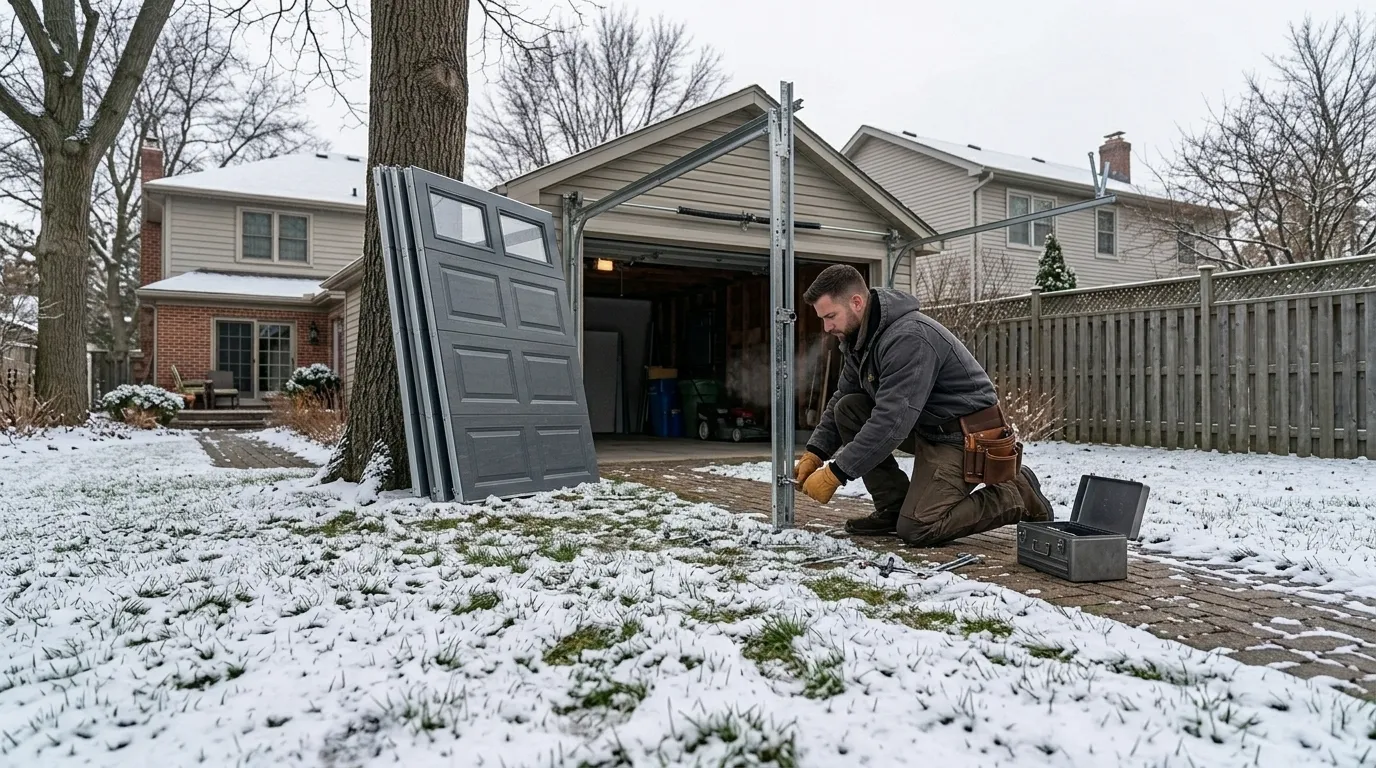
The service area sits in a cold, severe climate band, and that matters more for maintenance than most homeowners expect. Cold makes steel springs more brittle at the moment of failure and makes lubricant on rollers and hinges gum up or thin out depending on what's on there. A door that was fine in October and groans in January isn't imagining things - the metal and grease are both behaving differently in the cold. On a house built around 1979, the original hardware wasn't speced for forty-plus winters of that cycling. Left unchecked, the common failure is a torsion spring letting go on a cold morning, usually the coldest one of the week, because that's when the steel is under the most stress.
The DIY Question
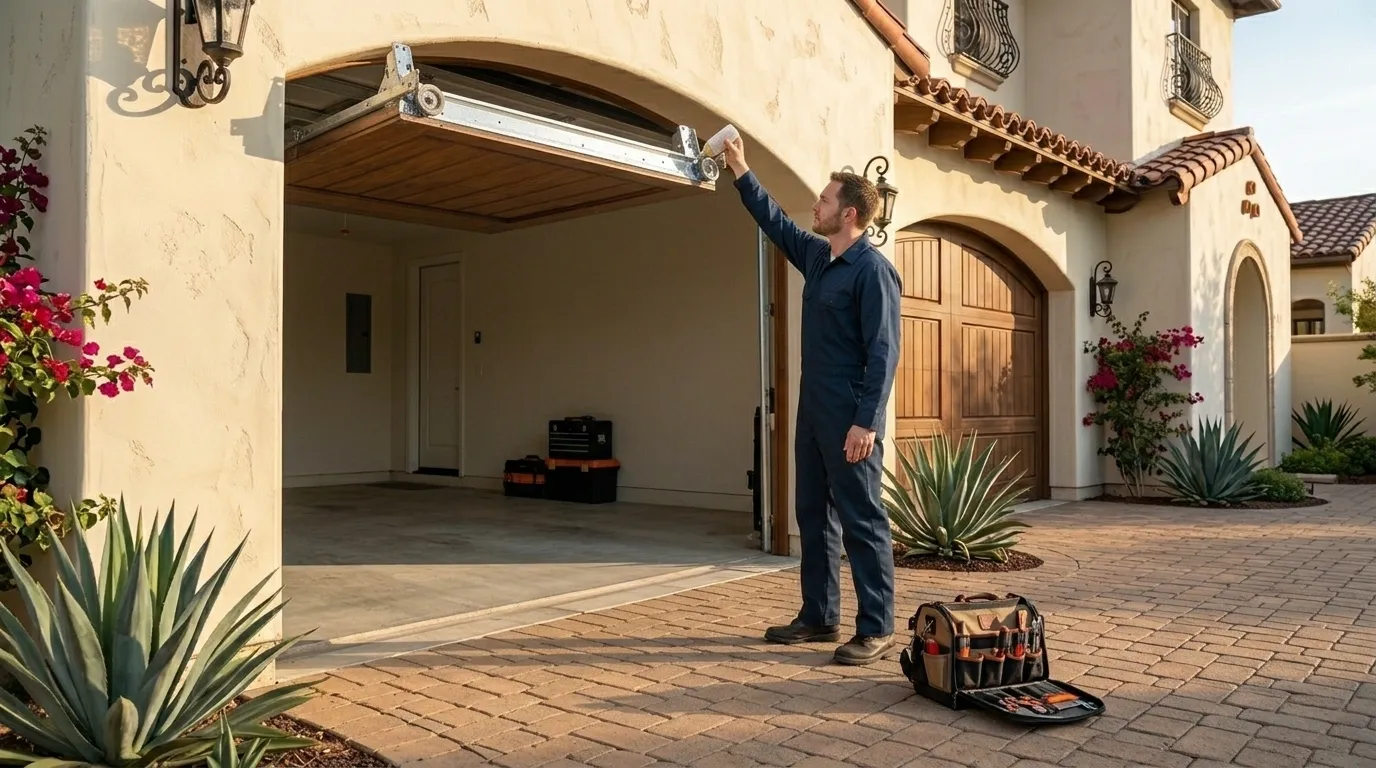
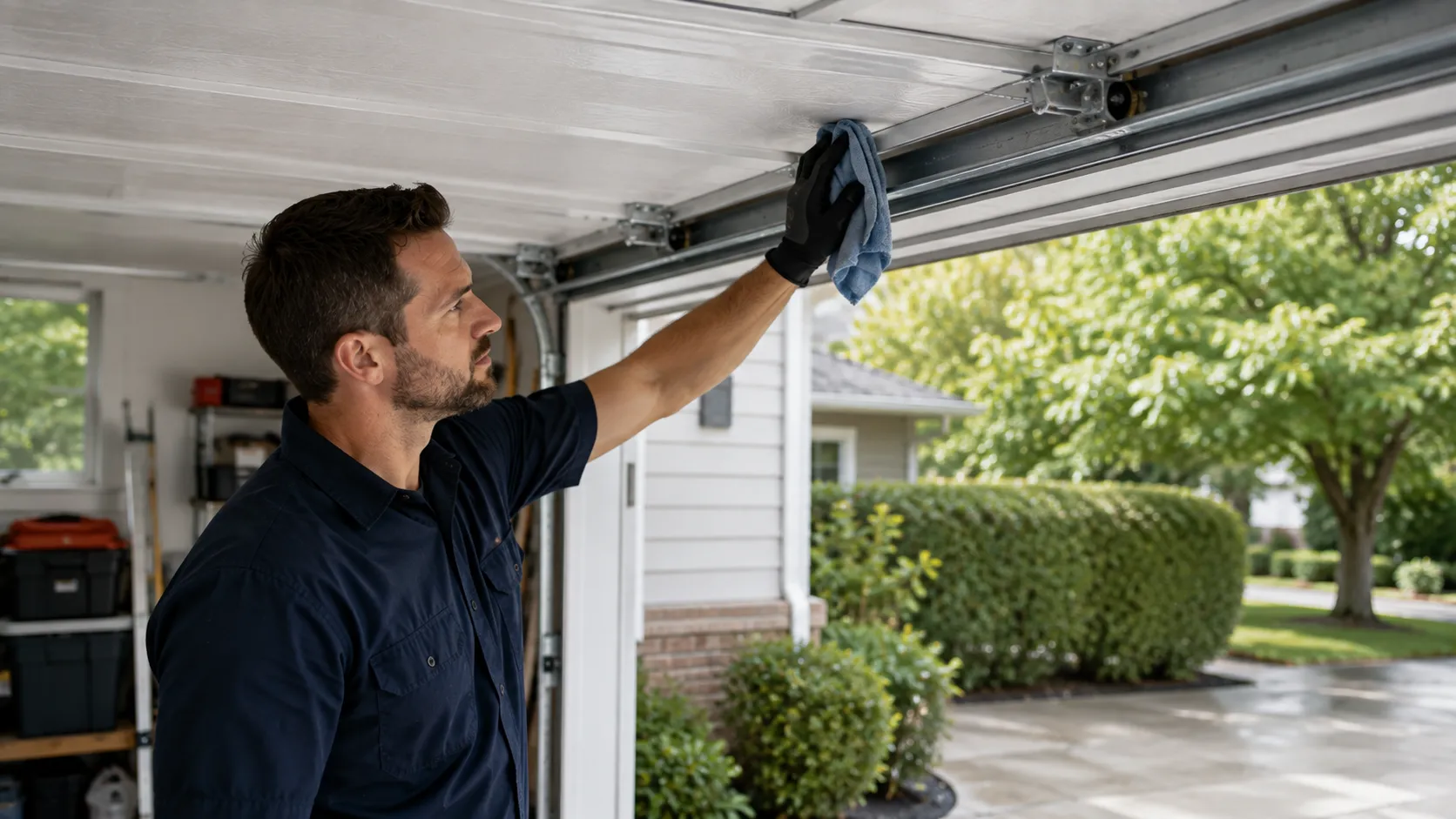
Lubricating hinges and rollers with a proper garage door lubricant, and visually checking cable for fraying, is fine to do yourself and worth doing twice a year regardless of who services the door. What we won't tell you to try is adjusting or replacing a torsion spring yourself. That spring is under enough tension to cause serious injury, and on a door built in the late '70s, the hardware holding it in place has had 45 years to corrode or loosen in ways you can't judge from a stepladder. If you're not sure whether what you're looking at is a lube job or a spring job, that's the actual question a maintenance call answers.